You can get a balanced garden without blowing your budget if you plan lawn, patio, and planting as clear zones. Place the patio where you’ll actually use it—sun at the right time, close to the door, and sized for your seating. Keep the lawn simple with clean curves that are easy to mow. Then soften hard edges with layered beds and a few tall screens for privacy. The key is how you connect these pieces…
Key Takeaways
- Define activity zones first, then size lawn, patio, and beds to fit furniture and traffic without wasted space.
- Place the patio by the most-used door and preferred sun, keeping kitchen and grill routes short.
- Shape the lawn with simple curves and durable edging to speed mowing, prevent mulch creep, and eliminate narrow strips.
- Soften hardscape with 24–36 inch planting beds, layering groundcovers, mid-height perennials, and vertical accents that won’t flop onto paving.
- Add privacy and year-round color using layered border beds, mixing evergreens, seasonal bulbs, and grasses, and refreshing mulch annually.
Plan Lawn-and-Patio Landscaping Ideas by Use
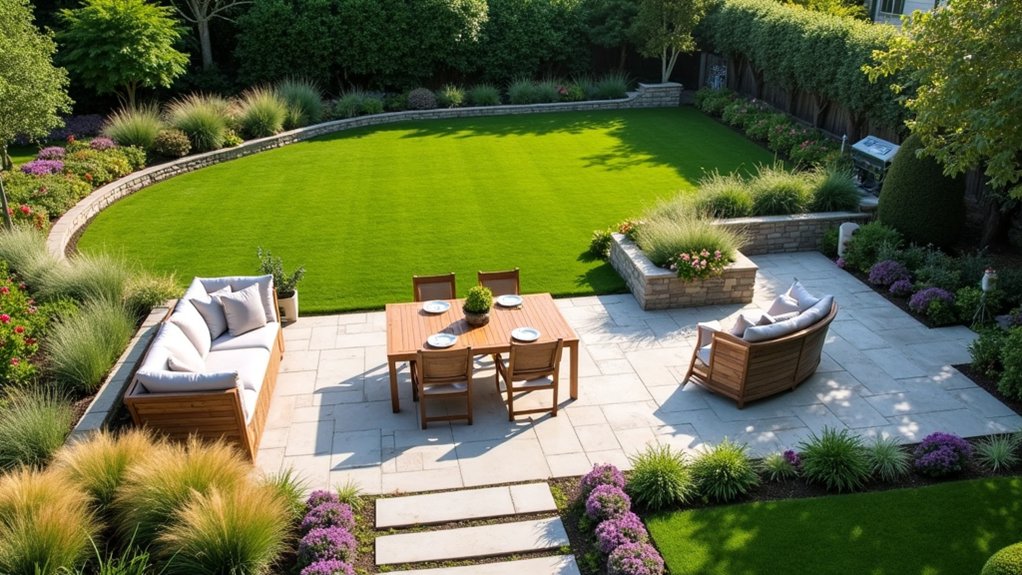
Before you buy pavers or plant a single shrub, decide how you’ll actually use your lawn and patio day to day—dining, kids’ play, pets, gardening, or quiet lounging—because that choice should drive every layout and material decision.
Map “zones” with simple rectangles, then size each to real furniture and traffic paths so you don’t pay for square footage you won’t use.
Keep the lawn only where you’ll run, relax, or let dogs roam; replace leftover strips with low-maintenance planting beds or gravel.
Choose durable edging to stop mulch creep and reduce trimming time.
Plan Garden lighting early so you can trench once and avoid costly rework.
Add Water features only if they fit your routine; a small recirculating bubbler beats a high-maintenance pond.
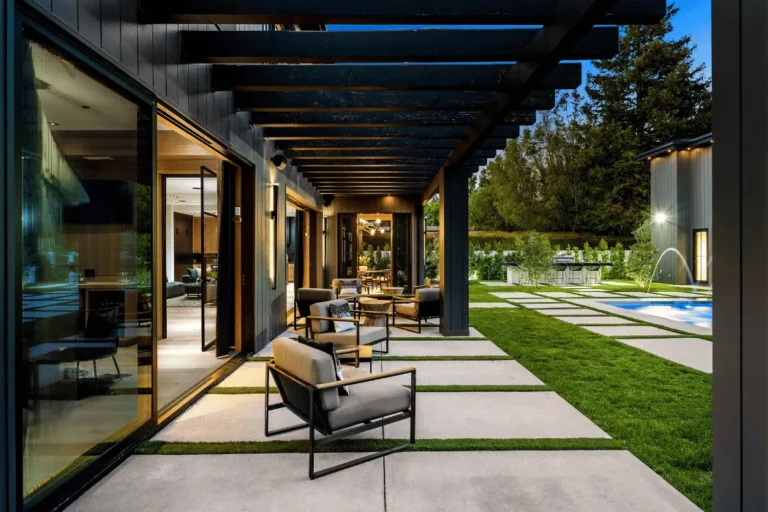
Place the Patio for Sun and Easy Access
Although a patio can go almost anywhere, you’ll get the most value by placing it where it catches the sun you actually want and connects directly to the doors you use every day. Start by tracking light for a week: morning sun suits coffee, late sun suits dining, and full afternoon sun may need an umbrella or nearby shade trees.
Keep the route short from kitchen or grill to cut steps and save on paving. If you’ve got a muddy threshold, extend the hard surface there first; it’s a small spend with big payback.
Align the patio with views you’ll enjoy, like planting beds or subtle water features, and keep utilities close so lighting and outlets don’t blow the budget.
Shape the Lawn for Tidy Views and Play
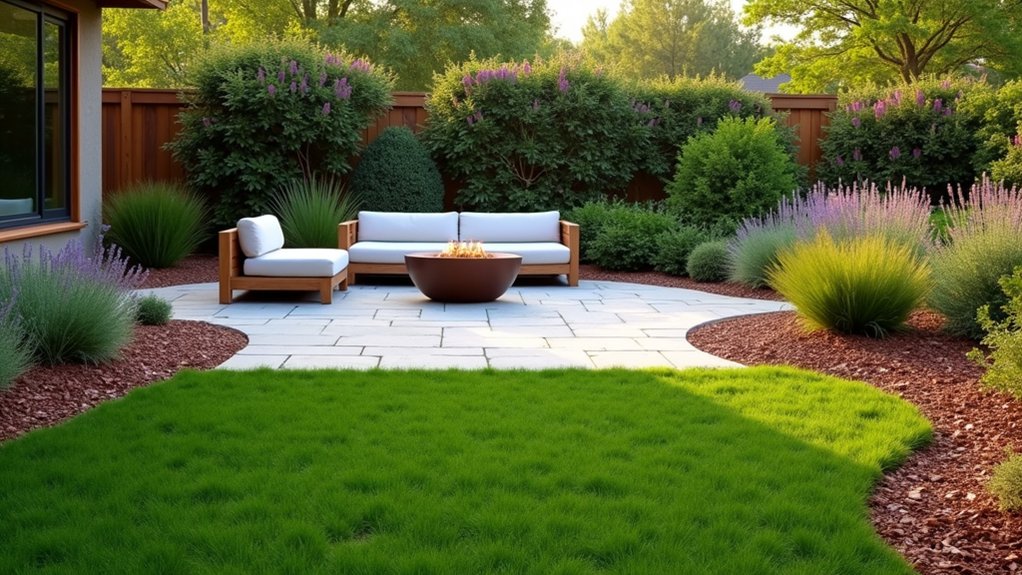
Give your lawn a crisp outline by setting clear edges along beds, paths, and the patio, so you’ll mow faster and keep views clean.
Use simple curves or straight runs to guide sightlines and avoid awkward narrow strips that waste time and seed.
Then zone the open turf for play where it’s flattest and most visible, keeping high-traffic areas away from delicate plantings.
Define Clear Lawn Edges
A clean lawn edge does two jobs at once: it makes the yard look sharper from every angle and it sets clear boundaries for play and mowing. Start with edge definition that matches your layout: straight lines feel modern and make trimming fast; gentle curves soften planting beds and guide sightlines to the patio.
Choose a method that fits your budget and upkeep tolerance. A simple spade-cut edge costs little and looks crisp if you re-cut it once or twice a season. Metal or plastic edging adds upfront cost but reduces grass creep into mulch and pavers, saving time later.
Keep border maintenance easy by leaving a narrow mowing strip along beds and patios, and avoid tiny in-and-out notches that waste trimming time.
Zone Lawn For Play
When you zone your lawn for play, you keep the yard looking intentional while protecting planting beds and patio spaces from daily traffic. Start by placing the play area where you can see it from the house and where the ground stays level and drains well.
Shape the lawn into a simple rectangle or oval so mowing stays quick and the view lines feel tidy from the patio. Use low-cost borders like steel edging, brick on sand, or a flush mow strip to separate turf from mulch.
Create safety zones by leaving clear runout space around swings, goals, or a trampoline, and keep hardscape edges outside that buffer. Add shade with a small tree or sail, and use tough grass seed for recovery.
Soften Patio Edges With Planting Beds
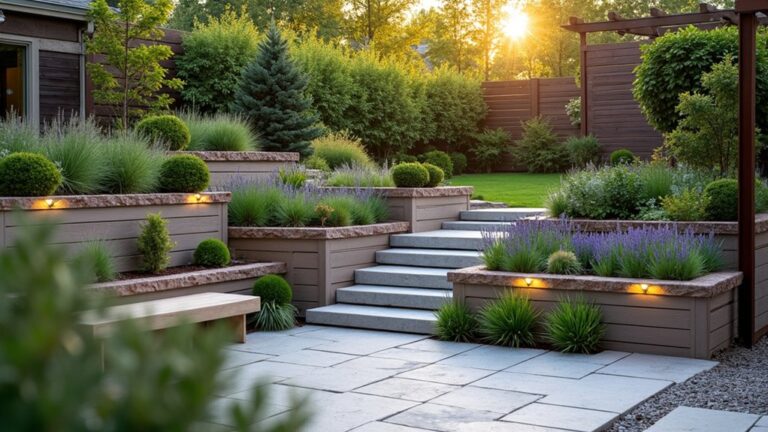
You can soften hard patio lines by adding curved border planting beds that guide the eye and make the space feel larger without expanding the pavers.
Keep costs down by shaping simple arcs with edging and filling them with tough, low-maintenance plants.
Then layer greenery along the pavers—groundcovers in front, mid-height shrubs behind—to hide edges and create a clean, finished progression.
Curved Border Planting Beds
Although sharp patio corners can make a yard feel boxy, curved border planting beds soften the hardscape and guide foot traffic without expensive rebuilds. You can mark the curve with a hose, then cut a clean edge with a flat spade so the line looks intentional from the house and the lawn.
Keep the bed depth 24–36 inches to fit roots and reduce trimming time. Use existing soil if it drains well; otherwise, amend only the planting zone with compost to control costs.
Install simple edging or a crisp trench to stop grass creep and keep mulch in place.
Choose hardy, compact shrubs and perennials that won’t flop onto the patio, and leave a narrow maintenance strip for easy access.
Layered Greenery Along Pavers
Because pavers can look stark on their own, layer low greenery along the edge to blur the hard line and make the patio feel finished without redoing the hardscape. Set a narrow planting bed or trench beside the pavers, then tuck in creeping thyme, dwarf mondo grass, or sedum for a tidy, drought-smart border. Keep plants 2–3 inches below the paver surface so soil won’t wash onto the patio.
To add depth, step heights: groundcover in front, mid-height perennials behind, and a few spots of vertical greenery like ornamental grasses or slim evergreens to frame seating. Match plant spacing to your paver patterns—repeat clumps at each joint line or corner for a clean, intentional rhythm.
Mulch lightly to cut weeding and protect edges.
Add Privacy Planting Without Losing Lawn Space
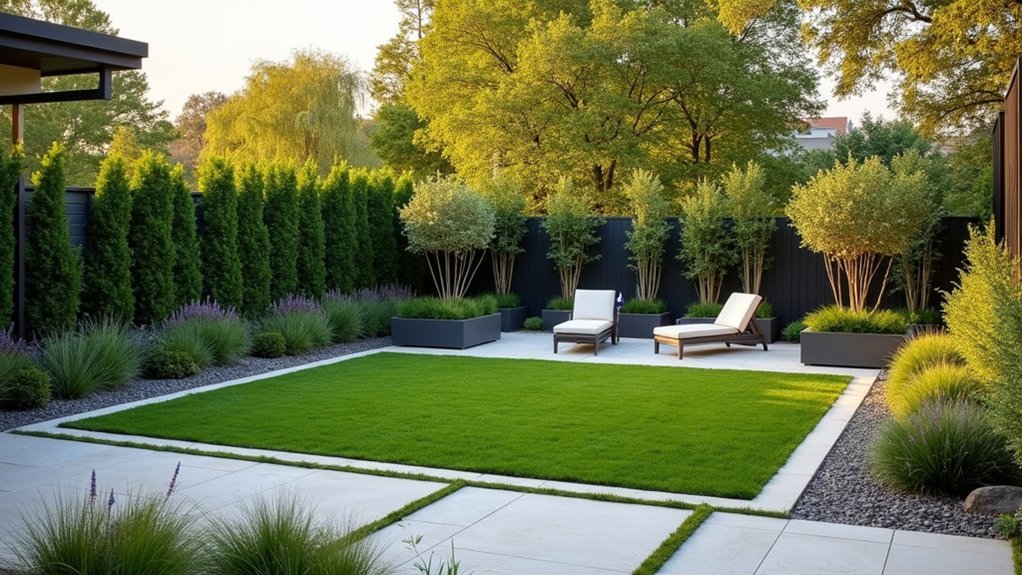
If you need more privacy but can’t spare a single square foot of turf, focus on the edges instead of the center. Use narrow border beds, fence-line strips, or the back of the patio to create privacy screening without shrinking the lawn’s play area.
Start with a simple plan: place taller plants at the rear and keep the bed just 18–30 inches deep. Choose columnar evergreens, clumping grasses, or slim shrubs that stay upright, so you don’t need constant trimming.
Boost planting density by spacing plants slightly closer than usual in the first two years, then thin or prune later as they fill in. Add a trellis with vines where roots can’t spread.
You’ll get quick coverage, controlled costs, and a clean turf edge.
Layer Lawn-and-Patio Beds for Year-Round Color
When you layer your lawn-and-patio beds like a staged backdrop, you get steady color without expanding the footprint or raising maintenance.
Start with a clean edge where turf meets bed, then place low growers in front, mid-height perennials behind, and a few upright shrubs as anchors.
You’ll control costs by repeating the same plants in drifts instead of buying one-offs.
For seasonal color, slot in hardy bulbs for spring, heat-tough annuals near the patio for summer, and ornamental grasses or asters for fall.
Keep winter interest with evergreen mounds or red-twig stems.
Finish with smart mulch options: shredded bark for slopes, composted fines for tight beds, or stone where splashback hits.
Refresh mulch yearly, not plants.
Frequently Asked Questions
What Permits or HOA Rules Apply to Patios and Lawn Changes?
Picture a new patio—will it pass? You’ll usually need Local building permits for hardscape, grading, drains, and sometimes sod. Check Homeowners association regulations for materials, size, setbacks, and approvals before you spend.
How Do I Estimate Total Costs for Lawn, Patio, and Planting?
You’ll estimate total costs by measuring areas, pricing materials and labor per unit, and adding delivery, permits, and contingency. Use cost estimation spreadsheets for each zone, then refine budget planning with 10–20% buffer.
Which Materials Are Most Slip-Resistant for Patios Around Sprinklers?
You’ll get the best grip from textured concrete, broom-finish pavers, flamed granite, or porcelain with high DCOF; funny how wet overspray finds your steps. Choose Slip resistant surfaces, prioritize sprinkler safety, and compare installed costs.
How Can I Make the Design Pet-Friendly Without Ruining Planting Beds?
You’ll protect beds by adding low edging, mulching paths, and giving pets a designated run. Choose pet safe plants and non toxic materials, use sturdy groundcovers, and install simple fencing or stepping stones to guide traffic.
What Maintenance Schedule Keeps Lawn Edges and Patio Joints Weed-Free?
You’ll keep edges and joints weed-free by inspecting weekly, trimming monthly, and sweeping joints twice weekly. Like guarding a border, you’ll use Edging techniques quarterly and spot-treat fast for Weed control, saving clients money.
About the Author