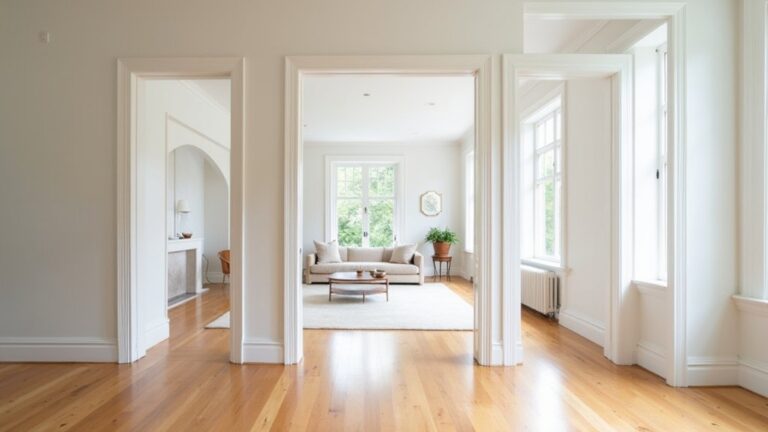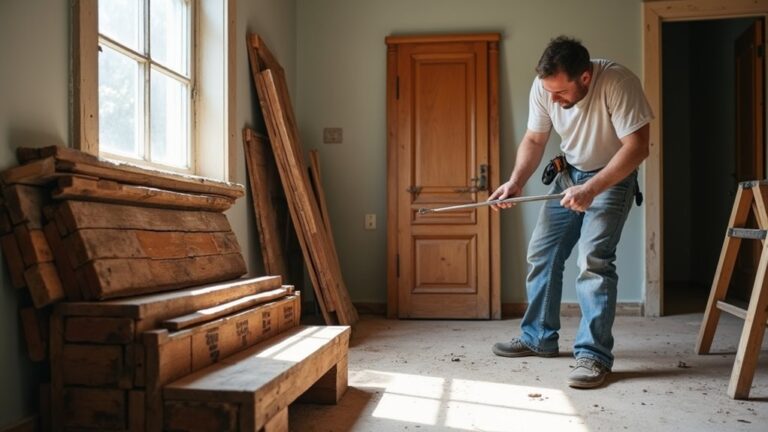
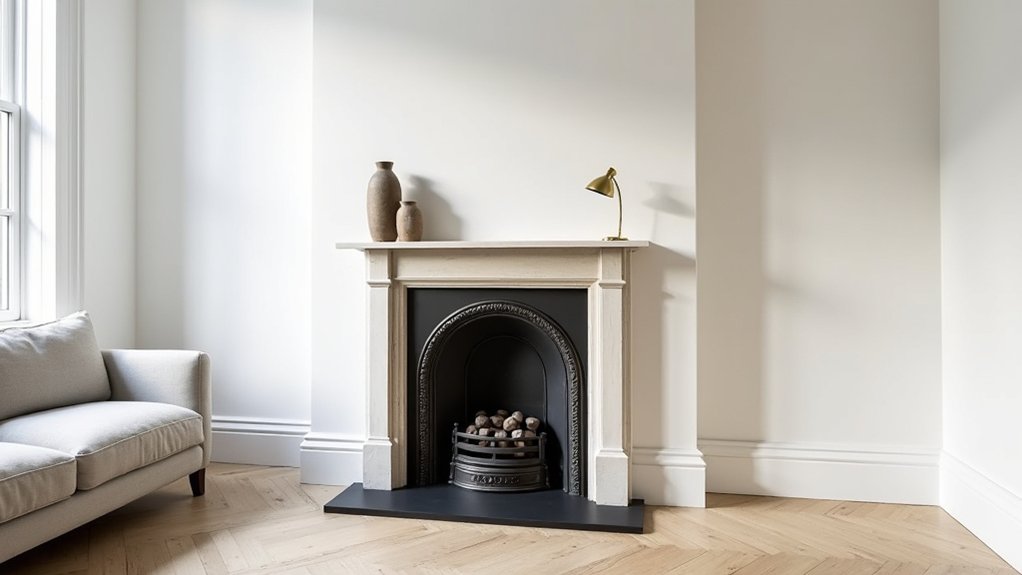
You match the shape, you echo the material, you refine the detail. Start by treating your restored fireplace as the room’s primary asset, then build a modern scheme that respects its proportions and updates its context. Use a controlled palette, mix period stone or tile with matte plaster or honed concrete, and choose clean-lined furniture to keep the surround from feeling heavy. The next decision is what makes it look intentional, not inherited…
Start With Your Restored Fireplace’s Style Cues
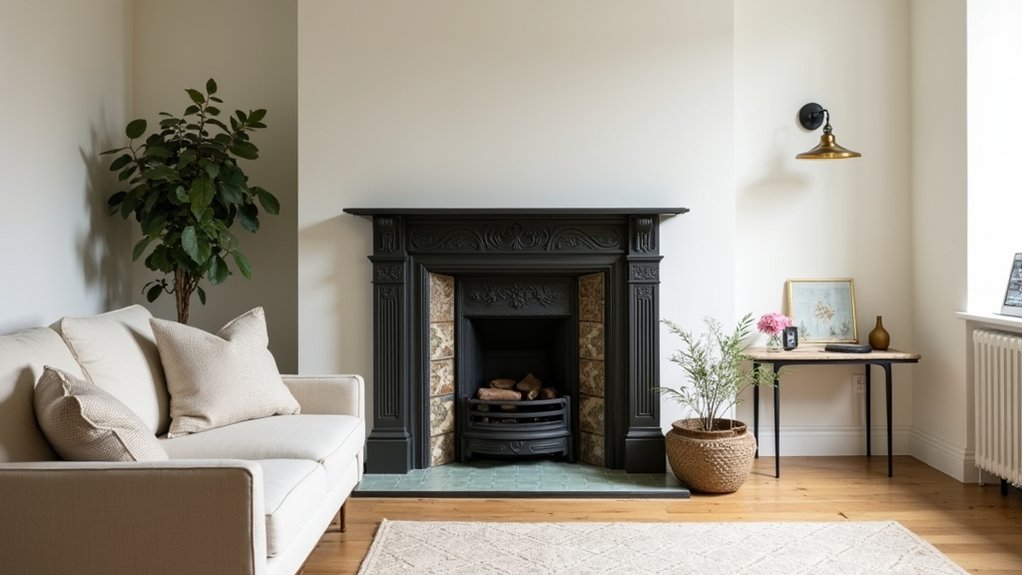
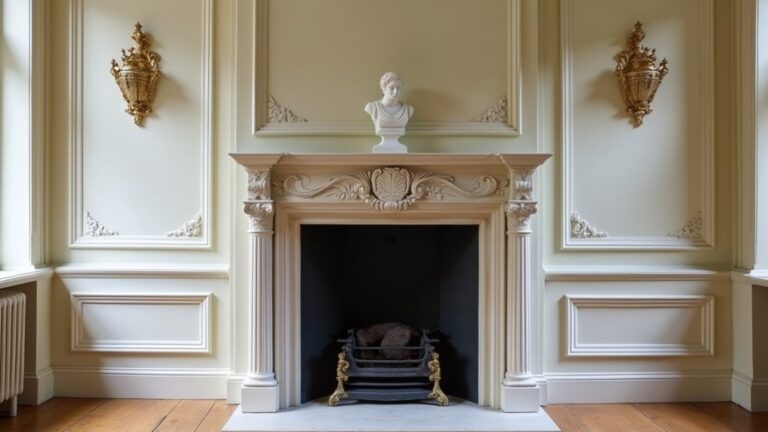
If you want your restored fireplace to look intentional rather than “added back in,” start by reading its style cues like a design brief. Identify the era signals: surround profile, mantel depth, tile geometry, cast-iron detailing, and hearth material.
Measure proportions and sightlines from key entry points so the fireplace anchors the room, not fights it.
Audit patina versus damage; decide what you’ll conserve, replicate, or discreetly repair to protect historical accuracy.
Confirm the correct firebox insert, grate, or screen type for the period, and verify flue and ventilation requirements before you commit to layout.
Specify finishes and fixings that match original workmanship standards, and schedule fireplace maintenance early so soot, rust, and loose joints don’t undermine the whole scheme.
Choose a Fresh Colour Palette Around the Fireplace
Where do you want your restored fireplace to sit on the spectrum—quietly blended in or deliberately spotlighted? Decide first, then build your palette with Color theory: match undertones, control contrast, and set a clear value range.
For a blended look, keep wall and trim within two steps of the surround’s lightness and repeat its undertone in adjacent textiles. For a focal moment, push contrast: deep, cool walls behind a pale surround, or a warm, saturated hue that frames the opening.
Lock cohesion through accessory selection. Choose one metal tone, one dominant wood tone, and two repeatable accent colours. Use art, cushions, and a rug to echo those accents at three heights, so the fireplace reads intentional, not accidental.
Pair Period Fireplace Materials With Modern Finishes
Although a period surround brings instant character, you’ll get the most value from it when you pair its honest materials—marble, slate, cast iron, or carved timber—with modern finishes that sharpen the contrast without fighting the original detailing.
Set glossy marble against honed concrete, microcement, or matte limewash so veining reads crisp. If you’ve got cast iron, use a low-sheen black metalwork paint and flank it with satin cabinetry or plaster for a clean edge.
With slate, choose brushed brass trims or stainless profiles to lift the tone without going brash. Protect antique woodwork with a clear hardwax oil, then specify flat-front joinery in a matching undertone.
Where vintage tiles exist, grout them in a tight, warm grey and run a seamless hearth line for precision.
Balance the Fireplace With Contemporary Furniture Shapes
Because a restored fireplace already commands the sightline, you’ll get a cleaner, more marketable room by counterbalancing it with contemporary furniture that stays low, crisp, and geometrically quiet. Choose sofas with slim arms, tight backs, and raised legs so the hearth reads as the hero, not the whole story.
Pair a rectilinear coffee table in stone, glass, or matte lacquer to echo the surround’s lines without copying Victorian detailing. If the firebox has Gothic influences—pointed arches, tracery, or carved capitals—answer with simple curves elsewhere: a barrel chair, a round side table, an oval rug.
Keep silhouettes consistent and scale disciplined: seat heights below the mantel line, no overstuffed skirts, no busy tufting. You’ll preserve period character while selling modern ease.
Style the Mantel So the Period Fireplace Feels Current
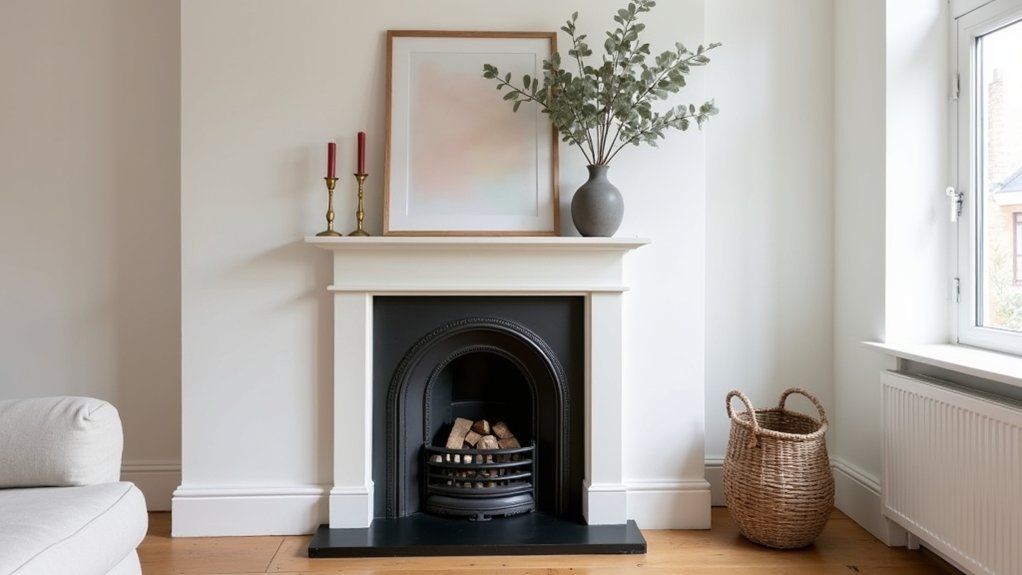
To make a period fireplace feel current, style the mantel with fewer, larger pieces that read intentional from the doorway. Anchor the composition with one oversized artwork or mirror, then add a single sculptural vase or bowl in a modern finish.
Keep Decorative accessories to odd-number groupings, vary heights, and leave negative space so the original surround stays the hero.
Use Lighting enhancements to shift the fireplace from “heritage feature” to “designed moment.” Flank the mantel with slimline sconces, or place a discreet picture light above the art to sharpen focus after dark.
If you prefer portable lighting, choose a small table lamp with a contemporary shade on one side only. Match metals to nearby hardware for a cohesive, sellable look.
Frequently Asked Questions
Do I Need Planning Permission to Reinstall a Period Fireplace?
You usually don’t need planning permission to reinstall a period fireplace, but you must check if your home’s listed or in a conservation area. Prioritise fireplace conservation and historical accuracy; building regs and approvals may apply.
What Safety Checks Are Required Before Using a Restored Fireplace?
You’ll need Fireplace safety checks: a professional Chimney inspection, flue integrity test, smoke draw test, and carbon monoxide alarm. UK fire data shows chimneys caused 40% of building fires—so you can’t skip certification, sweep, clearance.
Can I Convert a Period Fireplace to Gas or Electric?
Yes, you can convert a period fireplace to gas or electric, but you’ll need compatible Fireplace materials, correct flue/venting, and certified installation. Balance historical accuracy with efficiency by choosing discreet inserts and preserving original surrounds.
How Do I Improve Chimney Draught and Reduce Smoke Blowback?
To improve draught and stop smoke blowback, test the theory that a cold flue reverses flow—picture smoke spilling forward. Book chimney cleaning, seal leaks, add a top-sealing damper, warm the flue, fit a cowl for draft improvement.
What Are Typical Costs for Restoring and Fitting a Period Fireplace?
You’ll typically pay $1,500–$6,000 for fireplace restoration, plus $1,000–$5,000 in fireplace installation costs for lining, hearth, and labor. Your total depends on materials, structural repairs, permits, and local trades pricing.
About the Author