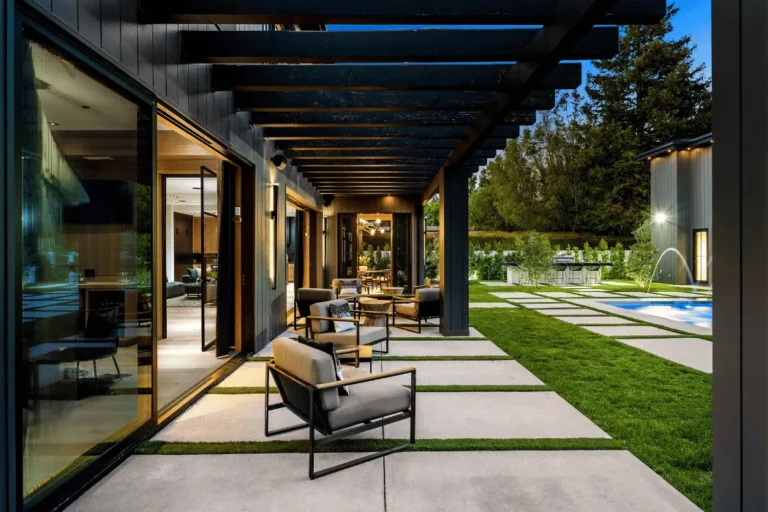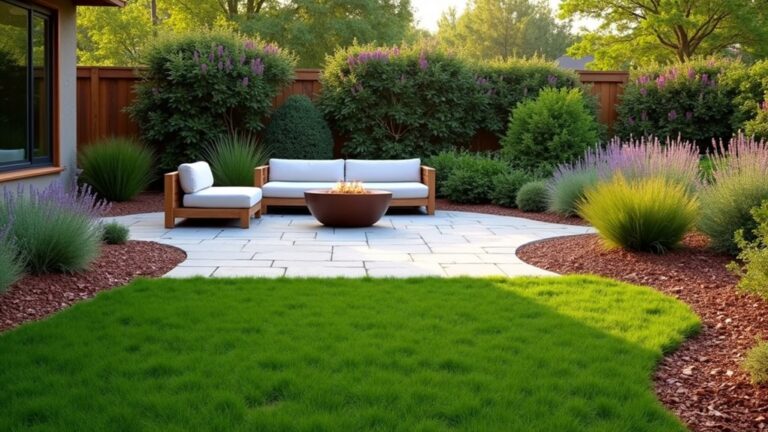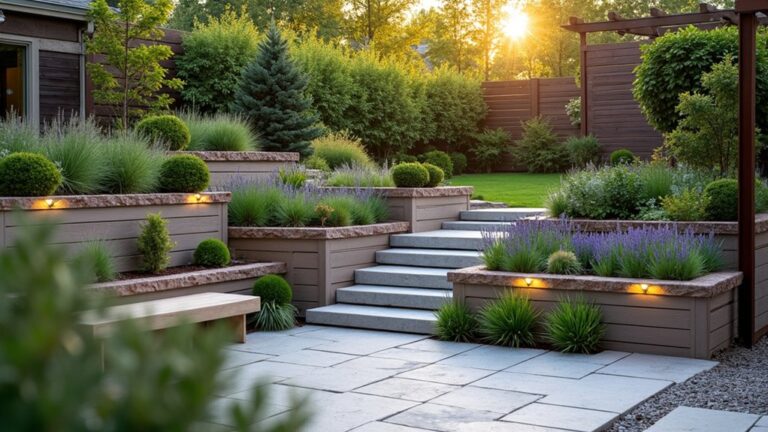

You’ll get a patio that feels pulled together faster if you start with how you actually use it—lounging, dining, or both—and sketch zones before you buy anything. Choose seating that fits your footprint, then stick to weather-ready basics like powder-coated metal or teak so you’re not replacing pieces every season. Add shade, an outdoor rug, and a few tough cushions to lock in comfort on a budget. Next, you’ll want to tackle privacy and night lighting…
Key Takeaways
- Plan a functional layout with clear, straight paths and align the seating zone with your most-used door for easy indoor-outdoor flow.
- Add shade and privacy using umbrellas, pergolas, shade sails, and layered plants or trellises with climbing vines for quick screening.
- Choose seating based on capacity and footprint, prioritizing fewer high-quality lounge pieces and keeping walk paths clear for chair movement.
- Define the seating area with a weather-resistant rug, durable surfaces, and compact tables or storage benches that double as serving space.
- Create atmosphere with layered lighting—string lights, solar path lights, and lanterns—and mix coordinated cushion textures and patterns for style.
Plan Your Patio Layout for How You Live

If you plan your patio around how you actually spend time outdoors, you’ll end up with a space that feels bigger, works harder, and wastes less money. Start by mapping your high-traffic paths: door to grill, door to garden, and door to trash/recycling. Keep these routes clear and straight so you don’t buy extra pavers to “fix” a bad layout later.
Next, design for Indoor flow by aligning the main patio zone with your most-used exit and the room it serves. Place shade or a focal point where you’ll naturally pause.
Add Storage solutions early: a narrow deck box along a wall, a weatherproof cabinet near cooking tasks, or a bench that hides tools. You’ll cut clutter, protect gear, and avoid replacing items too soon.
Choose Patio Seating by Size and Use
Because patio seating eats up more square footage (and budget) than almost anything else you’ll buy, choose it based on how many people you host and how you use the space day to day. Start by listing your typical seating capacity: two for weeknights, four to six for weekend dinners, or eight-plus for parties.
Measure your usable footprint, then map clear walk paths so chairs can slide out without blocking doors or grills. For small patios, pick a loveseat plus two compact chairs, or a bench that tucks under a table.
For lounging, prioritize a deep sofa and one ottoman over extra side chairs. Keep furniture style consistent with your home’s lines so the area feels intentional.
Buy fewer, better pieces, then add folding stools for overflow. Store extras indoors between gatherings.
Pick Patio Materials That Handle Weather
While your patio’s layout sets the vibe, the materials you choose decide how well it holds up through sun, rain, freeze-thaw cycles, and spills. Start with Weatherproof flooring: poured concrete, concrete pavers, or porcelain pavers resist staining and won’t warp. If you’re budgeting, choose standard pavers and spend on a good polymeric sand to lock joints and reduce weeds.
Seal natural stone to limit water absorption and salt damage; reapply on schedule. For composites or deck tiles, confirm UV ratings and drainage gaps so water doesn’t pool.
Next, pick Durable furniture materials that match your climate. Powder-coated aluminum won’t rust, teak weathers gracefully, and all-resin wicker beats damp. Use stainless or coated hardware, and pick quick-dry cushion cores to avoid mildew.
Add Patio Shade for All-Day Comfort
To keep your patio comfortable from morning to evening, you’ll want shade that fits your space and budget. Start by comparing shade structures—umbrellas, pergolas, awnings, or shade sails—then consider retractable options so you can adjust coverage as the sun moves.
Round it out with natural shade like small trees, trellised vines, or tall planters that block glare without a big price tag.
Choose Shade Structure Types
The right shade structure turns your patio into an all-day hangout by cutting glare, lowering surface temperatures, and protecting furniture from UV damage. Start by measuring your seating zone and tracking sun angles so you don’t pay for coverage you won’t use.
For tight budgets and small spaces, explore umbrella styles: market umbrellas suit dining sets, cantilever models cover sectionals without a center pole, and tilting frames chase late-day sun. Choose a weighted base sized for wind in your area.
If you want a built-in look, compare pergola designs in wood, aluminum, or vinyl; each can anchor to a slab and define zones. Keep maintenance in mind—powder-coated aluminum resists rust, while sealed wood needs periodic staining. Match color to cushions for cohesion.
Use Retractable Shade Options
How do you get shade when you need it—without sacrificing winter sun or patio views? Choose adjustable solutions you can open, angle, or stow in minutes. Wall-mounted retractable awnings let you extend coverage for lunch, then retract them to brighten the space later.
Pick a UV-rated, water-shedding fabric and a neutral frame color so it blends with your seating area. Measure projection and mounting height carefully to clear doors and keep runoff away from cushions.
For smaller budgets or rentals, folding canopies deliver instant shade and pack down fast. Look for vented tops to reduce wind lift, weighted legs, and replacement covers so you don’t buy a whole new unit. Add tie-downs for breezy afternoons.
Add Natural Shade Elements
When afternoon sun turns your patio into a hot spot, natural shade can cool it down without adding bulky hardware or blocking every view. Start with shade trees placed on the west or southwest edge so they intercept late-day rays; choose drought-tolerant natives and keep canopies 8–12 feet from slabs to reduce root lift.
If you need faster results, train vines on budget pergola options like a simple cedar kit or pressure-treated posts with cross slats. Plant grapes, wisteria, or hardy kiwi in large planters to control spread and protect paving.
Add a trellis screen behind seating for angled shade and privacy. Mulch deeply, install drip irrigation, and prune annually to maintain airflow and comfort.
Layer an Outdoor Rug and Cushions
Anchor your seating area with a weather-resistant outdoor rug that’s easy to hose off and won’t trap moisture.
Then mix cushion textures—like durable canvas with a few woven or knit covers—to add comfort without replacing your whole set.
Keep it cohesive by coordinating two or three colors and repeating one simple pattern, so you can swap pieces seasonally on a budget.
Choose Weather-Resistant Rug
Wondering what instantly makes a patio feel finished without spending much? Choose a weather-resistant rug that defines your seating zone and protects the surface below. Look for weatherproof textiles like polypropylene or recycled PET; they resist fading, mildew, and stains while staying easy to hose off.
For rainy climates, pick low-pile or flatweave options so water drains and the rug dries fast. Check for UV-treated labels and reinforced edges to prevent fraying. Size it so front legs of chairs and sofas sit on it, which keeps layouts stable.
Explore outdoor rug styles such as stripes to elongate small patios or tight geometrics to hide dirt. Add a non-slip pad made for outdoors to stop shifting.
Mix Cushion Textures
After you’ve defined your seating zone with a weather-resistant rug, make the setup feel softer and more styled by mixing cushion textures on top. Aim for textile contrast: pair smooth, tightly woven outdoor covers with nubby bouclé-style or ribbed performance fabrics, then add one quick-dry knit for tactile variety.
Start with what you’ve got and upgrade covers instead of buying new inserts. Shop end-of-season patio lines or indoor-outdoor pillowcases, then reuse existing forms. Keep fills practical: choose polyester that dries fast, and add a thin moisture barrier sleeve if your patio gets dew.
Mix sizes to boost comfort—one lumbar for back support, one oversized for lounging. Finish with one textured throw blanket in an outdoor-safe weave so you’ve got warmth without heavy bulk.
Coordinate Colors And Patterns
When you coordinate colors and patterns across your outdoor rug and cushions, the whole patio reads intentional without costing much. Start with one “anchor” color pulled from your home’s exterior or surrounding plants, then repeat it twice: once in the rug and once in a cushion. Add one neutral (tan, gray, or navy) to calm the set.
For Pattern mixing, follow a simple ratio: one large-scale pattern, one small-scale pattern, and one solid. Keep patterns in the same color family for easy Color coordination. If you’re on a budget, buy solid cushions and use two patterned pillow covers you can swap seasonally.
Choose a rug with built-in variation to hide dirt and extend its life. Measure your seating footprint so the rug frames all front legs.
Add Patio Lighting for Evening Hangouts
Three small lighting upgrades can turn your patio into a comfortable evening hangout without blowing your budget: start with a warm, layered mix of string lights for overall glow, a couple of solar path stakes or lanterns for safe footing, and one focused task light near the grill or table.
Hang string lights on a railing, fence, or pergola line, and plug them into a weatherproof outlet with a timer so you’re not turning them on nightly. Choose LEDs for low energy use and fewer bulb swaps.
Add lanterns with rechargeable candles to soften corners and create table-level light without cords.
For the task zone, use a clamp-on LED or motion-sensor sconce aimed downward to cut glare.
Keep everything outdoor-rated, and tuck cords in clips to prevent trips.
Use Patio Plants for Privacy and Softness
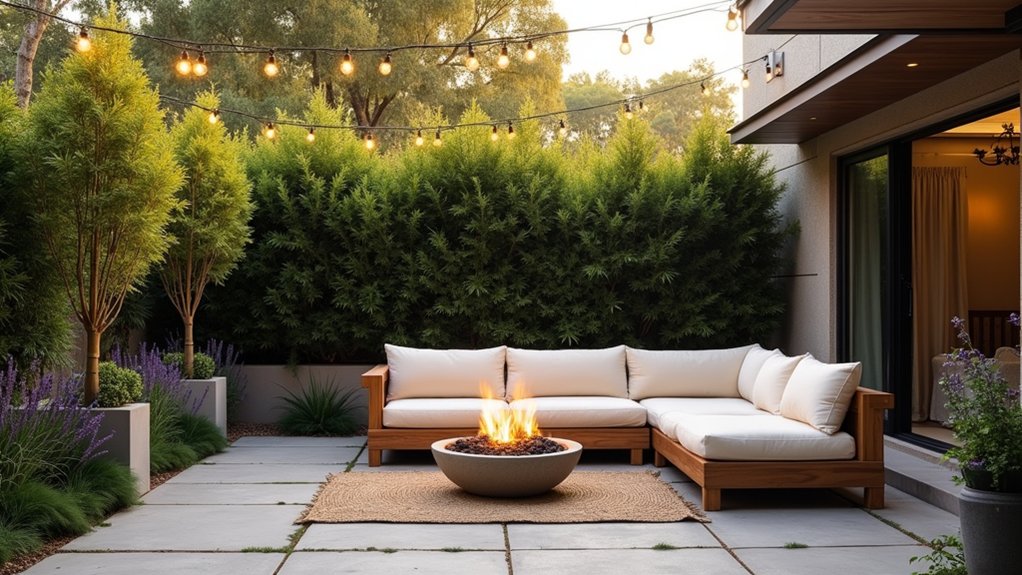
Good lighting keeps the patio usable at night, but plants make it feel private and comfortable in daylight and after dark. Build garden privacy by layering heights: tall grasses or bamboo in pots at the back, medium shrubs along the sides, and low herbs near the edge.
If you rent, rely on containers so you can move everything later. Choose tough, low-water picks like lavender, rosemary, or dwarf boxwood to cut maintenance and replacement costs.
Mix plant textures for a styled look—fine fescue, broad hosta leaves, and spiky yucca add contrast without extra decor.
Use inexpensive trellises with climbing jasmine or clematis to screen views fast.
Group pots to reduce soil, mulch, and watering time. Add drip emitters for savings.
Finish Patio Seating With Tables and Extras
Even if you’ve nailed the seating layout, a patio won’t feel finished until you add a few hardworking surfaces and small comfort upgrades. Start with at least one sturdy coffee table or pair of nesting side tables so every seat has a place for a drink. Choose powder-coated metal or sealed acacia for durability, and add felt pads to protect pavers.
For outdoor dining, use a compact bistro table or a folding drop-leaf option that stores flat. If you’re tight on budget, repurpose a weatherproof storage bench as a serving surface. Add a tray to corral essentials, plus clip-on cup holders for armless chairs.
Finish with a fire pit and a heat-safe ledge, then keep throws in a lidded bin nearby.
Frequently Asked Questions
Do I Need a Permit to Build or Renovate a Patio?
You might need a permit, depending on your city and scope. Check local Permit requirements and renovation regulations for size, height, setbacks, and drainage. Calling the building department early saves fees, redesigns, and contractor delays.
How Can I Keep Mosquitoes and Bugs Away From the Seating Area?
You can cut bites by 80% by removing standing water. Use mosquito control: empty saucers weekly, run a fan, add screens. Choose budget bug repellents like citronella, permethrin-treated gear, and DEET wipes.
What’s the Best Way to Store Patio Furniture During Winter?
Store patio furniture indoors if you can; otherwise, clean, dry, and stack it under breathable covers. For Furniture maintenance, tighten hardware and oil hinges. Protect Outdoor decor cushions in sealed bins, off cold concrete.
How Do I Protect Patio Surfaces From Stains, Mold, and Algae?
You’ll protect patio surfaces by regular surface cleaning, rinsing debris weekly, and scrubbing with mild detergent. Seal porous stone/concrete yearly for stain prevention. Improve drainage, trim shade, and use diluted vinegar or oxygen bleach to stop mold/algae.
What Are Budget-Friendly Ways to Upgrade an Existing Patio Fast?
You can upgrade fast by doing DIY improvements: pressure-wash, repaint or stain, and add peel-and-stick pavers. Use budget landscaping—mulch, edging, planters, and solar lights. Thrift cushions, hang string lights, and seal surfaces.
About the Author