
You can keep your loft’s original brick and steel looking authentic, but you’ve got to treat them like working materials, not décor. Start with a close inspection for hairline cracks, soft mortar, rust bloom, and any damp staining—those clues tell you what’s failing first. Clean brick gently, control moisture at the source, and protect steel without trapping humidity. The next step is knowing which “fixes” quietly cause the most damage…
Inspect Your Loft’s Brick and Steel First

Before you seal, paint, or even hang art, inspect your loft’s exposed brick and steel so you know exactly what you’re preserving. Walk the perimeter and photograph every elevation, then map hairline cracks, bulges, spalled faces, and powdery mortar.
Check for efflorescence and damp staining around sills, joist pockets, and party walls; moisture drives value-killing deterioration and failed finishes.
On steel, look for flaking mill scale, orange bleed-through, pitting, and lifted fireproofing; probe suspect spots with a pick, not guesses.
Verify load paths: confirm columns, beams, and lintels show no deflection, loose connections, or ad-hoc welds. Bring in a licensed engineer when you see movement; you’ll pair Historical preservation with targeted structural reinforcement.
Clean Exposed Brick Without Damaging It
Even if your brick looks “just dusty,” treat cleaning as conservation, not a cosmetic scrub—aggressive methods can etch faces, dissolve mortar, and permanently mute that original patina buyers pay for.
Start dry: vacuum with a soft brush and wipe with a microfiber cloth. For grime, use a pH-neutral cleaner diluted in warm water, apply with a natural-bristle brush, and rinse lightly; avoid acids, bleach, and pressure washers.
Spot-test in an inconspicuous bay and stop once the surface reads authentic, not “new.” Keep adjacent steel protected: mask edges, then finish with controlled Steel polishing to remove fingerprints without sling.
When the brick is fully clean and stable, consider breathable Brick sealing only where staining risk is highest, never as a gloss coat.
Stop Moisture Before Brick Starts Failing
When moisture gets behind exposed brick, it doesn’t just leave a dark patch—it mobilizes salts, softens mortar, and starts a slow cycle of efflorescence, spalling, and steel corrosion that devalues a loft fast. Your first move is diagnosis: map stains after rain, check window heads, parapets, and roof-wall intersections, and confirm rising damp with a moisture meter.
Then reduce the load. Tighten humidity control with a properly sized dehumidifier, balanced ventilation, and sealed HVAC penetrations so interior vapor doesn’t condense on cold masonry.
Outside, prioritize reversible waterproofing solutions: repair flashing, repoint with compatible lime mortar, and add discreet drip edges before you consider any coating. If you must seal, use a breathable silane/siloxane water repellent, never a film-forming paint that traps moisture.
Keep Original Steel Beams Rust-Free
Although original steel beams read as “set-and-forget,” they’re only as durable as the moisture and air quality you allow around them. Start with Rust prevention: keep indoor RH at 35–55% using a dehumidifier, especially near kitchens, baths, and HVAC returns. Vent dryers and range hoods outside, and fix condensate line leaks fast.
For Surface preservation, vacuum dust from ledges and beam flanges, then wipe with a barely damp microfiber and dry immediately—standing water accelerates oxidation. Watch for orange bloom at bolt heads, welds, and where steel meets masonry; those are your early-warning zones. Keep insulation and stored items off the steel to maintain airflow.
Finally, schedule an annual flashlight inspection after humid season so you catch issues before they scale.
Repair Brick and Steel Without Losing Patina
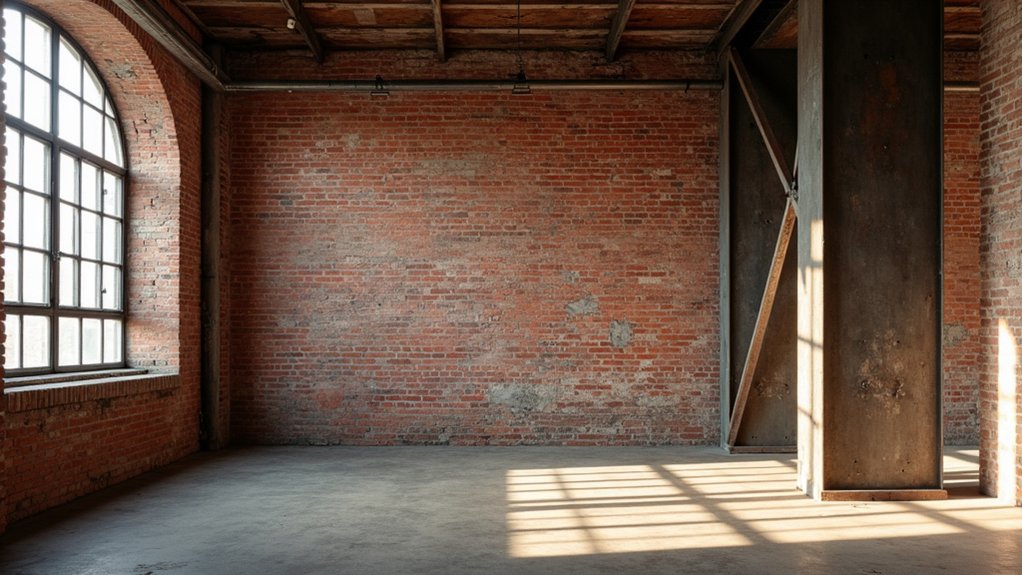
Because buyers and appraisers read patina as proof of authenticity, you’ll want repairs that stabilize brick and steel without making them look “new.” Start by matching materials and methods to the original assembly: use lime-based mortar where historic brick needs to breathe, tuckpoint only the failed joints, and keep grinding, sandblasting, and glossy sealers off the table unless an engineer specifies them.
For brick, clean with low-pressure water and nonionic detergent, then spot-repair spalls with compatible units, not hard modern brick.
For steel, remove only active rust, feather edges, and prime with a matte, corrosion-inhibiting system that won’t telegraph as fresh paint.
Document Restoration techniques and keep invoices; they support value. Your goal is Material preservation: stable structure, original texture, and honest age.
Frequently Asked Questions
How Do I Meet Building Codes While Keeping Exposed Brick and Steel?
You’ll meet codes by hiring an architect to verify Structural integrity, securing permits, adding fire-rated coatings, repointing brick, and protecting steel from corrosion. Coordinate inspections, document Historical preservation, and use concealed reinforcements to keep everything exposed.
Will Sealing Brick or Steel Affect Indoor Air Quality or Odors?
Yes—sealing can affect air quality concerns if you pick high-VOC products. You’ll reduce dust and musty smells for odor prevention, but apply low-odor, water-based sealers, ventilate well, and follow cure times.
Can I Insulate Over Brick Without Hiding It or Causing Condensation?
Yes—you can insulate over brick without hiding it if you use interior insulation options like aerogel blankets or vacuum panels behind a slim furring system, and detail moisture barriers carefully to prevent trapped vapor and condensation.
How Do I Safely Hang Shelves or Art on Old Brick Walls?
You’ll hang shelves or art safely by locating solid brick, avoiding mortar, and using appropriate wall anchors. Use sharp masonry bits, gentle drill techniques, and controlled depth; vacuum dust, then test-load gradually. Consider heavier-duty sleeve anchors.
Does Exposed Brick and Steel Increase Heating or Cooling Costs?
Yes, exposed brick and steel can raise heating and cooling costs—why gamble? You’ll lose Energy efficiency because steel conducts heat and brick lacks thermal insulation unless you add insulation, air sealing, and thermally broken windows.
About the Author