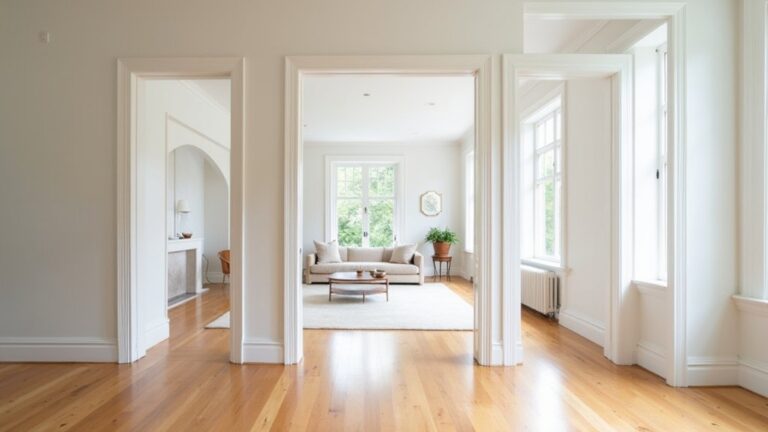

Your bedroom floor is the quiet shoreline where every day lands and recedes. You want warmth underfoot, softer acoustics, and a surface that suits your style and routine. Carpet feels hushed and plush, while hardwood paired with a well-chosen rug adds structure and timeless character. If budget or durability leads, laminate and luxury vinyl shift the balance. Prefer sustainable comfort? Cork and bamboo change the mood in different ways—but which one fits your space best?
Key Takeaways
- Prioritize warmth, softness, noise control, and easy cleaning based on your climate, subfloor, and budget.
- Carpet is the coziest and quietest choice; pick dense low-to-mid pile or plush, with stain-resistant fibers for easier upkeep.
- Hardwood delivers timeless style and long lifespan; use quality underlayment and area rugs to reduce noise and add warmth.
- For budget-friendly wood looks, laminate feels firmer and louder, while luxury vinyl is quieter and more spill-resistant.
- For sustainable comfort, cork is warm, resilient, and sound-dampening; bamboo is firmer, modern-looking, and fast-renewable.
Bedroom Flooring Basics: Warmth, Noise, Cleaning, Budget

Because bedrooms need to feel calm and comfortable, your flooring choice should balance four essentials: warmth underfoot, sound control, easy cleaning, and a budget that fits the room’s role in your home.
Start by matching thermal comfort to climate and subfloor; a quality underlayment can add insulation without changing the finished look.
For noise, you’ll reduce footfall and room-to-room transmission by selecting resilient surfaces and specifying acoustic pads, especially in upstairs rooms.
Cleaning needs depend on lifestyle: choose low-sheen, sealed finishes that resist dust, and keep seams tight at thresholds.
Budget wisely by factoring lifespan, refinishing potential, and repairability—not just material price.
Personalization options include plank width, tone, and edging.
Installation considerations cover moisture testing, leveling, and progression at closets.
Carpet Bedroom Flooring: Warm, Quiet, and Soft
When you want a bedroom that feels instantly quieter and more inviting, carpet delivers the most noticeable comfort per square foot. You’ll soften footfall, reduce echo, and make cold mornings feel gentler.
Choose a dense, low-to-mid pile for a tailored look, or a cut-pile plush for a cocooning vibe. Color and texture matter: heathered neutrals hide lint, while subtle patterns add depth without visual noise.
Pair it with Luxury underlay to improve cushioning, insulation, and acoustic control, especially in upstairs rooms.
For carpet maintenance, you’ll want regular vacuuming, quick spot treatment, and periodic deep cleaning to keep fibers springy and the surface crisp. Opt for stain-resistant yarns if you snack or sip in bed.
Hardwood Bedroom Flooring: Timeless Look (and How to Quiet It)
Carpet excels at softness, but hardwood brings a refined, architectural character that instantly elevates a bedroom’s look.
You’ll get Aesthetic versatility: white oak reads airy and modern, walnut feels rich and cocooning, and wide planks make small rooms seem calmer. Choose a matte finish to hide micro-scratches and keep glare low beside bedside lamps.
To quiet footfall, you can add a high-density underlayment beneath engineered boards, then anchor the space with a thick area rug and felt pad near the bed path.
If you’re installing upstairs, consider acoustic-rated underlayment and seal perimeter gaps to reduce flanking noise.
Expect installation challenges around uneven subfloors, door clearances, and gradual changes; plan thresholds and baseboard details early for a crisp, built-in finish.
Budget Bedroom Flooring: Laminate vs Luxury Vinyl
If you want a high-end look without the premium price tag, laminate and luxury vinyl plank (LVP) both deliver convincing wood visuals for bedrooms—but they feel and perform differently underfoot.
Laminate’s rigid core can feel firmer and slightly louder, yet premium underlayment helps soften steps and adds warmth.
LVP typically feels quieter and more forgiving, and it handles occasional spills better, making it safer near ensuite doors or kids’ rooms.
For design, choose matte finishes and longer planks to avoid a “budget” read.
Your installation considerations differ: laminate prefers flat, dry subfloors and careful expansion gaps; LVP tolerates minor imperfections and often installs faster.
For Eco friendly options, look for low-VOC certifications and phthalate-free LVP or responsibly sourced laminate cores.
Sustainable Bedroom Flooring: Cork vs Bamboo

Although both materials earn sustainability points, cork and bamboo create very different bedroom experiences.
Cork feels softly resilient underfoot, dampens sound, and holds warmth, so your room stays quieter and cozier. Its subtle, speckled pattern pairs well with relaxed, modern palettes and reads organic without looking rustic.
Bamboo delivers a cleaner, linear grain and a firmer step that suits minimalist or contemporary bedrooms. You’ll get stronger scratch resistance in strand-woven options, but less natural cushioning, so plan for a plush rug beside the bed.
As eco-friendly materials, both rely on renewable resources: cork harvests bark without felling trees, while bamboo regrows quickly.
Choose cork for comfort-first serenity; choose bamboo for crisp style and durability.
Frequently Asked Questions
What Flooring Is Best for Allergy Sufferers in Bedrooms?
You’ll love how the “coziest” choice for allergies is hard surface: sealed hardwood, luxury vinyl, or tile. These hypoallergenic flooring options minimize dust. Choose allergy friendly materials, low-VOC finishes, and washable rugs you can launder.
Can I Install Bedroom Flooring Over Radiant Floor Heating?
Yes, you can install bedroom flooring over radiant heating if you confirm Radiant heat compatibility. Prioritize Flooring material selection: engineered wood, luxury vinyl, tile, or thin carpet. Follow temperature limits, use proper underlayment, and acclimate planks.
How Long Does Bedroom Flooring Installation Typically Take?
You’ll typically finish bedroom flooring installation in 1–3 days, depending on subfloor prep, acclimation, and trim details. You’ll speed timelines by planning Flooring maintenance and doing a Cost comparison before ordering, minimizing delays.
What Bedroom Flooring Works Best for Pet Claws and Accidents?
Like armor underfoot, you’ll want luxury vinyl plank or porcelain tile; they resist Pet scratches and handle accidents fast. You’ll boost Flooring durability with textured finishes, waterproof cores, sealed seams, and easy-clean, matte surfaces.
Should I Use an Underlayment, and Which Type Is Best?
You should use flooring underlayment; it improves acoustics, comfort, and moisture control. For the best underlayment, choose dense cork for warmth, rubber for sound, or foam with vapor barrier under LVP/laminate. Match flooring specs.
About the Author