

In the past year, commuter-belt searches for Berkshire riverside homes have risen by over 20% on major UK property portals. You’re not just chasing more space; you’re optimising rail times, school catchments, and price per square foot while trading Zone 2 noise for Thames-side walks. Windsor, Maidenhead, and Reading keep London within reach, but the value gaps between postcodes are widening—so where should you focus first?
Key Takeaways
- Prioritise Reading, Maidenhead, and Slough for sub-45-minute London trains, frequent services, and strong liquidity driven by Crossrail connections.
- Choose Thames-side value pockets like Pangbourne, Purley-on-Thames, Windsor, and Eton for lifestyle appeal, character, and sometimes discounted pricing.
- Target homes within a 10-minute walk of stations and key amenities to maximise resale demand, rental appeal, and price-per-square-foot value.
- For families, focus on villages like Cookham, Wargrave, and Bray with “Outstanding” primaries and strong secondary pathways to protect long-term demand.
- Track days-on-market, price reductions, and planned developments to spot shifting momentum and avoid areas constrained by flood risk or poor connectivity.
How to Choose Where to Buy in Berkshire
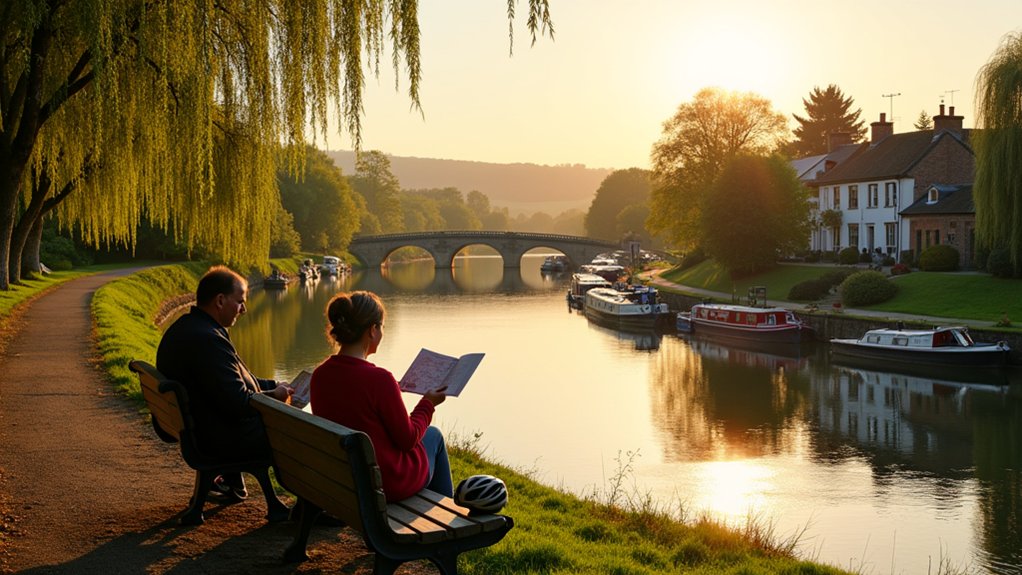
While Berkshire offers everything from commuter hubs to riverside villages, you’ll choose smarter if you anchor your search to three variables: your London commute (rail time, frequency, and season-ticket cost), your housing budget versus local price trends (especially near Crossrail/Elizabeth Line links and fast services into Paddington or Waterloo), and the lifestyle infrastructure you’ll actually use (school performance, flood risk along the Thames, walkability to town centres, and access to the M4/M3 corridors).
Next, map a 10-minute catchment around stations and compare peak vs off-peak service patterns; reliability often beats marginal speed. Stress-test “Affordable neighborhoods” by checking planned developments, conservation constraints, and broadband/mobile coverage.
If you want “Historic districts,” quantify the trade-off: tighter planning rules can cap extension potential but may stabilise streetscape quality. Finally, verify flood-zone ratings, parking controls, and GP/dentist capacity before you bid.
Berkshire House Prices by Area (Quick Guide)
You’ll see Berkshire prices split into three clear tiers when you compare sold-price data and current asking trends. Prime commuter hotspots command the highest £/sq ft and tighten fastest when rail times to London stay competitive.
While riverside value pockets often trade at a discount despite strong lifestyle demand. Luxury market leaders top the price tables, but you’ll want to track liquidity—days on market and price reductions—because that’s where momentum shifts first.
Prime Commuter Hotspots
As London office attendance stabilises and hybrid schedules stick, demand in Berkshire’s fastest rail-linked towns has stayed resilient, keeping prices firm in prime commuter hotspots such as Reading, Maidenhead, and Wokingham.
You’ll typically pay a premium for sub-45-minute rail access, with the best-performing commuter neighborhoods clustered around mainline stations and employment hubs.
In Reading, new-build supply has increased, yet family houses near schools still outpace flats on annual growth.
Maidenhead values track Crossrail reliability: stronger service days tighten stock and reduce discounting.
In Wokingham, limited turnover supports higher price-per-square-foot, especially for detached homes.
If you’re considering riverfront properties, expect sharper competition where walk-to-station links combine with Thames-side amenities, pushing achieved prices above wider town averages.
Riverside Value Pockets
Although Thames frontage often commands a premium, you can still find “riverside value pockets” in Berkshire where achieved prices sit below the headline hotspots—typically in stretches with longer walks to rail, flood-risk pricing adjustments, or fewer cafés and marinas.
So the best buys cluster in pockets of Pangbourne and Purley-on-Thames, quieter parts of Twyford/Wargrave, and select streets around Windsor and Eton that trade a little station convenience for more square footage per pound.
You’ll often see smaller differentials on modern flats, but bigger spreads on Riverfront cottages, where condition and insurance history drive negotiations.
Track sold-price per sq ft rather than asking prices, and expect discounts where EPC ratings are weaker or parking’s tight.
If you want the boating community without peak mooring fees, target streets one row back from the towpath.
Luxury Market Leaders
Riverside value pockets reward buyers who’ll trade a bit of convenience for sharper £/sq ft. At the other end of the spectrum, Berkshire’s luxury market leaders set the county’s price ceiling and move on a different set of drivers—school catchments, station speed to Paddington/Waterloo, privacy, and acreage.
You’ll see this most clearly in Ascot, Sunningdale, and parts of Windsor and Maidenhead, where prime streets hold up even when wider Market trends soften. Prices skew to detached homes with gated plots, while turnkey refurb quality and energy performance increasingly separate best-in-class from “needs work.”
Luxury branding matters too: names, golf clubs, and riverside addresses compress negotiation margins. If you’re buying here, you’ll pay for scarcity, but you’ll also get liquidity when stock tightens again.
Best Places to Buy in Berkshire for London Commutes
If you’re balancing a London salary with Berkshire space, commute time and rail frequency will drive most buying decisions. Look first at Reading: fast services reach Paddington in about 25 minutes, and Crossrail from nearby stations broadens access to the City.
Slough and Maidenhead keep journey times near 15–25 minutes, and buyers increasingly target commuter friendly neighborhoods around stations for walkability and rental demand.
For value, Bracknell and Wokingham typically trade a longer ride (roughly 40–55 minutes to Waterloo/Paddington routes) for more square footage, newer stock, and more affordable housing options.
If you need predictable returns, prioritise places with multiple trains per hour, parking capacity, and steady school catchment demand, then compare price-per-square-foot against time-to-platform and reliability metrics.
Best Thames-Side Towns to Buy in Berkshire
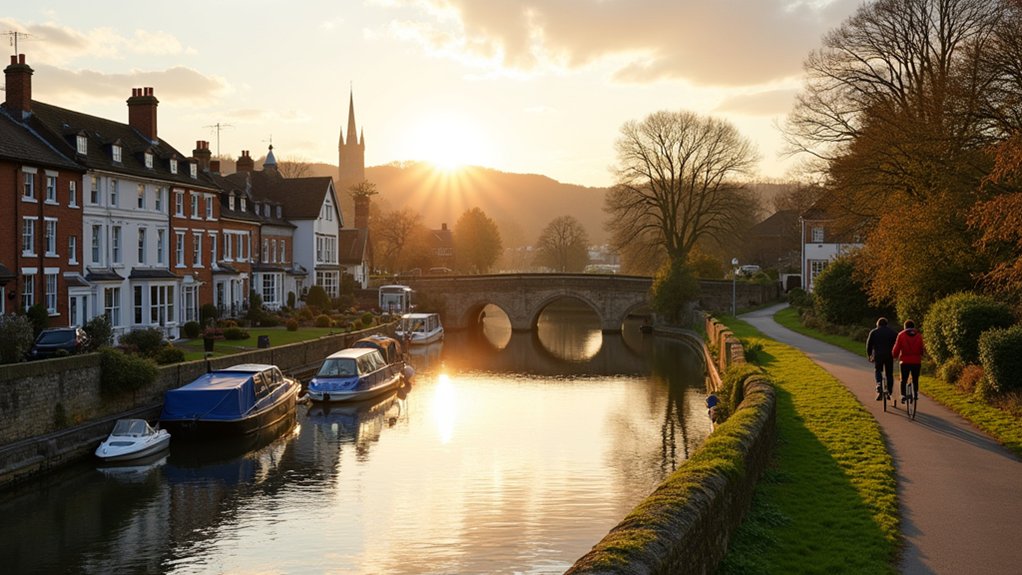
Because Thames frontage consistently prices at a premium—driven by limited supply, flood-risk screening, and strong lifestyle demand—you’ll get the best risk-adjusted value in Berkshire by targeting towns that pair a walkable riverfront with reliable rail links, resilient planning policy, and proven buyer liquidity.
Start with Maidenhead: Crossrail cuts perceived commute friction, and transaction volumes stay deep, supporting exit liquidity even when rates rise.
In Windsor, you’re buying scarcity—tight conservation controls and tourism-driven amenity density keep demand broad, especially near Thames side cafes and towpath access.
For a slightly lower entry point, look at Reading’s Caversham/Thames quarter: strong rental demand, faster sales, and ongoing centre investment underpin price support.
Prioritise homes with Riverfront gardens only after you’ve cleared flood mapping, insurability, and future resilience works.
Best Villages to Buy in Berkshire for Schools
If you’re buying in Berkshire with schools as your key filter, you’ll want villages with outstanding primary catchments where demand stays resilient and days-on-market trend lower.
You can narrow the shortlist by mapping Ofsted “Outstanding” primaries against catchment boundaries, then stress-testing commute times and planned housing growth that can shift intakes.
Next, focus on villages feeding top secondary school areas, because consistent results and strong admissions profiles typically correlate with tighter supply and firmer pricing.
Outstanding Primary Catchments
While Berkshire’s market still rewards commutable addresses, school-led demand increasingly sets the price floor in village hotspots, and outstanding primary catchments sit at the top of that list. You’ll see tighter stock and faster deal cycles within walkable radiuses of Ofsted “Outstanding” primaries, where family buyers outbid discretionary movers.
In villages such as Cookham, Wargrave, and Bray, pricing tracks term-time search spikes and September completions, with premiums strongest for three- and four-bedroom houses over extendable cottages. You don’t just buy classrooms; you’re buying lifestyle fundamentals—River views that anchor scarcity, and Historic landmarks that protect character and limit overdevelopment.
If you can prioritise catchment-first shortlists and act quickly on well-presented listings, you’ll reduce renegotiation risk and increase resale liquidity later.
Top Secondary School Areas
Outstanding primaries often get families through the first move, but secondary options usually lock in long-term demand and widen your resale buyer pool.
In Berkshire, you’ll see this effect most clearly around Reading and Wokingham, where consistently strong School rankings track closely with tighter catchments and faster time-to-offer for family homes.
If you’re prioritising selective pathways, target villages feeding grammar options in Slough and the wider Thames Valley; buyers pay for probability, not just postcode.
For a non-selective route, look at Warfield, Binfield, and Arborfield, where newer housing stock overlaps with high-performing secondaries and measurable progress scores.
You’ll also future-proof value by checking breadth of extracurricular activities—sport, music, and STEM clubs correlate with stronger sixth-form retention and lower mid-cycle moves.
Best Market Towns to Buy in Berkshire for Culture
Because Berkshire’s market towns combine commuter-friendly rail links with year-round arts programming, they’ve become a clear hotspot for culture-led buying in 2024–2026. If you’re targeting lifestyle value plus liquidity, focus on Newbury, Windsor, and Hungerford, where demand tracks closely with walkable centres and evening economies.
In Newbury, you’ll get a theatre-led calendar, historic festivals, and local art galleries clustered near the station, supporting stronger rental interest among young professionals.
Windsor gives you museum-grade heritage and river events that keep footfall high beyond peak tourist weeks, which buyers price into resale prospects.
Hungerford’s antiques and craft scene attracts weekenders, and its fast rail access helps you hedge against seasonality.
Prioritise homes within 10 minutes’ walk of venues and stations for best long-run pricing.
Frequently Asked Questions
What Are the Additional Costs of Buying in Berkshire Beyond the Purchase Price?
Beyond the price, you’ll pay stamp duty, survey, Mortgage approval charges, legal fees, searches, and Land Registry. You’ll also budget moving, mortgage arrangement, valuation, insurance, and possible service charges; these costs trend 2–5% overall.
Do I Need a Flood Risk Survey When Buying Near the Thames?
Yes—you should, because calm river views can hide rising risk. You’ll use Flood risk assessments to confirm exposure, price negotiation, and mortgage viability; it also protects property insurance, as premiums and exclusions track Environment Agency mapping.
How Do Berkshire Council Tax Bands Vary Between Districts?
You’ll see Property tax vary mainly because districts apply different Council banding mixes: higher-value areas skew toward Bands D–H, while others cluster in A–C. Check each council’s annual rate table and your property’s band.
Are There Major Planned Infrastructure Projects That Could Affect Property Values?
Yes—you’ll see a few “quiet upgrades” that can shift prices. Track urban development allocations and transportation improvements like rail-station capacity, road junction works, and broadband rollouts; planning timelines and funding commitments often correlate with outperformance.
What Are the Rules and Costs for Extending or Renovating Listed Buildings in Berkshire?
You’ll need Listed Building Consent (often plus planning) for most changes; historic preservation rules limit materials and layouts. Budget £2k–£10k+ for surveys/applications, 10–20% higher build costs; seek renovation grants locally.
About the Author