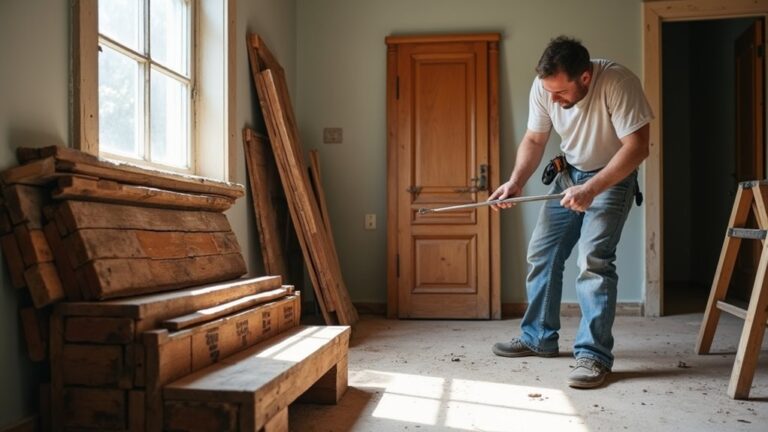

What is it about the appeal of the Classical Georgian Fireplace, in a freshly renovated property? You’re renovating a draughty 1890s terrace and pick up a reclaimed Georgian surround at a salvage yard for less than a new stove. Once it’s in, you notice how the straight jambs, balanced opening, and tidy mantel line make the whole wall feel calmer, even beside muddy boots and firewood baskets. But before you commit, you’ll want to know what proportions to look for, which materials hold up best, and what can trip you up on install…
Key Takeaways
- Its balanced rectangular opening and crisp symmetry create a calm, timeless focal point without visual clutter.
- Simple, disciplined mouldings and a modest mantel suit both period homes and modern minimal interiors.
- Durable materials like marble, limestone, or slate offer clean edges, easy maintenance, and long-lasting wear.
- Practical proportions—wider than tall with straight jambs—support effective smoke draw and comfortable fireside use.
- Restoring one preserves heritage value while upgrading safety through flue tests, liners, and proper clearances.
Classical Georgian Fireplace: Key Features and Tell-Tale Signs
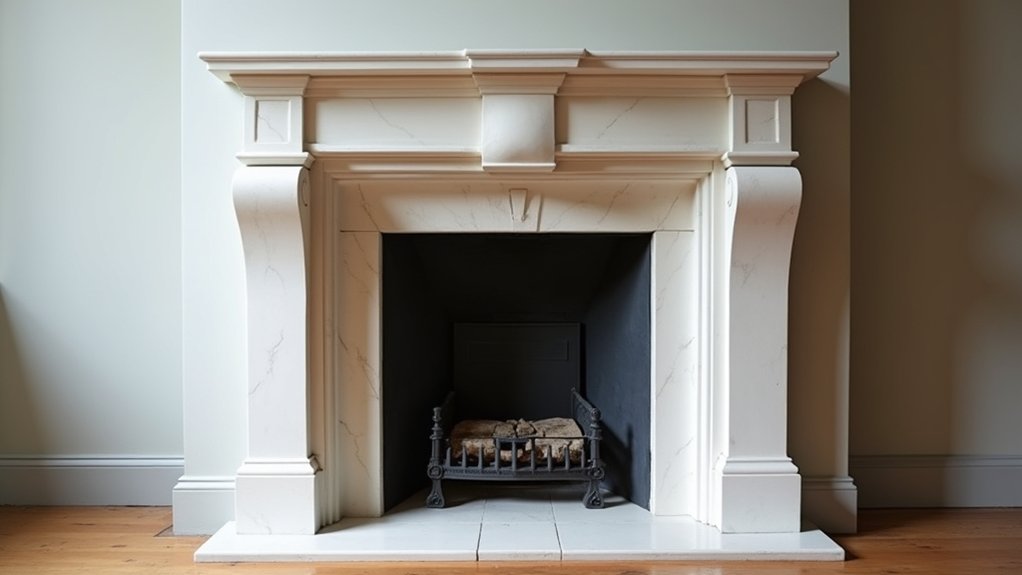
Although Georgian design looks refined, you can spot a true classical Georgian fireplace by checking a few practical details: a balanced, rectangular opening; a crisp, symmetrical surround; and a simple, disciplined mantel that doesn’t try to steal the show.
Look for tight joints, square corners, and stone or painted timber that can handle hard use after a muddy hike. You’ll often see understated carving, slim pilasters, and a hearth that sits flush enough for easy sweeping.
If you’re restoring on a budget, choose lime plaster repairs, off-the-shelf slips, and salvaged stone to keep costs down. Avoid fussy Victorian design add-ons like heavy brackets or over-ornate tiles. To get a great choice of reclaimed Georgian Fireplaces you should check out Nostalgia who have a wide choice of options.
For contemporary adaptations, keep the face clean, upgrade the liner, and add a discreet stove guard for safety.
Georgian Fireplace Proportions: Openings, Mantels, Symmetry
When you’re sizing up a Georgian fireplace, start with the proportions, because they tell you fast whether it’ll look right and work well after a wet day outdoors. Aim for a fire opening that’s wider than it’s tall, with straight jambs and a shallow, calm arch or lintel line, so smoke draws cleanly and heat throws forward.
Keep the mantel shelf modest and level, projecting just enough to stop drips from damp gloves and jackets hitting the opening. Check symmetry: equal jamb widths, a centered opening, and balanced fireplace ornamentation that doesn’t crowd the lines.
If you’re buying salvage, measure twice and note repairs that skew the geometry; fixing wonky alignment costs. For historical accuracy, match the room scale, not your wish list.
Georgian Fireplace Surround Materials: Marble, Stone, Timber
Because a Georgian surround sits right where wet boots, damp coats, and sooty hands meet the room, the material you choose matters as much as the proportions.
Marble gives crisp edges and wipes clean fast, but it chips and shows etches from sparks or acidic cleaners, so budget for sealing and careful fuel handling.
Stone (limestone, sandstone, slate) suits hard-working halls; it hides scuffs, tolerates heat, and you can source local to cut hauling costs. Expect softer stones to mark, and plan for periodic repointing.
Timber delivers warmth for less money and easier fitting, yet it needs clearances, fire-rated finishes, and ongoing touch-ups when hikers brush past.
If you like Victorian influence, pick darker marbles or carved timber; for a Modern reinterpretation, choose honed stone and simple profiles.
How to Style a Georgian Fireplace in Modern Rooms
Even if your room leans modern and minimal, a Georgian fireplace can anchor it—just treat the surround as the one “heritage” piece and keep everything else clean and hard-wearing. Paint nearby walls in soft mineral tones, then add one bold, weatherproof texture: a wool throw, a canvas rug, or a reclaimed-wood bench that can handle muddy boots after a walk.
Keep the hearth clear and functional. Choose a simple black or aged-brass set of fireplace accessories, but limit it to what you’ll use: shovel, brush, and a slim log holder.
For historical authenticity, echo Georgian symmetry with matching lanterns or pots either side, using inexpensive LED candles. Finish with one large landscape print instead of cluttered knick-knacks.
Fitting or Restoring a Georgian Fireplace Today: What to Check
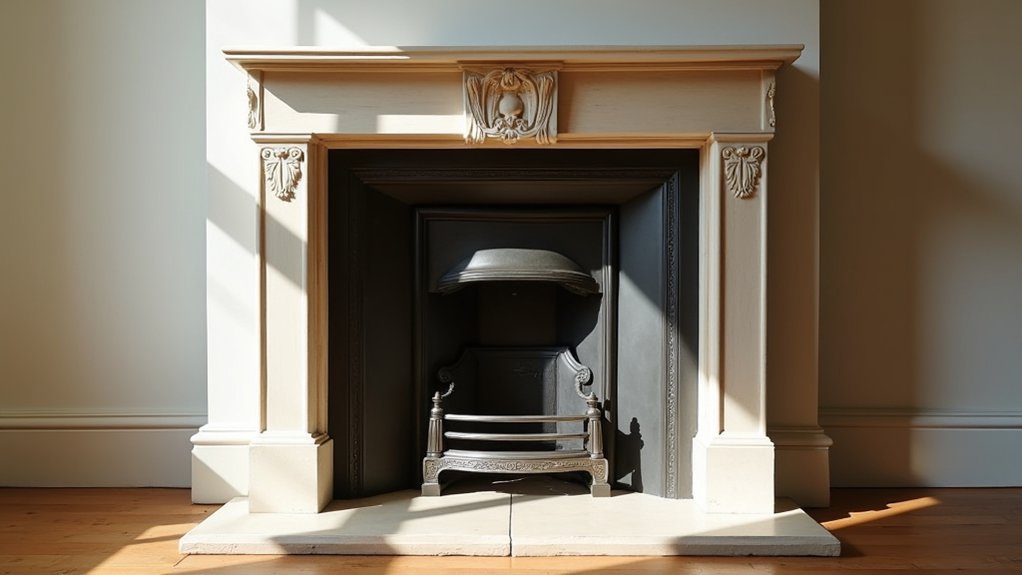
Although a Georgian fireplace looks like a simple surround, you’ll save time and money by checking the basics before you buy, fit, or restore one. Measure the opening, hearth depth, and lintel height, then confirm the chimney breast is sound and dry—rain ingress outdoors often causes hidden salts and crumbling brick.
Next, inspect the flue: book a sweep and smoke test, and budget for a liner if draw is poor. Check for missing slips, cracked stone, loose tiles, or heat-shocked cast iron.
If you’re chasing historical accuracy, match the period profile, mantel proportions, and fixings, and avoid modern cement where lime is needed.
Finally, plan fireplace maintenance: keep air vents clear, fit a carbon monoxide alarm, and use seasoned wood to reduce soot.
Frequently Asked Questions
What Did Georgian Fireplaces Cost Compared With Victorian Designs?
You’ll usually pay less for Georgian fireplaces than ornate Victorian designs, even if you worry upkeep’s tricky. Simpler lines cut fireplace maintenance costs; Victorian cast-iron detail raised prices. Both carry historical significance, so budget for installs.
Which Famous Architects Influenced Classical Georgian Fireplace Styles?
You’ll see Palladio, Inigo Jones, and Robert Adam shaping classical Georgian fireplace styles, with Wren nearby. You can copy their Historical craftsmanship and Architectural symbolism using simple stone, lime mortar, and reclaimed surrounds.
Are Georgian Fireplace Designs Protected Under Listed Building Regulations?
Yes—you’re in for some gentle red tape: if your home’s listed, Georgian fireplace alterations usually need consent. You’ll use budget Restoration techniques, respect Historical symbolism, and plan outdoor-friendly staging to avoid costly, damp-weather setbacks.
How Can I Date a Georgian Fireplace Without Removing It?
You can date it in place by checking proportions, tooling marks, soot patterns, and ironwork. Photograph details outdoors in daylight, compare catalogs, and consult a conservator for Restoration techniques, confirming Material authenticity.
Where Can I Buy Accurate Georgian Fireplace Reproductions in the UK?
You can buy accurate Georgian fireplace reproductions from UK architectural salvage yards, specialist cast-iron foundries, and period-style mantel makers. Compare Historical craftsmanship with Modern reproductions, check measurements, request provenance, and budget for delivery, fitting.
About the Author