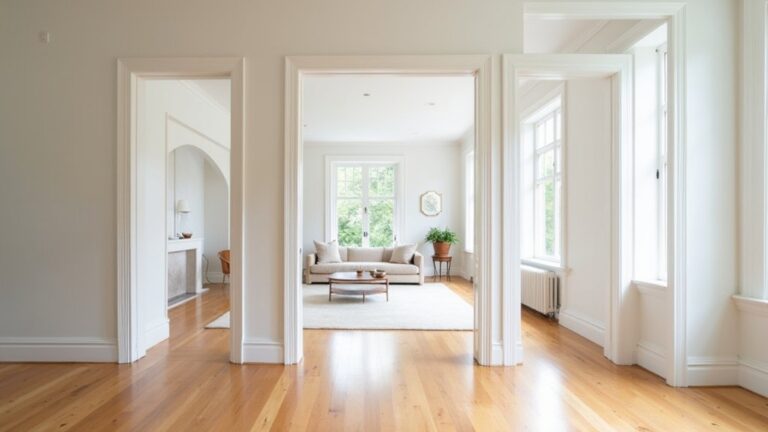
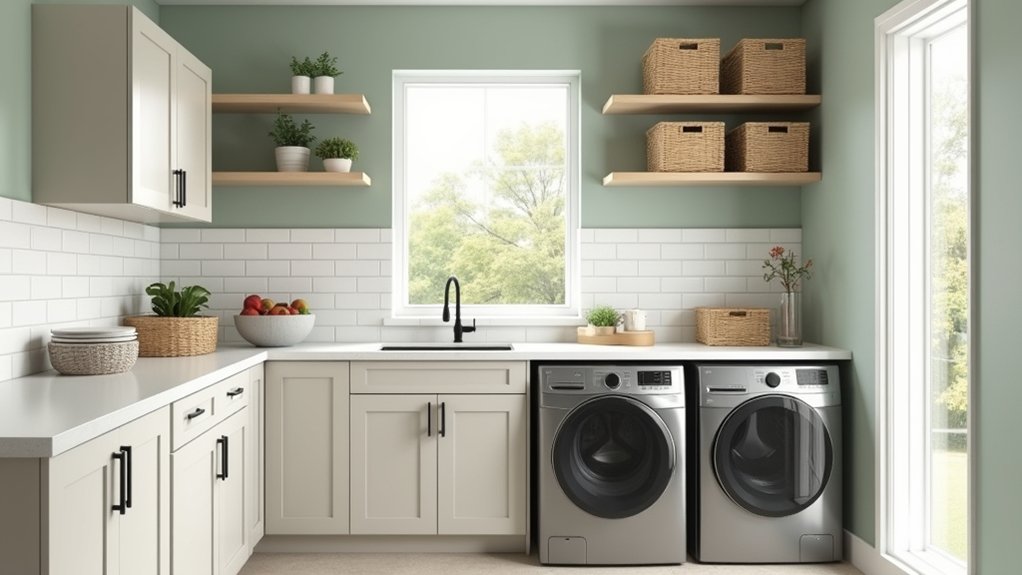
You’ll keep a utility room bright by leaning on light-reflective whites, pale greys, or soft pastels like mint or blush, then choosing an eggshell or satin finish that you can actually scrub. Match your wall colour to cabinets or flooring for a calm, seamless look, and add a deeper accent only where it won’t steal light. The real difference comes when you factor in scuffs, shadows, and your bulbs…
Key Takeaways
- Choose light-reflective hues like creamy white, pale greige, soft yellow, sage, or sky blue to brighten small utility rooms.
- Match wall undertones to fixed finishes: warm floors suit creamy whites; cool tiles suit crisp whites or blue-greiges.
- Use satin or eggshell wall paint for durability, easy cleaning, and gentle light bounce; reserve semi-gloss for trim.
- Consider mid-tones like smoky blue, eucalyptus, or warm clay to hide scuffs while keeping the room airy and calm.
- Boost brightness with 3000–4000K high-CRI LEDs and add deeper accent details (peg rails, labels) for practical contrast.
Best Utility Room Paint Colours for Brightness

Because utility rooms often rely on limited natural light, the right paint colour can make the entire space feel cleaner, larger, and more inviting. Choose light-reflective hues with a subtle sheen: soft buttery yellow boosts warmth, pale sage keeps it fresh, and cool sky blue sharpens a cramped footprint.
If your room has lots of cabinets, match walls to a slightly lighter version of the cabinetry colour so edges blur and the room reads bigger. Use a scrubbable satin or durable eggshell on walls to handle splashes and fingerprints, then paint trim in the same finish for a seamless bounce of light.
Add decorative wall accents—thin peg rails or framed laundry labels—in a deeper coordinating tone. Prioritise eco-friendly paint options for low-odour, quick re-entry.
How to Choose Whites, Greiges, and Pastels
Although whites, greiges, and pastels all read “light,” they behave very differently once they’re on your utility room walls, so start by matching the undertone to your fixed finishes. If your tiles skew warm, choose creamy whites or warm greiges; if you’ve got chrome, concrete, or cool quartz, pick crisp whites or blue-based greiges. Test swatches beside cabinetry and flooring at morning and evening to catch shifts under LEDs.
Use white when you want maximum contrast with darker counters and Decorative accents.
Choose greige to soften busy elements like patterned vinyl or woven baskets while keeping edges clean.
For pastels, keep saturation low—dusty mint, powder blue, or blush—then lock in Colour coordination with one repeatable accent colour in hardware, labels, or textiles.
Mid-Tone Utility Room Colours That Hide Scuffs
Once you’ve nailed your light whites, greiges, or pastels, mid-tone paint becomes the smart next move when your utility room sees daily traffic, splashes, and bumped baskets.
Aim for smoky blue, eucalyptus green, or warm clay: these hues keep the space bright yet disguise grime lines and heel marks better than pale shades.
Use Colour psychology to your advantage—blue-greens feel clean and calming, while earthy terracottas read cosy and grounded, helping a hardworking room look intentional.
Choose an eggshell or satin finish for wipeability without spotlighting wall texture.
Prioritise Paint durability: look for scrub-rated, stain-resistant formulas, and consider a mildew-resistant option near sinks.
Keep touch-up paint on hand, and you’ll maintain a crisp, practical look with minimal fuss.
Match Utility Room Colours to Floors and Cabinets
When you match your wall colour to your floors and cabinets, the utility room instantly looks more cohesive and less like an afterthought. Start by identifying the undertone in your flooring—warm oak, cool grey tile, or red-leaning vinyl—then echo it on the walls in a lighter or softer step.
If your cabinets are white, you can push colour on the walls without crowding the space: try misty sage, pale denim, or warm greige. With wood cabinets, keep utility room colour palettes grounded: creamy off-white, flax, or muted clay will feel intentional.
Use complementary colour schemes for controlled contrast—navy walls with honey oak, or soft terracotta with charcoal floors—then repeat that accent in baskets or hardware.
Lighting and Paint Finishes That Boost Brightness

If your utility room still feels dim after you’ve nailed the colour palette, upgrade the lighting and sheen level before you repaint. Swap a single ceiling pendant for a bright, diffused LED flush fitting, then add under-cabinet strips to wash worktops and sinks with even light.
Aim for 3000–4000K so whites look clean, not icy, and choose high-CRI bulbs to prevent colour shift.
For paint, use eggshell or satin on walls to bounce light while staying wipeable; reserve semi-gloss for trim and doors to sharpen edges.
If you want Decorative wall patterns, keep them tonal and pair them with a higher sheen so they read crisp, not busy.
Finish by positioning Functional storage solutions near light sources to avoid shadowy corners.
Frequently Asked Questions
How Often Should Utility Room Walls Be Repainted in High-Traffic Homes?
In high-traffic homes, you should repaint utility room walls every 3–5 years, sooner if scuffs show. Wall texture hides wear, while smoother finishes mark faster. Consider lighting effects; bright, angled light reveals imperfections.
Are Low-Voc Paints Recommended for Laundry and Cleaning Supply Areas?
Yes, you should—unless you enjoy eau de detergent and mystery fumes as home fragrance. Choose low-VOC, eco friendly finishes for crisp walls, and mind ventilation considerations: exhaust fan, open doorways, quick drying, washable sheen.
Can Wall Colours Affect How Clean a Utility Room Feels Between Deep Cleans?
Yes—you’ll notice wall colours change how clean your utility room feels between deep cleans. Use wall colour psychology: soft greige or cool white hides dust. Pair them with satin, stain resistant finishes, so splashes wipe off.
What Are the Best Colour Choices for Pet-Friendly Utility Rooms?
Choose mid-tone greige, warm taupe, or muted sage for pet-friendly utility rooms; they hide fur and scuffs. Use Pet friendly paints in washable eggshell, and pick stain resistant colours like charcoal accents for high-traffic walls.
Should I Use Mould-Resistant Paint in a Utility Room With a Washer?
Yes—you should; like a raincoat that kept my gear dry through a week of storms, mould-resistant paint boosts mould prevention. You’ll improve paint durability around the washer’s humidity; choose satin, seal seams, and ventilate.
About the Author