In a 1930s mock-Tudor semi, you can strip back the glossy stain and suddenly the beams look intentional again. You’ll get the best result when you treat them like architecture, not décor: keep finishes honest, push contrast with calm ceilings, and use warm, tight-beam lighting to graze the grain. Do that, and the room feels modern without losing its age—unless you miss the first decision that changes everything.
Decide What Kind of Tudor Beams You Have

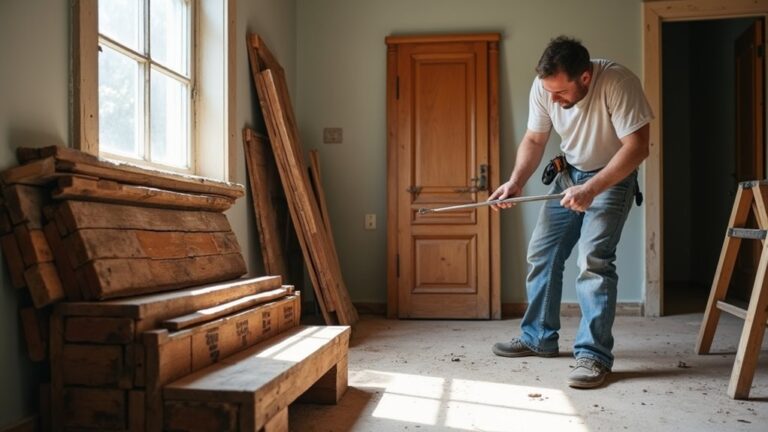
Before you start sanding, staining, or painting, identify exactly what you’re working with—because “Tudor beams” can mean anything from original, hand-hewn structural oak to later softwood additions or decorative box beams.
Check spans, joints, and how the timber meets walls and ceilings; true structural members usually align with load paths and show pegged mortise-and-tenon joinery.
Tap and probe discreetly for hollowness that signals a box beam.
Look for saw marks: irregular adze scars suggest age; straight circular-saw kerfs point to later work.
Verify species and moisture with a pro if you see staining, beetle holes, or cracking.
This due diligence protects Structural integrity and supports Historical accuracy—both key to resale value and compliant renovation decisions.
Pick a Tudor Beam Finish That Feels Modern
Once you’ve identified your Tudor beams, you can modernize them with a finish that sharpens grain definition while keeping the room light.
Choose matte cerused oak tones for a clean, European look, a softwashed charcoal stain for crisp contrast without high gloss, or a limed natural wood finish to brighten aged timber and pair seamlessly with today’s neutral palettes.
Match the undertone to your flooring and trim so the beams read intentional, not heavy.
Matte Cerused Oak Tones
While traditional Tudor beams often skew dark and heavy, a matte cerused oak finish gives you the same architectural definition with a cleaner, more modern read. You keep the grain visible and tactile, but you trade shine and heaviness for an airy, design-forward tone that pairs easily with plaster walls, linen textiles, and warm metals.
To get it right, you’ll start with oak (or oak-veneered wraps) and open the grain through brushing before applying a pale wax or limewash glaze. Then knock it back to dead-matte. That process signals historical authenticity without looking museum-staged, and it respects traditional craftsmanship by letting the wood’s structure do the talking.
Specify low-VOC topcoats and sample under your exact lighting conditions.
Softwashed Charcoal Stain
If you want Tudor beams to read tailored instead of heavy, a softwashed charcoal stain delivers contrast with restraint. You’ll get a modern shadow-line effect that sharpens ceiling geometry while keeping the room bright.
Specify a stain with a grey-black undertone, then shear it back with controlled wiping so grain and tool marks stay legible, not lacquered.
For Historical accuracy, avoid inky, opaque blacks that feel contemporary or theatrical; aim for depth that suggests aged oak without pretending it’s new.
Insist on Traditional craftsmanship: proper sanding progression, end-grain conditioning, and a sample board that matches your site lighting.
Seal with a low-sheen topcoat to prevent chalky rub-off and to keep the charcoal tone consistent across bays and joints.
Limed Natural Wood Finish
Limed natural wood takes the same “contrast with restraint” goal as softwashed charcoal, but shifts the effect from shadow-line to sunlit texture. You’ll lighten heavy beams without erasing character, because the white pigment settles into open pores and softens the overall tone while keeping Natural grain legible.
Choose a limewash or cerused stain on oak, chestnut, or reclaimed timber, and test on an inconspicuous face to control uptake. You should wire-brush lightly if you want stronger pore definition, then seal with a low-sheen matte topcoat so the finish reads modern, not rustic.
For Wood preservation, you’ll want a breathable system: treat for insects where needed, avoid high-gloss films that trap moisture, and maintain with periodic cleaning and spot re-coating.
Use Contrast to Make Tudor Beams Pop
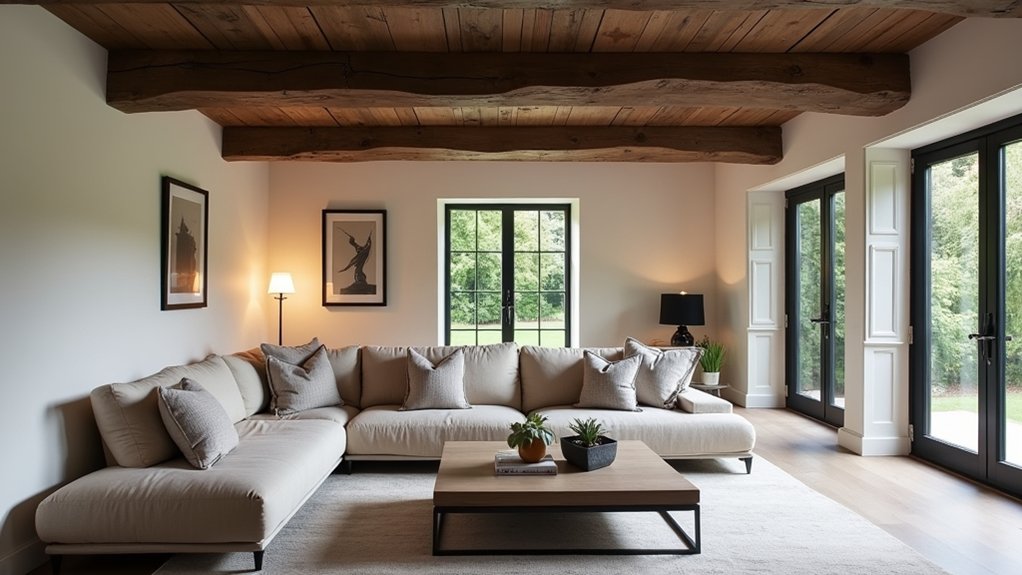
You’ll make Tudor beams pop by pushing contrast: pair light walls with dark beams so the structure reads crisp and intentional.
Keep the field matte with flat or eggshell paint, then use controlled gloss accents—on trim, hardware, or lighting—to catch the eye without competing.
Anchor the look with modern furnishings that sharpen the room’s lines while letting rustic timber stay the hero.
Light Walls, Dark Beams
How do you make authentic Tudor beams read as intentional architecture instead of background texture? You lean on color contrast: keep walls and ceilings in pale, warm neutrals so the timbers land as crisp silhouettes.
If your room lacks daylight, shift the wall tone slightly higher in value to prevent the beams from feeling heavy, then let the beams stay deep brown or near-black for definition. Test samples at beam height; undertones change beside aged wood.
Use lighting techniques to reinforce the separation: wash walls evenly with recessed or track fixtures, and add a narrow-beam spotlight to skim along the timber’s edges. Aim for consistent brightness ratios so photos, showings, and daily living all read polished and intentional.
Matte Paint, Gloss Accents
Because Tudor beams already carry visual weight, sheen becomes your quietest—and most controllable—contrast tool: keep surrounding walls and ceilings in a flat or matte finish to suppress glare and hide minor plaster waviness. Then introduce selective gloss on adjacent trim, ironwork, or a picture rail to create crisp highlights that frame the timber.
Aim for a 5–10% sheen on broad planes, then step up to satin or semi-gloss on details you want buyers’ eyes to track. This micro-shift reads intentional, not “busy,” and it photographs cleanly.
If you’re using textured finishes like limewash or suede paint, keep them matte so the texture doesn’t compete. For color contrasting, stay within one undertone family—warm with warm—so the beam remains the hero.
Modern Furnishings, Rustic Timber
While Tudor beams broadcast age and craft, modern furnishings give them a clean stage: pair the rustic timber with low-profile silhouettes, crisp lines, and restrained palettes so the eye reads “intentional contrast,” not themed décor.
Keep sofas tight-armed, tables slab-thin, and casegoods flush-front; let the beams supply texture and shadow.
Anchor the room with a large, flat-weave rug and minimal window treatments to avoid competing patterns.
Choose metals (blackened steel, brushed nickel) and stone (light quartz, honed limestone) to sharpen the timber’s warmth.
Use energy efficient lighting—linear LEDs, discreet uplights, and dimmable wall washers—to graze the grain and deepen relief.
Finish with Smart home integration: scene presets that shift from daytime clarity to evening drama, keeping the beams your headline feature.
Light Tudor Beams Like an Architectural Feature
When you treat Tudor beams as architectural focal points, lighting becomes the tool that defines their texture, depth, and rhythm across the ceiling. Use warm, high-CRI LEDs (2700–3000K, 90+ CRI) so the timber reads authentic, not orange or flat.
Aim adjustable downlights or discreet track heads to graze the beam faces at a shallow angle, revealing saw marks and patina tied to historical accuracy and traditional craftsmanship.
Layer in wall sconces or picture lights to bounce ambient illumination upward, then add dimmers to shift from daytime clarity to evening drama.
Specify tight beam spreads (20–36°) for emphasis and wider floods for overall balance. Keep fixtures quiet in finish—aged brass, blackened steel—so the beams stay the hero.
Simplify Ceilings and Trim Around Tudor Beams
To make Tudor beams read intentional rather than busy, you’ll get the best results by keeping the ceiling plane and surrounding trim deliberately quiet. Specify a flat, matte ceiling finish so shadows fall on the beams, not on extra profiles. Skip heavy texture, coffered grids, and competing panel lines that fragment the field.
Keep crown molding minimal: a small cove or simple square-edge profile, painted to match the ceiling, maintains a clean perimeter without stealing focus. If you need a passage at beam ends, use tight returns and crisp caulk lines instead of layered buildup.
Avoid ornate ceiling medallions unless you’re centering one primary fixture; then choose a low-relief, oversized disc that reads calm from the floor. Consistent reveals and straight runs signal a considered upgrade.
Balance Tudor Beams With Modern Materials
A quiet ceiling and restrained trim give Tudor beams the spotlight—now make the rest of the room support them with clean, modern materials that won’t compete. Pair the texture of aged timber with matte plaster, microcement, or large-format porcelain that reads calm and continuous.
Choose slim-profile steel or oak-framed glazing to echo the beams’ linear rhythm without copying their heft. Keep built-ins flush and hardware minimal, so the eye returns to the overhead structure.
For historical authenticity, let the wood stay honest: oil finishes, low-sheen sealers, and natural cracks beat heavy stain.
For cultural symbolism, balance heritage with today’s livability—think tailored linen, wool, and neutral rugs that absorb sound and soften contrast. Then punctuate with one contemporary statement light centered between bays.
Avoid Mistakes That Date Tudor Beams Fast

Even if your Tudor beams are genuinely old, a few common design moves can make them look like a theme-park add-on overnight. Don’t over-stain them to “espresso” or paint them jet black; that reads 1990s faux-Tudor and kills Historical accuracy. Skip glossy polyurethane—high sheen spotlights every sanding mark and screams renovation.
You’ll also want to avoid pairing beams with busy, literal Traditional motifs everywhere (heraldic wallpaper, twee ironwork, heavy scalloped valances). One reference is enough; let the timber lead. Keep joint lines crisp, not over-caulked, and don’t box beams in with chunky trims.
Choose lighting that grazes, not blasts—warm 2700K, tight beam control. Finally, match hardware metals and wood undertones so the ceiling reads intentional, not patched.
Frequently Asked Questions
Do Tudor Beams Affect Home Insurance Premiums or Inspections?
Yes, Tudor beams can affect premiums and inspections if they’re structural, aged, or fire-prone. You’ll need Beam maintenance records and Insurance considerations like updated wiring, treated timber, and engineer reports to keep rates competitive.
What Permissions Are Needed to Alter Beams in a Listed Property?
You’ll need Listed Building Consent from your local authority, often plus planning permission. You must follow Historic preservation standards and comply with Building regulations, typically using a conservation officer, structural engineer, and documented method statements.
Can Termites or Woodworm Infest Tudor Beams, and How Is It Treated?
Yes, Tudor beams can suffer woodworm or, rarely, termites—like a slow-burning fuse. You’ll treat it via inspection, targeted insecticide/boron Wood preservation, moisture control, and ongoing Pest prevention with monitoring and improved ventilation.
Are Replica Beams Worth It Compared to Restoring Originals?
Replica beams are worth it if you prioritize budget and speed over historical authenticity; run a cost comparison first. You’ll save on labor and risk, but you can’t replicate original patina or provenance.
How Do Tudor Beams Impact Acoustics and Soundproofing in Rooms?
Like a baffle in a studio, Tudor beams break up reflections, giving modest Acoustic enhancement. You’ll get limited Sound absorption from timber alone, so add insulation, resilient channels, and seals if you’re chasing soundproofing.
About the Author