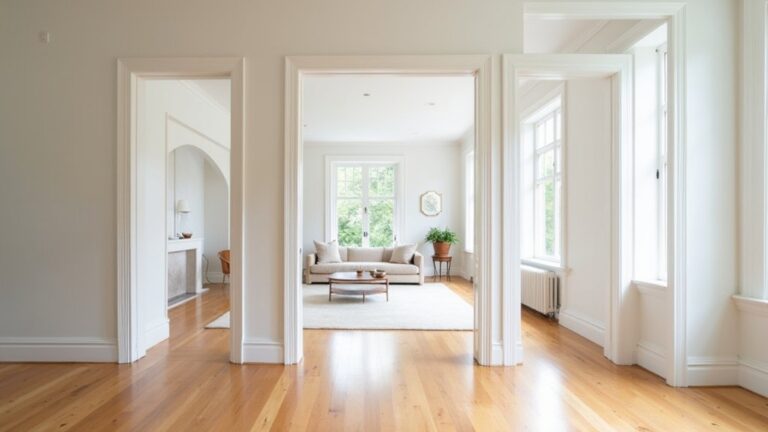

If your interior doors still feel builder-basic, you can modernize the whole space fast with cleaner lines, tighter reveals, and better finishes. Start by measuring each opening and setting a realistic budget, then decide where a simple slab works and where a prehung door makes sense. Pair a flush or Shaker profile with matte black or satin brass hardware, and keep trim minimal. Next, you’ll want to choose the right core and paint or stain strategy…
Key Takeaways
- Measure door slabs, jamb depth, and hinge/backset locations to ensure modern replacements fit cleanly with proper floor clearance.
- Choose slab doors for quick style upgrades or prehung units to correct crooked frames, improve privacy, and tighten reveals.
- Pick contemporary profiles like Shaker, flush, or glass panels (reeded/frosted) to match architecture, light needs, and privacy.
- Use solid-core or moisture-resistant constructions for better sound control, durability, and stability in high-traffic or humid rooms.
- Update finishes and hardware: prep, sand, prime, paint/stain, and standardize modern lever sets and hinge finishes for a cohesive look.
Measure Openings and Set Your Door Budget
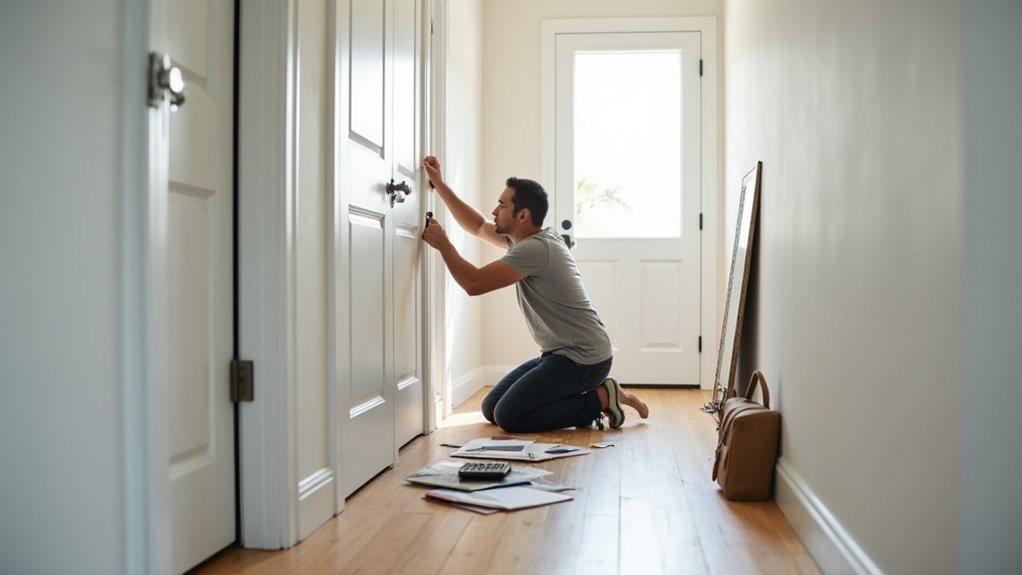
Before you fall in love with a new door style, measure every opening with a tape measure and a notepad—width, height, jamb depth, and hinge/backset locations—so you know exactly what’ll (and won’t) fit.
For today’s contemporary upgrades—thin-stile shakers, smooth slabs, or fluted panels—measurement accuracy keeps sightlines crisp and reveals where you’ll need new jambs, shims, or casing tweaks. Confirm flooring changes, too; a thicker rug or new tile can steal clearance fast.
Next, lock in Budget planning by pricing doors, hardware, paint or stain, and labor, plus a 10–15% cushion for surprises. If you’re matching finishes across rooms, order samples and standardize hinge color and lever style to avoid costly mismatches later.
Decide Slab vs Prehung Interior Doors by Room
Although slab doors cost less and let you keep existing trim, you’ll get the cleanest, most predictable upgrade by choosing slab vs. prehung based on each room’s priorities.
In main living areas, go slab if your jambs are square and hinges align; you’ll refresh the look fast without drywall touch-ups.
For bedrooms and offices, lean prehung when you want tighter reveals, quieter closes, and improved privacy features like better latching and closer gaps.
In bathrooms, prehung often wins because it lets you dial in the door swing for clearance around vanities and towel bars, and it reduces drafts.
Choose prehung for hallways with crooked frames or uneven floors, since the new jamb lets you re-plumb and keep sightlines crisp.
Choose Modern Interior Door Styles (Shaker, Flush, Glass)
When you choose a modern interior door style, you’re really setting the tone for the whole room—so match the look to the architecture, light, and how hard the door works day to day. For a clean, tailored update, pick Shaker: its crisp rails feel transitional and pair easily with matte black or brushed nickel levers.
Want a sharper, gallery-like vibe? Go flush for seamless sightlines and a minimalist trim profile. If you’re chasing brighter, more open circulation, add glass—clear for maximum daylight, reeded for privacy, or frosted for baths and offices.
Today’s innovative door designs also include oversized panels and slim stiles. Ask for sustainable materials with low-VOC finishes so your refresh looks current and feels healthier overall.
Choose Durable Interior Door Cores and Materials
Since your door’s core does the real heavy lifting, choose materials that match how you live—noise levels, humidity, and daily traffic—not just the look.
For bedrooms and offices, you’ll notice the upgrade of solid-core MDF or engineered wood: better sound control, fewer vibrations, and a higher-end close.
In busy hallways, prioritize Material durability with a hardwood or reinforced composite skin that resists dents and scuffs.
For baths and laundry areas, skip thirsty wood and spec moisture-resistant cores and sealed edges to limit swelling.
Ask your supplier exactly how the Core construction is built—stiles, rails, and face thickness—so hinges hold tight and hardware doesn’t loosen.
You’ll get a door that feels contemporary because it performs.
Update Interior Door Trim for a Minimal Look
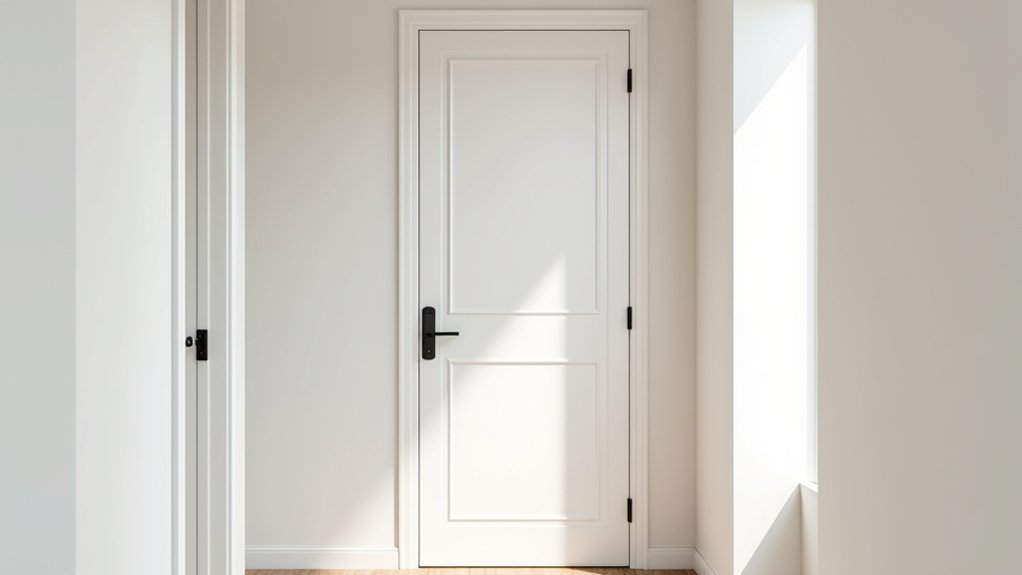
To give your doors that current, minimal look, you’ll want to simplify the trim profile and keep the lines crisp.
Choose clean, tight mitered corners for a seamless frame that reads custom, not builder-grade.
Then match a modern paint sheen—often satin or matte—to unify the trim and door for a polished, design-forward finish.
Simplify Trim Profiles
Although your door slab might already look modern, bulky casing and ornate backbands can instantly date the whole opening, so simplifying the trim profile delivers the clean, architectural vibe today’s interiors lean on.
Swap thick, stepped casings for a slimmer, flat stock that reads crisp against the wall. Keep reveals consistent, and size the casing to match your baseboards for a coordinated, intentional look.
If you’ve got Decorative molding or Ornamental trim, you don’t have to gut everything—remove extra layers, skip fussy detail, and let the door’s proportions do the work.
Paint trim and wall the same color for a seamless, gallery-like effect, or choose a soft contrast to outline the opening without visual clutter. You’ll get a calmer, higher-end finish.
Use Clean Mitered Corners
When you want trim that reads sharp and current, clean mitered corners instantly elevate the whole door opening with a tailored, built-in look. You’ll get that gallery-clean outline by aligning every reveal and keeping your casing widths consistent, so the eye reads one crisp frame instead of stacked parts.
Prioritize tight 45-degree cuts, then dry-fit each run to check for gaps before fastening. You’ll want square jambs and straight stock; even slight bows telegraph at the corners. Use clamps or pin nails to hold alignment, and reinforce corner joints with glue for durability and a seamless seam line.
If your walls aren’t perfectly plumb, scribe the back edge rather than forcing the miter. The result feels custom, minimal, and intentionally modern.
Match Modern Paint Sheen
Clean miters give your casing that sharp, tailored outline, but the paint sheen is what makes it read truly modern up close. Skip flat finishes on trim; they absorb light and can look chalky against crisp door lines. Instead, compare sheen options like satin, semi-gloss, and modern low-luster enamels.
Satin feels current and soft, while still wiping clean after fingerprints. Semi-gloss pushes a sharper, gallery-like contrast and highlights flawless prep, so fill nail holes and sand to 220 grit.
For high-traffic hallways and kids’ rooms, prioritize paint durability: choose a trim enamel with scuff resistance and a washable formula. Keep the same sheen on casing and baseboards so the whole opening looks intentional, not pieced together.
Swap Interior Door Hardware for a Modern Finish
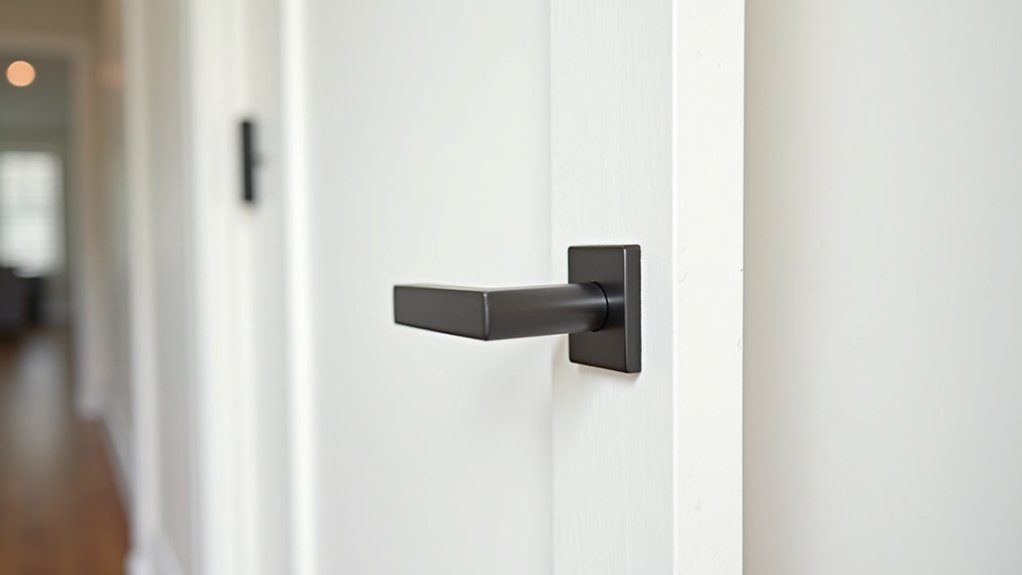
If you want an instant interior-door upgrade without repainting or rehanging anything, swap your hardware for a modern finish that matches today’s design trends. Choose a door handle in matte black for bold contrast, satin brass for warm minimalism, or polished nickel for a crisp, tailored vibe. Keep the look cohesive by matching latch plates, strike plates, and screws so nothing feels piecemeal.
Don’t ignore hinge style: squared-corner hinges read cleaner and more contemporary than rounded ones, and concealed hinges deliver a high-end, flush aesthetic on modern builds.
If your doors vary, standardize finish and profile across the whole floor for a designer-throughline.
Finally, test the hand-feel—knurling, lever length, and return-to-door shapes should look sleek and operate smoothly every day.
Paint or Stain Interior Doors: and Install Them Right
Next, you’ll choose paint or stain based on your home’s current vibe—crisp satin color for a modern refresh, or a warm stain to spotlight natural grain.
You’ll prep the door the right way by cleaning, sanding, and priming or conditioning so the finish levels smoothly and lasts.
Then you’ll hang it with precision—set hinges tight, maintain even reveals, and align the latch so it closes cleanly every time.
Choosing Paint Or Stain
Wondering whether paint or stain will give your upgraded interior doors the right look—and the right durability—for your home? Choose paint when you want crisp, contemporary contrast and easy refreshes. It pairs beautifully with today’s Color palettes: warm whites, moody charcoals, clay tones, and muted sages that coordinate with hardware and trim.
Go stain when you want natural grain to read as design, especially on solid wood or quality veneer. It brings warmth to minimalist spaces and elevates flat slabs.
Your lifestyle should decide, too. Paint hides mismatched wood and patches, while stain highlights every variation.
Compare Finish techniques: matte for a soft modern vibe, satin for washable practicality, and semi-gloss for sharp, architectural definition.
Preparing Doors For Finish
Once you’ve picked paint or stain, your finish will only look as good as the prep beneath it. Start with smart door preparation: remove hardware, label parts, and protect glass or panels with tape. Clean off oils and silicone residue using a degreaser so modern low-sheen paints and clear coats bond evenly.
Next, use proven sanding techniques to match today’s crisp, minimal look. Scuff flat faces with 180–220 grit, feather edges, and hand-sand profiles so you don’t round details. Fill dents with stainable or paintable filler, then spot-sand flush.
Vacuum dust, wipe with a tack cloth, and seal knots or tannins with a stain-blocking primer when needed. You’ll get smoother color, tighter lines, and a finish that reads custom.
Proper Hanging And Alignment
How do you make a freshly painted or stained interior door look truly upgraded? You hang it with showroom-level precision, because alignment is what reads “custom” in today’s clean, contemporary interiors.
Start with accurate hinge placement: match the mortises, keep hinges flush, and use quality screws into solid framing so the slab doesn’t drift over time. Before you celebrate, check reveals on all sides with the door closed. You want consistent margins that feel intentional, not “builder basic.”
Do door gap adjustment by shimming hinges, swapping in longer screws, or nudging the jamb until the latch side clears without rubbing. Confirm the latch engages smoothly and the door doesn’t swing on its own. That crisp, even reveal sells the upgrade instantly.
Frequently Asked Questions
Do Contemporary Interior Doors Improve Home Resale Value?
Yes—contemporary interior doors can boost resale value because you’re signaling a turnkey, updated home. Choose smart door material options and weigh design style considerations to match current trends, improve flow, and impress buyers.
How Can I Reduce Noise Transmission Between Rooms Without Replacing Doors?
Like a volume knob, you’ll cut noise fast: apply soundproofing techniques with weatherstripping, a door sweep, and adhesive foam. Add a dense rug and heavy curtains. Choose door sealing options like automatic door bottoms.
Are Modern Interior Doors Safe for Homes With Children and Pets?
Yes—modern interior doors are safe if you choose rounded edges, tempered glass, and soft-close hardware. Add Childproof locks to prevent pinched fingers, and prioritize Pet safe finishes that resist scratches and low-VOC offgassing.
Do I Need a Permit or HOA Approval to Change Interior Doors?
You usually don’t need a permit for interior door swaps, but your HOA might require notice. Check rules before choosing door material options, then follow door installation tips to meet fire-rating, noise-control, and resale-friendly trends.
How Should I Clean and Maintain Painted or Stained Interior Doors?
You’ll keep painted or stained doors fresh with weekly dusting, gentle door cleaning using damp microfiber, and immediate spot-wiping. For paint maintenance, avoid abrasives, use mild soap, dry fast, and touch up chips promptly. Condition stained doors annually.
About the Author