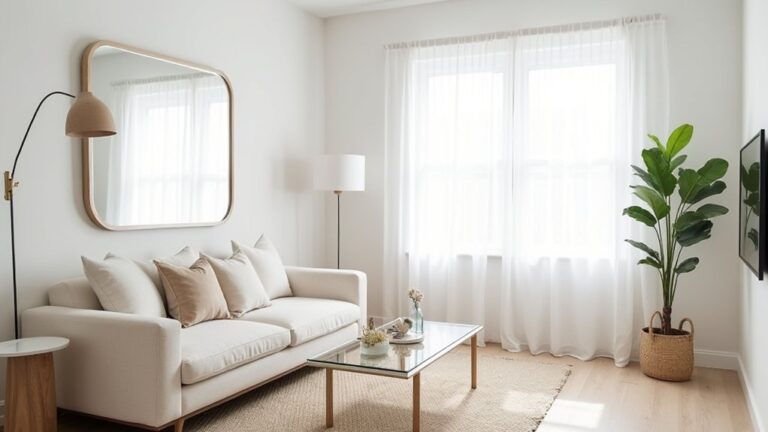

Your living room can go from tired to magazine-worthy with one smart flooring swap and a lighting reset. You’ll start by setting a budget and locking in a style direction, then choose a floor that can handle pets, kids, and daily traffic without looking utilitarian. Next, you’ll layer dimmable ambient light with targeted task lamps and subtle accents, keeping finishes coordinated. The real shift happens when you pair undertone and color temperature, because that’s where…
Key Takeaways
- Set a flooring-and-lighting budget with a 10% buffer, and choose one splurge item like a statement fixture or wide-plank look.
- Define your style in three adjectives and lock a cohesive color palette using undertones so flooring and fixtures coordinate.
- Choose durable, low-sheen flooring in warm mid-tones with subtle patterning to hide scuffs, pet hair, and daily debris.
- Measure accurately, add 10–15% waste, and prep the subfloor for level, moisture, and squeaks before committing to installation.
- Layer dimmable ambient, targeted task, and accent lighting using warm 2700–3000K high-CRI LEDs to improve comfort and depth.
Set Your Living Room Budget, Style, and Constraints
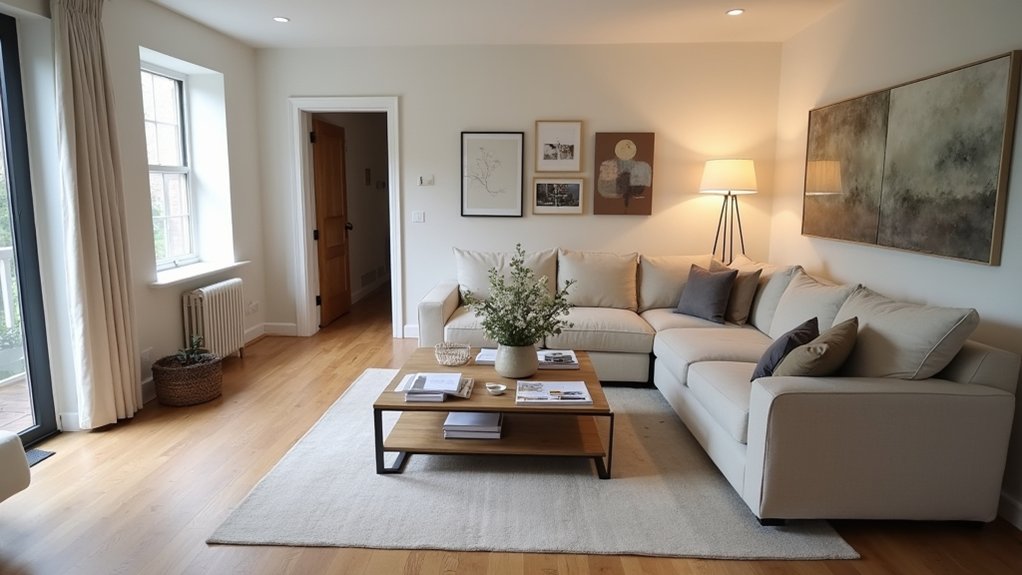
Before you shop or start rearranging furniture, lock in three essentials: your budget, your style lane, and the constraints you can’t wish away. Set a hard spend range for flooring, lighting, labor, and a 10% buffer, then decide where you’ll splurge—statement pendant, dimmers, or wide-plank visuals.
Define your lane with three adjectives (warm modern, quiet luxe, coastal minimal) and pull references that match your Home decor priorities, not impulse trends.
Audit constraints: ceiling height, existing wiring, outlet placement, window glare, and how light shifts from day to night.
Finally, commit to tight color schemes—undertone-led whites, grounded neutrals, or saturated accents—so new surfaces and fixtures read intentional, cohesive, and current.
Choose Living Room Flooring by Kids, Pets, and Traffic
If your living room doubles as a play zone, dog track, and main hallway, let durability drive the design. Prioritize Flooring durability first: look for tough wear layers, dense cores, and finishes that resist micro-scratches from grit and toys.
Choose low-sheen, matte looks to camouflage scuffs while staying on-trend with natural, light-oak tones and warm neutrals.
For pet friendly options, favor surfaces that handle claws and accidents: waterproof construction, tight seams, and stain-resistant coatings. Add a textured, slip-reducing surface so zoomies don’t turn into wipeouts.
Keep cleaning easy with mid-tone patterns, subtle graining, or micro-speckle visuals that hide fur between vacuum runs.
Finish the design with durable baseboards and washable entry mats to catch debris before it spreads.
Compare Living Room Flooring Costs and Comfort (Wood, Vinyl, Carpet, Rugs)
Next, you’ll want to balance what your living room floor costs with how it feels underfoot, because the trendiest look won’t matter if it’s cold or hard day to day. Hardwood reads elevated but often lands at the top of the budget and feels firm.
Luxury vinyl keeps the price friendlier with a slightly warmer, quieter step. Carpet brings the plush comfort (with a range of price points), and a well-chosen area rug lets you soften wood or vinyl and fine-tune both spend and coziness.
Flooring Cost Breakdown
Four flooring choices tend to shape a living room refresh—hardwood, vinyl, carpet, and area rugs—and each hits a different sweet spot for cost, comfort, and style.
For hardwood, expect the highest material-plus-install range, especially with wide planks, herringbone layouts, or site-finished stain; refinishing later is a separate line item.
Vinyl plank keeps budgets lean, yet upgraded wear layers, embossed textures, and rigid cores push pricing up while still undercutting wood.
Carpet looks affordable, but pad quality, stair/threshold details, and stain treatments add up.
Area rugs let you spend surgically: invest in wool, hand-knotted patterns, or oversized sizing, then pair with a lower-cost base floor.
Weigh flooring maintenance and flooring warranties before you commit.
Comfort And Underfoot Feel
While price tags grab your attention, underfoot feel is what you’ll notice every time you pad across the room—so compare how hardwood, vinyl, carpet, and rugs handle warmth, cushion, noise, and fatigue.
Hardwood feels crisp and cool, but wide-plank oak plus a thick felt pad under a vintage-style rug softens steps and adds hush.
Luxury vinyl plank costs less and stays slightly warmer, with resilient give that’s kinder on knees—ideal if you’re standing to chat or rearrange furniture.
Wall-to-wall carpet wins for plushness and sound control, though it can look heavy; choose low-pile, heathered neutrals for a tailored, modern vibe.
Tie comfort to lighting fixtures: softer pools of light make layered textures read richer and cozier.
Measure, Prep Subfloors, and Avoid Flooring Install Mistakes
Before you order that wide-plank oak or concrete-look LVP, you’ll measure your living room like a pro—accounting for alcoves, thresholds, and a smart waste factor so patterns stay seamless.
Then you’ll prep the subfloor for a flat, quiet finish by checking level, moisture, squeaks, and old adhesive, because even premium flooring telegraphs bumps and gaps.
Get these basics right, and you won’t end up with lippage, peaking seams, or that telltale hollow sound that ruins the refresh.
Accurate Measuring Essentials
Even if you’ve already picked a showstopping floor, the finish only looks high-end when your measurements and subfloor prep are exact. Start with Measuring accuracy: sketch the room, then measure every wall, doorway, and inset twice, noting the smallest dimension. Treat alcoves, bay windows, and fireplace bumps as separate rectangles so your layout stays intentional and balanced.
Your Tool selection matters for a modern, clean install. Use a laser distance measurer for long runs, a steel tape for trim-to-trim checks, and a framing square to confirm corners before you commit to plank direction. Mark a baseline chalk line that aligns with the room’s focal point, then dry-lay a few rows to preview seams, grain flow, and border spacing.
Add 10% waste (15% for diagonals) and document it.
Subfloor Prep And Pitfalls
Once your layout is locked in, the subfloor becomes the make-or-break layer that determines whether your new flooring reads crisp and seamless or starts telegraphing flaws. Walk the room with a straightedge and mark dips, high seams, and squeaks. Handle subfloor leveling early: sand proud joints, screw down loose panels, and pour patch where light catches shadows. Vacuum like you mean it—grit under planks reads as uneven sheen in raking lamp light.
Test moisture, especially over slabs or crawlspaces, before you commit to wide-plank looks. Install the right moisture barriers for your product and climate, and tape seams meticulously so edges don’t cup later. Don’t skip acclimation or expansion gaps; trendy tight reveals still need room to move.
Upgrade Living Room Lighting: Ambient, Task, and Accent
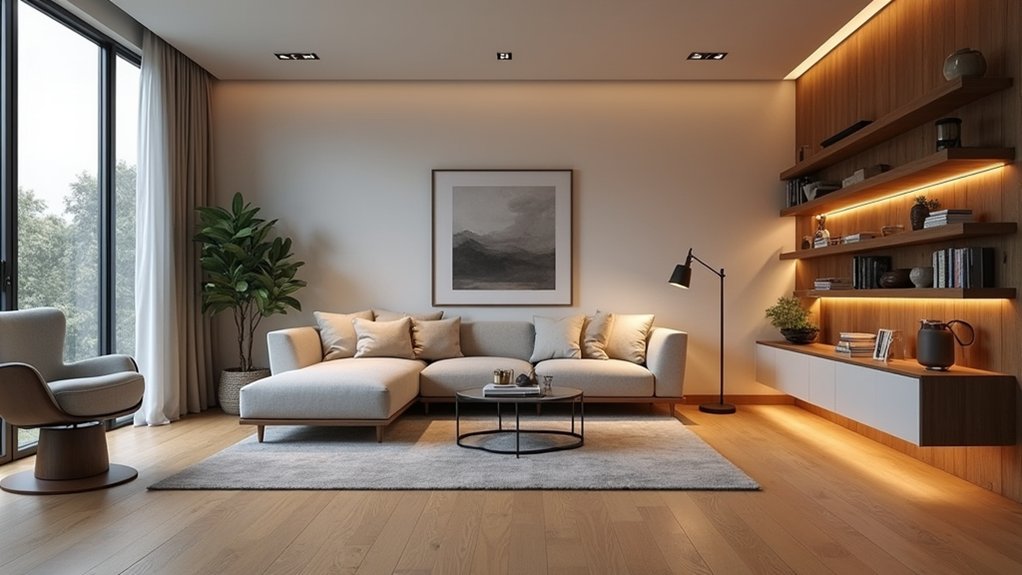
Although furniture sets the layout, lighting sets the mood, so start your living room refresh by layering three types: ambient, task, and accent.
For ambient lighting, choose a dimmable ceiling fixture or low-profile flush mount that gives even coverage without glare. Prioritize lighting design that supports conversation zones.
Next, add task lighting where you read, work, or play: a swing-arm floor lamp by the sofa, an adjustable table lamp on a console, or a picture-light style sconce near built-ins. Keep lumens targeted and shades opaque to control spill.
Finish with accent lighting to create depth—wall washers, uplights behind plants, or LED strip inside shelving. In fixture selection, match finishes intentionally, and use warm 2700–3000K LEDs with high CRI for flattering color rendition.
Match Living Room Flooring and Lighting for One Cohesive Look
When you coordinate your flooring and lighting as a single palette, the whole living room reads more intentional and more elevated. Start with undertones: pair warm oak, terracotta rugs, and brass fixtures, or choose cool ash planks with nickel and crisp LEDs.
Use Color coordination to keep bulbs, shades, and wood stain in the same temperature band, then vary depth for dimension.
For material harmony, echo finishes across the room—matte floors like wide-plank LVP look sharp with linen pendants, while polished concrete loves blackened steel and opal globes.
Let sheen do the heavy lifting: a satin floor balances glossy glass, and a matte shade softens reflective tile.
Finally, test samples at night; your lighting will shift everything.
Frequently Asked Questions
How Long Will My Living Room Be Unusable During Flooring Installation?
You’ll lose the room 1–3 days, or a week if you chase perfection—because you will. Faster installs protect flooring durability; plan LED swaps for lighting energy efficiency while furniture migrates like a curated, chaotic runway.
Do I Need Permits or HOA Approval for Flooring or Lighting Changes?
You might need permit requirements for electrical rewiring, recessed cans, or structural subfloor work; simple flooring swaps and fixture changes often don’t. Check HOA approval for visible finishes, noise rules, and modern lighting placements. Verify locally first.
What’s the Best Way to Reduce Echo After Installing Hard Flooring?
Soften sharp sound with sumptuous textiles: layer thick rugs, drapes, and upholstered pieces for sound absorption. Add sleek acoustic panels on key walls or ceilings, and break up bare surfaces with bookshelves and art.
Can New Flooring and Lighting Increase My Home’s Resale Value?
Yes, you can boost resale value with new flooring and lighting if you choose on-trend finishes. Prioritize Flooring durability and Lighting energy efficiency, then stage with layered fixtures, warm temperatures, and seamless shifts that photograph beautifully.
How Do I Dispose of Old Flooring Materials Safely and Legally?
For safe, legal Floor disposal, you’ll sort materials, bag dust, and check Legal regulations with your local waste authority. Recycle wood or metal, return carpet, and hire certified haulers for asbestos, adhesives, and treated boards.
About the Author