You probably don’t know that the wrong pendant diameter can make even premium furniture look dated and cramped. Start by measuring your room, your table, and your sightlines, then set a budget that prioritises lighting quality and chair comfort. Choose clean-lined furniture in cohesive finishes, and layer high-CRI LED light with dimmers for control at every hour. Next, you’ll want to avoid the placement mistake that instantly breaks the whole look…
Key Takeaways
- Measure the room and plan a layout with 36″ walkways and 24″ per diner to keep the space open and functional.
- Set a budget prioritizing a durable table and quality seating, reserving 10% for unexpected costs and finishing touches.
- Modernise lighting with layered fixtures, high-CRI 2700–3000K LEDs, and dimmers to create flexible, flattering ambience.
- Choose a table shape and finish that suits the room—round for softness, rectangular for structure—with 36–48″ clearance for flow.
- Add cohesive seating and storage, plus a rug, art, and low centrepiece to update style while keeping sightlines clean and uncluttered.
Measure Your Dining Room and Set a Budget
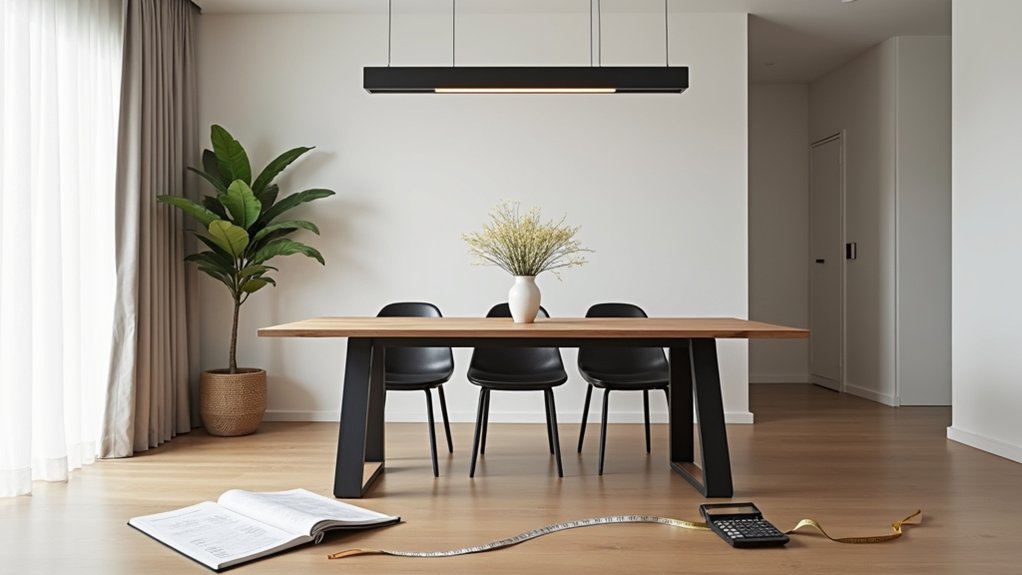
Before you buy furniture or pick a paint colour, measure your dining room with intention and set a realistic budget. Start by recording wall lengths, ceiling height, window and door swings, and outlet locations.
Then map the dining zone: allow 36 inches for walkways and 24 inches per seated guest so chairs slide back comfortably. Note focal points you can enhance later with Decorative accents, and identify surfaces that may need refinishing.
Translate measurements into a scaled plan so you don’t overbuy a table or undersize a rug. Next, set a budget that reflects your priorities: allocate more to a durable dining table and quality seating, then reserve a defined percentage for Color schemes, textiles, and hardware. Add a 10% contingency.
Choose Modern Dining Room Lighting That Fits Your Style
With your measurements and budget set, you can choose lighting that looks intentional and functions well at the table. Start by defining your mood: warm and intimate, bright and energetic, or gallery-like and crisp.
For modern spaces, lean into clean silhouettes, matte metals, and opal glass. For transitional rooms, mix classic shapes with updated finishes.
Build a layered plan: use ambient lighting from a dimmable ceiling source, then add targeted glow with wall sconces or a sideboard lamp.
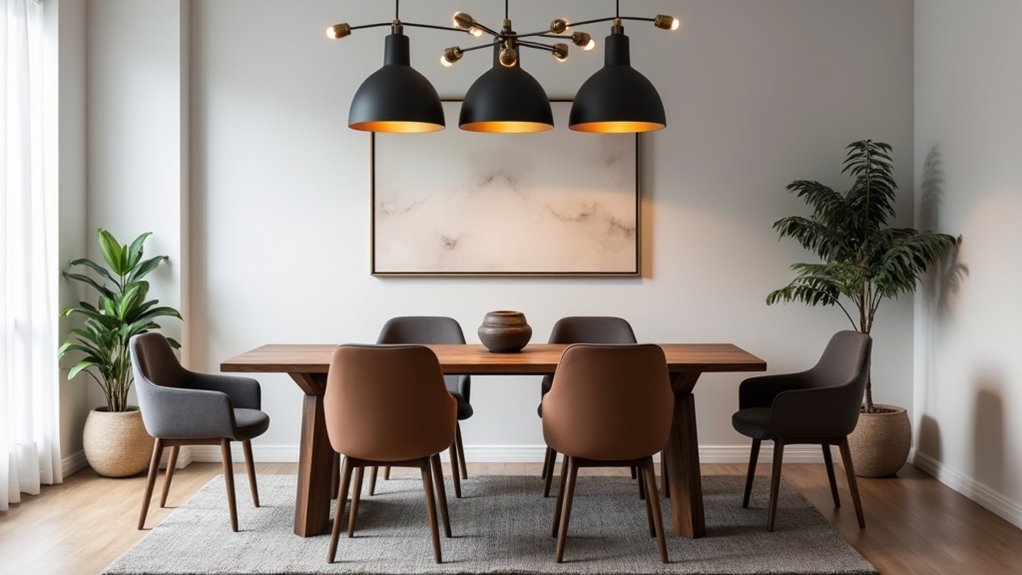
Select decorative fixtures that echo your dining set’s lines—linear forms suit long tables, while sculptural clusters complement round layouts.
Keep finishes cohesive with hardware and furniture, and choose high-CRI LEDs so food and skin tones look natural, even during late dinners.
Size and Hang Your Pendant or Chandelier Correctly
How high should you hang a pendant or chandelier so it feels polished instead of precarious? Aim for a chandelier height of 30–34 inches above the tabletop with 8-foot ceilings, then add about 3 inches for each extra foot of ceiling height.
Keep Pendant placement centered on the table, not the room, so the fixture visually “belongs” to the dining zone even in open plans.
Size matters as much as height: choose a fixture diameter about 1/2 to 2/3 the table’s width, and keep at least 6 inches of clearance from the table edge to the fixture’s outermost point.
For long tables, use a linear pendant or two smaller pendants spaced evenly along the centerline.
Pick Bulbs, Colour Temperature, and Dimmers
Once your chandelier or pendants sit at the right height and scale, the bulbs you choose determine whether the room reads current and inviting or harsh and dated. Choose high-CRI LEDs (90+), so food and finishes look true.
Aim for 2700K for a warm, classic glow, or 3000K for a cleaner, contemporary edge; avoid 4000K+ unless you want a task-room feel.
Match lumens to the space: roughly 1,500–3,000 total for most dining rooms, then rely on dimming for flexibility.
Use a trailing-edge (ELV) dimmer or smart dimmer rated for LED loads to prevent flicker and buzzing.
Prioritise bulb lifespan, and consider lighting automation to schedule dinner scenes and late-night low levels.
Choose a Modern Dining Table Shape and Finish

Next, anchor your modern dining room with a table shape and finish that suits your space and lifestyle. You’ll weigh round versus rectangular profiles for conversation and clearance.
Then, choose on-trend materials—like light oak, matte lacquer, stone, or metal—while keeping the finish consistent with your flooring and cabinetry.
Size it for comfortable seating and legroom, and protect flow by leaving enough circulation space around every edge.
Round Vs. Rectangular Tables
While your dining table’s shape might seem like a purely practical choice, it sets the tone for how the room looks and functions every day. Round tables soften a space, encourage conversation, and suit compact rooms because you can circulate without bumping corners. They also create a centred, sculptural moment beneath a statement pendant.
Rectangular tables read architectural and modern, especially in longer rooms where they echo the room’s lines and maximise seating along the sides. You’ll also find them easier to align with rugs, sideboards, and linear lighting.
If you host often, choose the shape that matches your typical headcount and traffic flow: round for fluid, intimate gatherings; rectangular for structured layouts and bigger groups. Consider sightlines, too, from doorways.
Modern Material And Finish
How do you make a dining table feel modern the moment you walk in? You start with material and finish, because they set the room’s tone before any styling. Choose sustainable materials like FSC-certified oak, reclaimed timber, or rapidly renewable bamboo to signal contemporary values and add visual warmth.
For a sharper, architectural look, consider recycled metal bases or sintered stone tops that resist heat and scratching.
Next, lock in a finish that reads current. Matte finishes outperform high-gloss by hiding fingerprints, softening reflections, and pairing cleanly with modern lighting. Go for wire-brushed wood, honed stone, or powder-coated metal in warm neutrals, inky black, or muted greige.
Keep grain and veining subtle, and let crisp edges do the work.
Scale, Seating, And Flow
Even if you’ve nailed the material and finish, a dining table won’t feel modern unless its scale and layout support effortless movement. Measure clearances first: keep about 36 inches from table edge to walls or storage, and 44–48 inches where people pass behind seated diners. That’s your baseline for scale balance.
Choose a shape that matches the room’s geometry. Rectangles suit long spaces and banquettes; round or oval tops soften tight rooms and improve conversation. A pedestal base buys legroom and boosts seating comfort, especially with mixed chair styles.
Keep chair widths realistic—around 18–22 inches—and plan 24 inches of table edge per person. Finally, align the table with the main walkway so you’re not forcing detours around corners.
Choose Modern Dining Chairs for Comfort and Spacing

You’ll modernise the room faster when you prioritise ergonomic chair design that supports posture through long meals.
Match seat height to your table so your knees clear comfortably and the tabletop feels naturally within reach.
Then plan spacing like a pro, allowing enough chair clearance to pull out, sit, and circulate without crowding the layout.
Prioritize Ergonomic Chair Design
While a bold dining table may anchor the room, ergonomic chair design determines whether the space actually feels livable. You’ll notice the difference in longer meals when the backrest follows your spine’s natural curve and the seat offers balanced cushioning without feeling bulky.
Look for ergonomic support through subtle lumbar shaping, a gently waterfall front edge that reduces leg pressure, and breathable upholstery that stays comfortable under warm lighting. If you host often, prioritize durable frames and easy-clean fabrics that still look refined.
For flexibility, consider adjustable seating options like swivel bases or discreet height and tilt controls, especially in mixed-use dining areas. Finally, choose arm profiles that tuck in cleanly and maintain clear circulation paths.
Match Seat Height And Table
If you want your dining setup to feel polished and effortless, match your chair’s seat height to your table before you fall for a silhouette. For most modern dining sets, you’ll want roughly 10–12 inches between the seat and the tabletop so your arms rest naturally and your posture stays relaxed through long meals.
Measure your table height, then confirm the chair’s Seat height (not just overall height) in the spec sheet, since upholstery thickness can change the real sit level.
For Table matching, align proportions too: slim chairs suit light, leggy tables; fuller seats balance solid pedestal bases.
If you’re mixing pieces, test one chair in person or mock it up with books to hit the right feel.
Allow Proper Chair Clearance
Even the sleekest modern dining chairs won’t feel right unless you build in proper clearance for easy movement and daily comfort. Start with chair spacing: allow about 24 inches per diner along the table edge so elbows don’t clash and silhouettes stay clean.
Follow clearance guidelines behind each chair, too—plan 36 inches from table edge to wall or casework for smooth pull-outs, or 48 inches if it’s a main traffic path.
If you’re mixing chair styles, measure the widest point (often the arms) and base spacing on that. Choose slim, tapered legs and open backs to keep the room airy, but don’t sacrifice ergonomics.
Test by sliding a chair back and standing up; you shouldn’t pivot or squeeze.
Add a Sideboard or Bar Cart for Storage and Serving
Because modern dining rooms need to work harder than ever, adding a sideboard or bar cart gives you dedicated storage and a polished serving zone without crowding the space. Choose a low-profile sideboard to anchor the room and keep sightlines clean.
Sideboard storage lets you hide placemats, linens, and extra flatware while keeping everyday essentials within reach.
If you’re tight on square footage, lean on Bar cart versatility. Roll it beside the table for drink service, then park it against a wall as a compact buffet.
Style it with matching decanters, a small tray for napkins, and stacked glassware for a cohesive look. Prioritise finishes that echo your lighting or chair legs—brass, blackened steel, or warm oak—so the update feels intentional, not added-on.
Finish With a Rug, Art, and a Simple Centrepiece
Once your storage and serving pieces are in place, lock in a modern finish with a rug, statement art, and a simple centrepiece that won’t compete with conversation.
For rug selection, size matters most: choose one that lets every chair stay on the pile, even when pulled out, and aim for low-profile, easy-clean fibres. Use a subtle pattern to hide crumbs, or go solid to spotlight sculptural dining chairs.
For art placement, hang a single oversized piece or a tight grid to create a clean focal wall. Centre it at eye level and align edges with the table or sideboard for a tailored look.
Finish with one low bowl, branch, or trio of candles—nothing tall enough to block sightlines. Keep it cohesive, calm, and current.
Frequently Asked Questions
Do I Need an Electrician to Install a New Dining Room Light?
You’ll often need an electrician—coincidentally, most homeowners do—if you’re adding a dimmer switch, relocating wiring, or swapping a ceiling fan. For like-for-like fixture replacements on existing wiring, you can DIY if codes allow.
What Are the Best Modern Lighting Choices for Low Ceilings?
For low ceilings, you’ll get the best results with slim flush-mounts, low-profile semi-flush fixtures, and recessed LED options. Choose tight Pendant styles like mini pendants or short drops, and use dimmable, warm-white bulbs.
How Can I Modernise My Dining Room Without Replacing Existing Furniture?
You modernise your dining room by restyling, not replacing—like a classic ship refitted for speed. Update textiles, add Vintage accents, hang statement artwork, refresh paint, and swap bulbs for crisp, layered illumination.
Which Materials Are Easiest to Clean for Families With Young Children?
Choose sealed quartz, porcelain tile, and laminate for wipe-clean durability. Add Childproof finishes on wood and opt for stain resistant fabrics like performance velvet or solution-dyed acrylic; they’re scrubbable, repel spills, and resist marks.
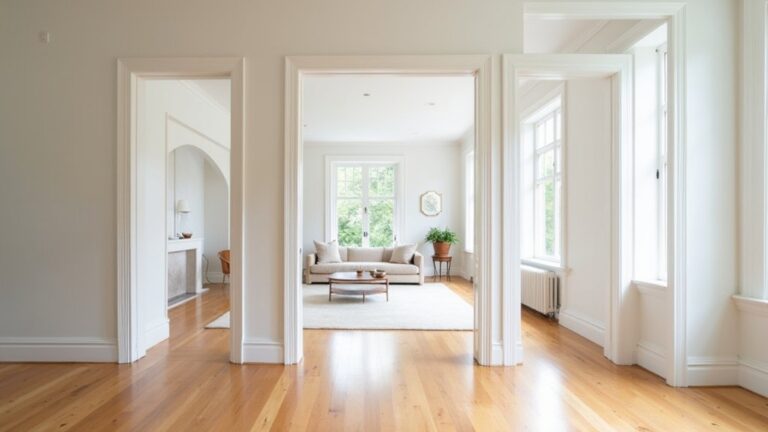
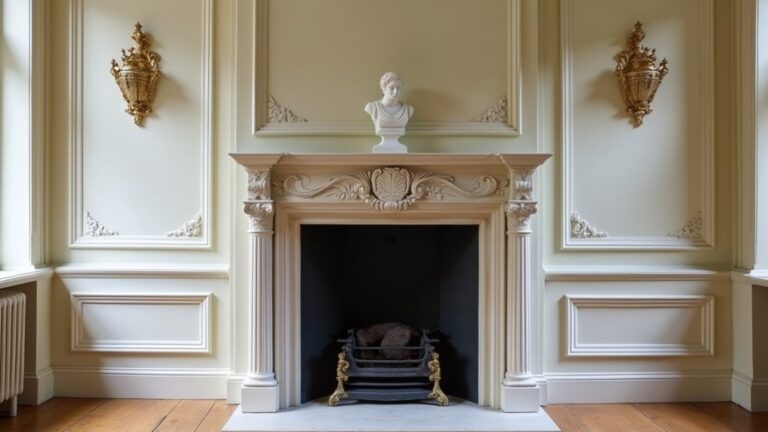
How Do I Mix Modern Pieces With Traditional Architecture Without Clashing?
You’ll avoid clashes by repeating existing lines and proportions, then adding modern contrast in controlled doses. Keep Classic color schemes, use Antique accents sparingly, and unify everything with consistent metals, woods, and textiles throughout.
About the Author