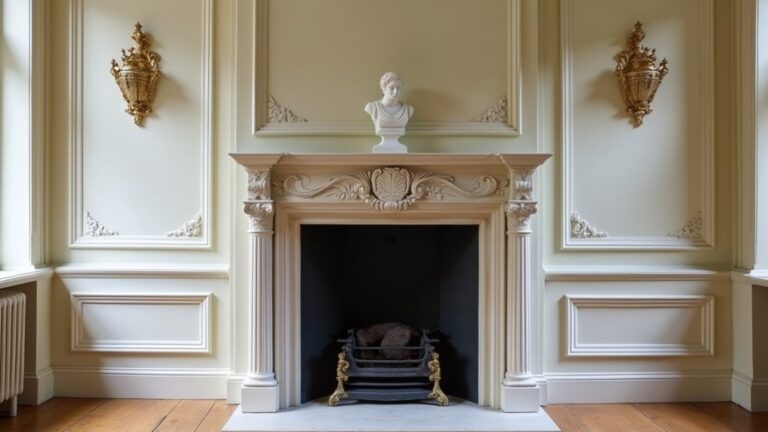
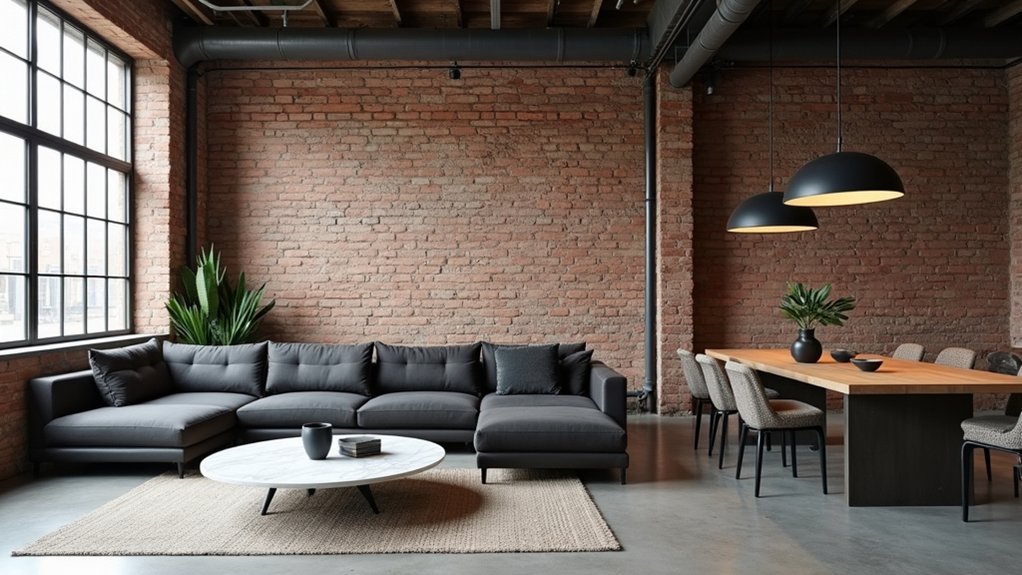
When you’re blending modern furniture with industrial architecture, you’ll get better results if you audit the space first: ceiling height, beam lines, brick tone, and concrete finish. Then you can use curved, low-profile pieces to soften hard angles without fighting the structure. You’ll balance warm textiles against metal and masonry, keep a disciplined neutral palette, and choose lighting that links both styles. But the biggest wins usually come from one decision most people overlook…
Read the Industrial Architecture Before You Buy

Before you order a single modern piece, you need to “read” the industrial architecture like a set of constraints and opportunities. Map the shell’s fixed assets: column grid, ceiling height, window rhythm, and circulation paths. Note where daylight pools and where shadows flatten finishes so you don’t overpay for features no one will see.
Audit structural integrity early. Confirm load-bearing walls, slab limits, and vibration from nearby mechanicals; these factors dictate allowable furniture weights, anchoring methods, and leg stability.
Use the building’s historical context as a value filter: original brick, steel, and patina signal what buyers expect, and what feels off-brand.
Measure clearances around doors, radiators, and conduit runs, then shortlist pieces that respect those hard dimensions and maintenance access.
Use Modern Furniture to Soften Hard Edges
You can counter steel beams, exposed brick, and sharp angles by choosing modern furniture with curved silhouettes and continuous lines that redirect sightlines and improve flow.
You’ll get a stronger buyer-ready balance when you pair those forms with warm textures—bouclé, wool, leather, or velvet upholstery—that absorbs visual harshness and adds tactile value.
You’re not hiding the industrial shell; you’re using softness as a measurable contrast that makes the space feel more livable and premium.
Curved Silhouettes And Lines
Although industrial architecture celebrates crisp angles in steel, brick, and concrete, curved modern furniture introduces a strategic counterbalance that makes the space feel more intentional and commercially appealing.
You can deploy curved furniture to redirect sightlines away from harsh corners and toward focal zones like reception, lounge, or collaboration areas. Prioritize pieces with flowing lines—arched sofas, rounded coffee tables, and circular meeting tops—to reduce visual friction and improve circulation.
Place a curved form at key junctions (entries, corridor ends, column clusters) to soften progressions and guide movement without adding partitions. Keep radii consistent across multiple items so the look reads curated, not random.
Balance curves with straight industrial elements to maintain credibility, then repeat the silhouette subtly to strengthen brand cohesion.
Warm Textures And Upholstery
When raw concrete floors and exposed steel dominate the envelope, warm upholstery becomes the fastest way to make an industrial space feel premium and client-ready. You should specify high-rub-count performance textiles on lounge chairs and banquettes, so the look stays polished under traffic and cleans easily for facilities teams.
Use textured upholstery—bouclé, tweed, or ribbed velvet—to add depth that counters flat gray planes without changing the architecture. Pair it with cozy fabrics like wool blends or brushed cotton on pillows and acoustic panels to soften sound and extend dwell time in lobbies and collaborative zones.
Keep palettes disciplined: camel, oat, and charcoal read modern, while cognac leather signals value. Anchor seating with slim metal frames so you preserve the industrial story, then let touchpoints deliver comfort and conversion.
Balance Textures: Concrete, Brick, Wood, and Wool
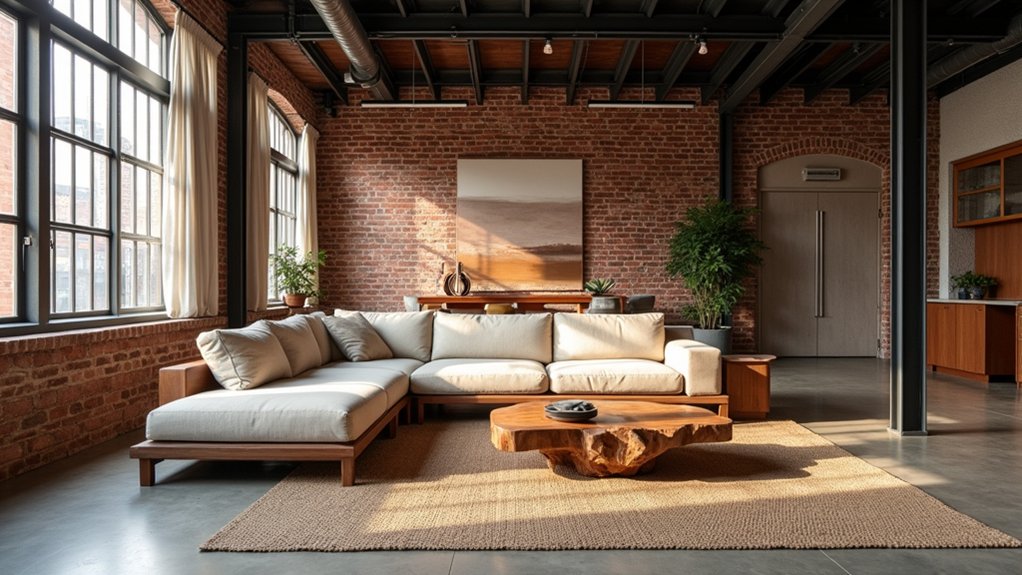
You’ll get the clean, modern look buyers expect when you balance industrial surfaces with tactile warmth. Pair concrete floors or counters with warm wood tables, shelving, or casegoods to add visual ROI without fighting the architecture.
Then layer exposed brick with soft wool throws or rugs to control echo, improve comfort, and keep the space feeling premium rather than raw.
Pair Concrete With Warm Wood
Because concrete dominates with cool mass and visual weight, you’ll get a more market-ready, livable industrial look by pairing it with warm wood that adds grain, color variation, and acoustic softness.
Use Concrete countertops to signal durability and contemporary value, then counterbalance them with Warm wood accents that read tailored rather rather than rustic.
Specify walnut, white oak, or ash in matte finishes to avoid glare against polished slabs. Keep undertones consistent: pair cooler gray concrete with neutral or slightly smoked woods; pair warmer concrete with honey tones.
Add wood at touchpoints—cabinet fronts, stair treads, bench seating, or a slatted ceiling panel—to improve perceived comfort and reduce echo.
Maintain crisp reveals and minimal hardware so the mix feels intentional, not improvised. Buyers notice that discipline quickly.
Layer Brick With Soft Wool
Warm wood handles comfort at the touchpoints, then brick and wool take over the job of making an industrial shell feel finished and saleable. You’ll layer brick strategically: keep one authentic wall exposed for credibility, then add brick slips where you need proportion and visual weight without structural cost.
Next, introduce soft wool through rugs, boucle upholstery, and wool throws to counter hard edges and improve dwell time during showings. Specify wool-backed acoustic panels on key echo paths—behind seating, along mezzanine rails—to cut reverb and sharpen speech clarity, a measurable upgrade buyers notice.
Wool also adds thermal insulation at the perimeter: line window bays, benches, or headboards to reduce radiant chill and stabilize comfort with minimal HVAC load. Keep tones neutral so modern pieces read premium.
Pick a Modern + Industrial Color Palette
A strong modern + industrial palette typically leans on three core anchors—cool neutrals, dark metals, and one controlled accent—to keep exposed structure looking intentional, not unfinished.
Start with concrete gray, chalk white, and greige to stabilize large planes and support Color harmony across open layouts.
Then specify dark metals—matte black, gunmetal, or oiled bronze—so beams, frames, and hardware read as a cohesive system, not scattered parts.
Finally, add one accent pulled from market-proven winners: rust, deep olive, ink blue, or oxblood.
Keep accent accents disciplined: repeat them in two to three touchpoints (textiles, art, small decor) and avoid competing hues.
You’ll get contrast, cleaner sightlines, and a higher-end finish that sells the architecture.
Bridge the Look With Modern Industrial Lighting
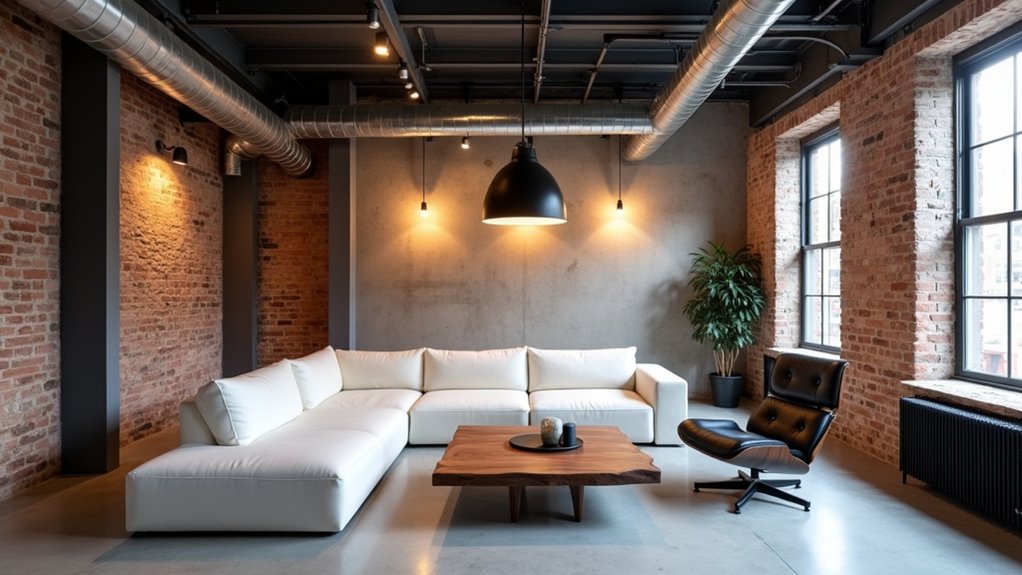
While your palette sets the baseline, modern industrial lighting does the heavy lifting by visually tying sleek furniture profiles to exposed beams, ducts, and concrete.
You’ll get the cleanest bridge by layering task, ambient, and accent sources so the room reads intentional, not improvised.
Prioritize Industrial lighting fixtures with refined geometries—linear pendants over a minimalist dining table, track heads aimed at art, and a slim floor lamp beside low-profile seating.
Specify Modern light bulbs with high CRI (90+) to keep upholstery and wood tones accurate against gray substrates.
Use dimmable drivers to tune contrast: brighter for work zones, softer for lounge zones.
Keep sightlines crisp by aligning fixture centers with furniture axes and circulation paths.
Mix Metals and Finishes Without Visual Clutter
Because industrial shells already bring high-contrast surfaces—raw steel, concrete, and brick—your metal and finish mix needs a clear hierarchy to avoid visual noise. Pick one “primary” metal finish that shows up on the biggest touchpoints, like table bases, shelving frames, or window hardware, then limit accents to one or two secondary tones.
Use a simple ratio: 70% primary, 20% secondary, 10% accent. Keep undertones consistent—warm brass pairs best with warm woods; cool chrome aligns with gray concrete. Repeat each finish at least twice so it reads intentional, not random.
When you need variety, vary sheen instead of color: matte black plus satin black delivers depth without clutter. This approach protects visual harmony and feels premium in resale comps.
Keep Modern Furniture Scale Right for Lofts
If you oversize sleek sectionals or underscale occasional chairs, a loft’s open volume makes the mismatch obvious and can drag down both flow and perceived value. Start by mapping key sightlines and circulation paths, then size primary pieces to anchor zones without choking them.
In sales terms, buyers read scale harmony as “intentional” and pay more for layouts that photograph cleanly. Use a rug and coffee table sized to the sofa’s footprint, and keep clearances consistent to protect proportion balance.
Choose fewer, larger accent chairs rather than many small ones that look like staging props. Match low modern profiles with taller industrial elements by adding height through art or lighting, not bulk.
Measure before you buy, and audit ceiling height impact.
Frequently Asked Questions
How Do I Improve Acoustics in Industrial Spaces Without Sacrificing Modern Style?
You tame echo like a steel canyon with soft moss: apply soundproofing techniques—sealed gaps, mass-loaded vinyl, rugs—and specify sleek acoustic panel designs in felt or wood slats, positioned at reflections for measurable RT60 gains.
What Window Treatments Suit Factory-Style Windows While Staying Contemporary?
Choose minimalist roller or solar Blind styles that fit steel frames and control glare. Pair Curtain fabrics like textured linen or acoustic sheers on ceiling tracks. You’ll preserve sightlines, add softness, and meet modern buyer expectations.
Which Plants Thrive in Loft Conditions and Complement Modern-Industrial Interiors?
You’ll get the best loft performance from snake plants, ZZ plants, pothos, rubber trees, and fiddle-leaf figs; they handle variable light and dry air. Use Indoor greenery strategically—optimize Plant placement near windows, avoiding drafts.
How Can I Hide Cables and Outlets in Exposed-Wall Industrial Architecture?
Like a magician’s misdirection, you’ll route concealed wiring through metal conduit, baseboards, or cable raceways, then use outlet camouflage via paintable covers, recessed boxes, or furniture-backed panels—cleaning sightlines, meeting code, and boosting resale appeal.
What Maintenance Routines Keep Concrete Floors and Modern Upholstery Looking New?
You’ll keep concrete floors fresh by dust-mopping daily, pH-neutral mopping weekly, and scheduling Concrete sealing every 12–24 months. You’ll preserve textiles with prompt blotting, weekly vacuuming, and quarterly Upholstery cleaning, using protectant.
About the Author