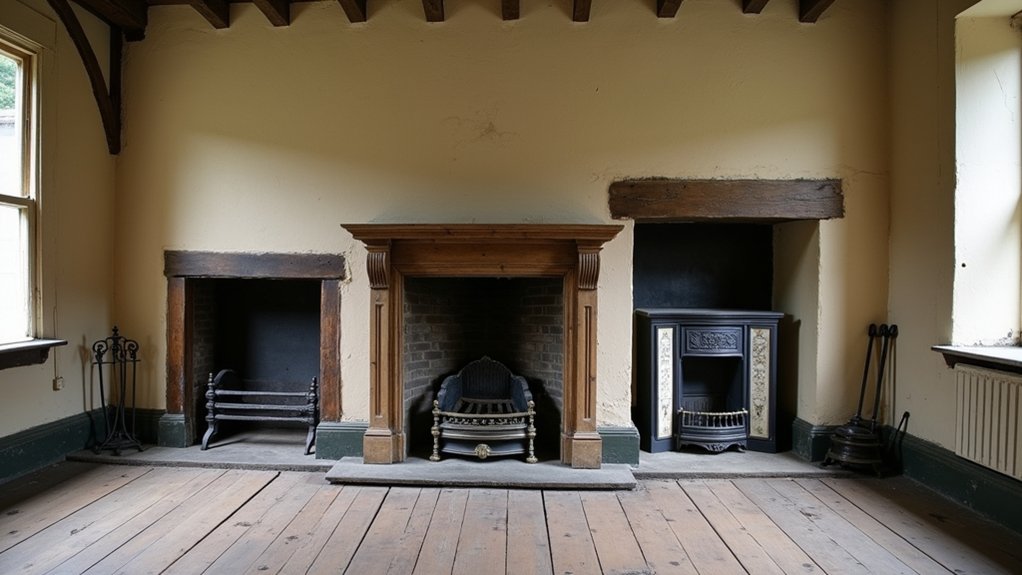
There’s something special about a UK Period Fireplace in an older property. In many pre‑1900 UK houses, fireplaces still anchor the main room—often more than half of what you’ll spot on a street of terraces. You can date most of them fast if you treat the surround like trail sign: soot‑worn stone suggests an inglenook, a heavy bressumer points to Tudor or Stuart, tight symmetry flags Georgian, and cast iron with tiles usually means Victorian. But one small detail can flip your call, so you’ll want to check…
Key Takeaways
- Medieval inglenook fireplaces were vast open-hall bays with rough stone cheeks, smoke-blackened canopies, and spit hooks for communal cooking.
- Tudor and Stuart hearths narrowed the opening, added stout bressumers, and improved smoke control with straighter jambs and defined throats.
- Georgian fireplaces became symmetrical and restrained, pairing crisp stone surrounds with shallow coal grates, ash pits, and tighter joints.
- Victorian designs popularised cast-iron inserts and decorative tiled surrounds, with vents, fixing lugs, and durable, easy-clean tile patterns.
- Edwardian and Arts & Crafts fireplaces favoured lighter proportions, honest joinery, and neatly run tilework with precise reveals and clean metal detailing.
UK Period Fireplace Dating: The Quick Visual Checklist

Before you start prising off trim or ordering replacement tiles, date the fireplace with a fast visual sweep: check the opening shape (big inglenook vs tight cast insert), the surround material (rough local stone, plain timber, or polished marble), and the tell-tale hardware—hob grates, decorative ironwork, or a full register grate. Then grab a torch, stiff brush, and mirror to read the clues.
Look for machine-cut brick, crisp mouldings, and standardized cast-iron parts that point to later periods. Note flue size and liners; narrow, regular flues often signal retrofits for Modern heating.
Check fixings: slotted screws, nails, or cementitious bedding help you bracket dates. Finally, scan for Sustainable materials—reclaimed tiles, salvaged stone, lime mortar—before you disturb anything or haul debris outside.
Medieval Inglenook Fireplaces: Soot, Stone, Open Halls
Once you’ve clocked the broad period from the opening shape and fixings, the medieval inglenook stands out as the big, workmanlike fire bay built for an open hall, not a neat cast insert. You’ll see rough stone cheeks, a wide throat, and a smoke-black canopy where medieval soot has baked in for centuries.
Bring a torch, a stiff brush, and a scraper: you’re looking for soot layers, heat-spalled stone, and iron hooks or simple peg holes for spit supports. Check the floor for a worn hearth edge and ash-packed joints.
In open halls, draught marks and uneven staining tell you where smoke curled before any proper flue. Measure the opening; big spans usually mean earlier, communal use.
Tudor & Stuart Fireplaces: Bressumers, Brick, Deep Hearths
Although they still read as big, working hearths, Tudor and Stuart fireplaces tighten up the medieval bay with a stout bressumer (massive timber or stone lintel), more deliberate brickwork, and a deep, squared hearth that expects a proper flue.
You’ll spot Tudor architecture in the straightened jambs and the shift from rough stone to laid brick you can rake, repoint, and true up with line and level.
Check the bressumer for sag, insect holes, or char; wedge and pack it before you touch the stack.
The hearth’s depth lets you set dogs, trivets, and a crane without crowding the fire, and the throat guides smoke better on windy days.
Look for Stuart symbols carved on overmantels—they’re a dating clue, not a fuel guide.
Georgian UK Fireplaces: Symmetry, Stone Surrounds, Grates
As the Georgian taste for order takes over, you’ll see the fireplace snap into symmetry: a centered opening, straight jambs, and a crisply proportioned stone surround that reads like joinery done in masonry. You can spot this period style fast: restrained mouldings, clean lines, and a shelf set level like a well-struck datum on a site line.
When you inspect one, bring a tape, a straightedge, and a torch. Check the surround for square returns, tight joints, and hairline cracks around the lintel. Look behind the grate: Georgian grates sit shallow, designed to burn coal efficiently, with a neat ash pit and simple cheeks.
Measure the opening and hearth projection, then check flue draw on a windy day to confirm the architectural features still work.
Victorian UK Fireplaces: Cast Inserts and Tiled Panels

With a Victorian fireplace, you’re working with a cast-iron insert that’s built like kit from a good foundry—check the seams, vents, and fixing lugs before you lift it into place.
You can scrub back the iron, black it up, and bed it square so it draws clean and sits tight against the opening.
Then you set decorative tiled surrounds like you’d lay a weatherproof splashback: sound substrate, straight lines, and heat-safe adhesive so the pattern stays sharp when the fire’s running.
Cast-Iron Insert Craftsmanship
Because a Victorian cast-iron insert has to take heat, ash, and hard use day after day, the craft starts at the foundry and finishes at your hearth. You’ll spot cast iron durability in the weight, crisp mould lines, and a face that stays flat after decades of firing.
Look for tight joints, intact lugs, and no hairline cracks around the flue throat.
When you fit one, work like you’re setting kit in a field shelter: measure the opening, square the insert, and pack behind with non-combustible fill.
Use a wire brush, scraper, and vacuum to clear scale, then stove-black or heatproof paint in thin coats. These craftsmanship techniques keep draw steady, edges true, and maintenance simple year after year.
Decorative Tiled Surrounds
How do you turn a plain cast insert into a proper Victorian focal point? You frame it with a tiled surround that’s tough, bright, and easy to scrub after a winter’s burning.
Start by checking the hearth and opening are square; use a level, tape, and a straightedge. Dry-lay your tiles to lock in spacing, then mark cuts with a pencil and score them outside on a stable board.
Choose Fireplace color to suit the room: deep greens and ochres read period, while cream keeps soot marks quiet.
Set tiles with heat-rated adhesive, keep joints even with spacers, and wipe as you go. Finish with grout, sealant, and small Decorative accents—corner rosettes or patterned panels—to pull the ironwork together.
Edwardian & Arts and Crafts Fireplaces: Lighter, Handmade Detail
You’ll notice Edwardian fireplaces slim down the surround and open up the room, so you can check proportions fast with a tape and straightedge.
With Arts and Crafts pieces, you’re looking for honest, handmade joinery and crisp, purposeful carving—run your hand over edges and sight down lines like you’d a well-set gate.
Then inspect the tilework and metal insert: tap tiles for hollows, look for tight grout and clean corners, and make sure the grate and trim sit square and solid.
Lighter Edwardian Proportions
While the Edwardian era kept the Arts and Crafts respect for honest materials, it lightened the whole fireplace profile so the surround reads as joinery rather than bulk. You’ll spot slimmer jambs, a shallower shelf, and a higher, squarer opening that frames a tiled insert without hogging the room.
When you’re measuring up, run a straightedge across the wall and check reveals; these designs rely on crisp lines, not weight.
Treat it like fitting exterior trim: mark plumb, scribe tight to uneven plaster, and use a sharp block plane to ease edges.
For Modern reinterpretations, choose eco friendly materials like reclaimed oak or low-cement cast stone, then keep proportions lean so the firebox stays the visual anchor.
Arts And Crafts Craftsmanship
Although Edwardian surrounds slimmed down, Arts and Crafts craftsmanship still shows up in the places your hands and tools actually touch: pegged joints, proud wedges, stopped chamfers, and tile runs set dead true inside a crisp opening.
When you restore one, you work like you’re on a wet site: check plumb with a level, snap chalk lines, then pare back proud edges with a sharp chisel and block plane.
You’ll spot artisan techniques in the quiet decisions—hand-cut rebates, slightly eased arrises, and tool marks left honest, not sanded flat.
Treat material sourcing like fieldcraft: choose straight-grained oak, dense local stone, and lime-compatible mortar that’ll breathe through winter.
You’re not chasing ornament; you’re building durability you can service again.
Tilework And Metal Inserts
Those honest joints and true openings set you up for the next make-or-break work: tile runs and a metal insert that actually fits. Snap a chalk line, dry-lay the field tiles, then cut edges with a wet saw out in the yard so dust stays outside. Use a small notched trowel and lime-friendly adhesive; keep spacers tight and wipe joints before it skins.
When you’re doing fireplace restoration, aim for flat, even planes—Edwardian surrounds look light only if the tilework’s dead true. Offer up the cast-iron insert early, scribe the reveal, and shim with non-combustible packers.
Wire-brush, de-rust, and blacken the grate, then chase crisp corners in the metalwork detailing with files and a punch.
Frequently Asked Questions
What Permissions Are Needed to Alter a Listed Period Fireplace?
You’ll need Listed Building Consent, and often planning permission, before you alter it; you must also meet Building regulations. Check with your council’s conservation officer for Heritage conservation guidance, then document, repair, and install safely.
How Can I Improve Fireplace Efficiency Without Losing Historic Character?
Sure, keep worshipping your drafty shrine: add Fireplace insulation behind the surround, fit a tight damper and fireback, and use Modern adaptations like a discreet stove insert. You’ll cut smoke losses while keeping period looks.
What Are Typical Costs to Restore Versus Replace a Period Fireplace?
You’ll usually pay £500–£3,000 to restore, or £1,500–£6,000+ to replace, depending on fireplace material costs and restoration vs replacement scope. Add £200–£800 for lining, hearths, and fitting.
Which Fuels Are Safe and Legal for Different Historic Fireplace Types?
You can burn seasoned logs, burn smokeless coal, burn approved briquettes: open hearths handle solid fuel; inserts need suitable liners; gas needs certified fitting. Follow Fire safety checks and Fuel regulations, especially in smoke-control zones.
How Do I Find Qualified Craftspeople for Period Fireplace Restoration?
Start with HETAS, Guild of Master Craftsmen, or SPAB directories, then check insurers’ approved lists. Ask for photos and references showing Restoration techniques and Craftsmanship qualities. Get written quotes, site inspections, and clear warranties.
About the Author