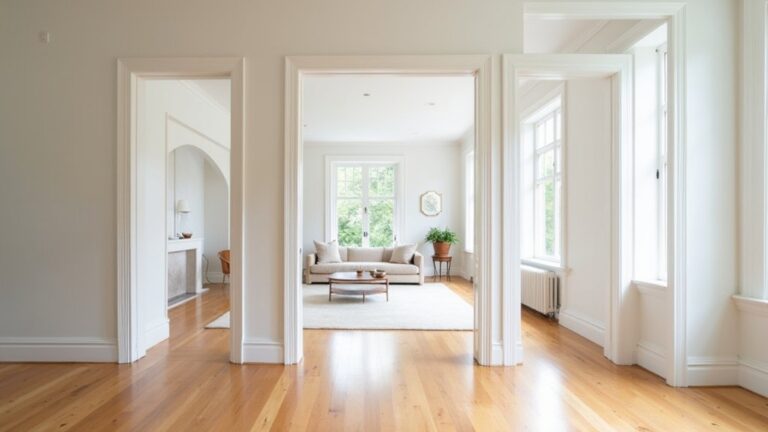
In a London townhouse survey, you might find two fireplaces on the same floor—one a heavy coal-hog, the other a calm stone frame that seems to breathe with the room. You can picture how Robert Adam shifted the hearth from blunt utility to balanced architecture, slimming the surround, tightening proportions, and keeping ornament as measured as a clipped hedge. If you’re restoring, specifying, or simply comparing rooms, the tells show up fast—once you know where to look…
Key Takeaways
- Adam shrank bulky hearths into lower, wider openings that integrated with rooms and improved draft and heat proximity.
- He replaced thick jambs and heavy mantels with slim surrounds and tight shelves for a lighter, cleaner architectural profile.
- Adam aligned fireplace proportions with doors, windows, and cornices, creating balanced interiors with clear visual hierarchy.
- He introduced disciplined neoclassical ornament—husks, laurel, shells, urns, paterae—carved in shallow relief for subtle shadow.
- His designs emphasized precise craftsmanship: crisp friezes, continuous lines, clean miters, and fine joints over soot-managing hoods and grates.
What Were Fireplaces Like Before Adam’s Style?
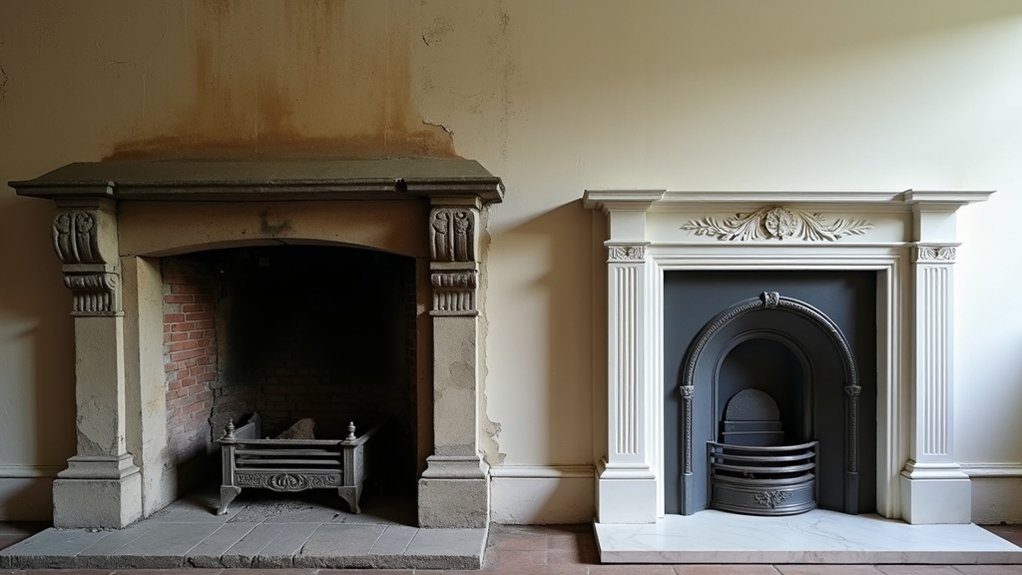
Before Robert Adam refined the British hearth, most fireplaces worked hard but looked heavy. You’d find deep openings, thick stone or brick jambs, and bulky mantels built to take constant heat and soot.
In many rooms, the fire sat low and wide, pulling air unevenly and sending smoke into the space when winds shifted. You relied on large grates, iron dogs, and broad hoods, which trapped grime and demanded frequent sweeping.
When you study historical fireplace evolution, you see practical choices shaped by fuel, draft, and local materials. Traditional hearth designs favored durability over finesse: rough-molded plaster, darkened timber surrounds, and hard edges that caught ash.
You gained warmth and cooking utility, but you sacrificed lightness and easy maintenance indoors.
How Did Robert Adam Change Fireplace Proportions and Surrounds?
Although the Georgian hearth had already started to shrink, Robert Adam pushed the change with precise proportions and lighter surrounds that made a room feel cleaner and better balanced.
You see it in the way the opening relates to the wall plane: lower, wider, and visually calmer, so heat sits closer to where you live instead of roaring up the chimney. You’d specify slimmer jambs and a tighter shelf, reducing heavy projection and letting daylight travel across plaster and stone like it does across a cliff face.
Adam also tuned each surround to Architectural symmetry, aligning it with doors, windows, and cornices so the fireplace reads as part of the room’s natural geometry. He kept Neoclassical ornamentation controlled, so mass feels airy and materials breathe.
What Motifs and Mantel Details Define an Adam Fireplace?
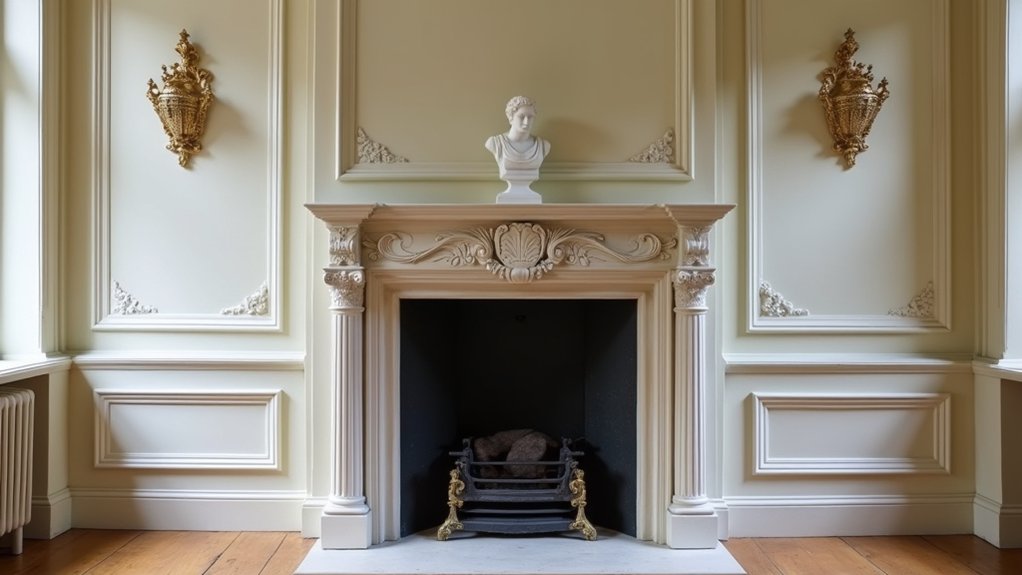
Once Adam settled the surround’s proportions into that calmer, lower-and-wider frame, he let motif do the fine work of character without adding weight. You’ll notice decorative motifs that feel botanical and coastal: husk swags, laurel, wheat ears, acanthus, shells, and light urns, often tied with crisp ribbons.
He keeps relief shallow, so shadows read like leaf-veins instead of heavy carving.
Look to the frieze for repeating bands—Greek key, bead-and-reel, fluting, and small rosettes—set out with a draftsman’s rhythm. The center tablet may hold a patera or medallion, giving you a calm focal point above the fire.
Good mantel craftsmanship shows in sharp arrises, clean miters, and continuous lines that guide your eye like a garden path.
How to Spot an Authentic Robert Adam Fireplace Today?
If you’re trying to confirm a Robert Adam fireplace in the wild—whether it’s in a country house, a London terrace, or a salvage yard—you’ll need to read it the way you’d read a landscape: proportion first, then the fine grain of detail.
Start with the opening: it should feel calmly rectangular, never bulky, with a crisp, shallow frieze and a light entablature. Check the jambs for disciplined fluting or tapering pilasters, not heavy Victorian carving.
Run your eye over the architectural ornamentation: low-relief swags, urns, husks, and delicate paterae, spaced like well-planted hedgerows. Look for consistent tool marks, fine joints, and period stone.
Finally, confirm historical influence—Roman clarity, Palladian order—rather than later pastiche.
Frequently Asked Questions
How Much Does It Cost to Restore an Adam-Style Fireplace?
You’ll typically pay $2,000–$10,000+ to restore an Adam-style fireplace, depending on damage and materials. You’ll preserve Historical significance and Artistic influence, using lime mortar and gentle cleaning, and you’ll budget for skilled carving.
Are Adam Fireplaces Safer or More Efficient Than Earlier Designs?
In a drafty cottage, you’ll find Adam fireplaces can be safer and slightly more efficient, with better proportions and tighter surrounds. You’re choosing Historical significance and Architectural influence, while you’ll still rely on a sound flue.
Which Woods and Marbles Were Commonly Used in Adam Mantelpieces?
You’ll commonly see Marble varieties like Carrara, Siena, and Belgian black, plus Wood species such as mahogany, oak, and pine in Adam mantelpieces. Choose dense marble and stable hardwoods—they’ll weather heat, wear, and time.
Did Robert Adam Design Fireplace Grates and Fireboxes Too?
Yes, you’ll find Adam designed fireplace grates and sometimes fireboxes, coordinating them with Fireplace ornamentation and other Historical design features. You can specify cleaner air draw, durable ironwork, and hearth proportions for efficient, steady heat.
Can Modern Homes Incorporate Adam Fireplaces Without Breaking Building Codes?
Yes, you can incorporate Adam fireplaces without breaking codes if you use certified liners, proper clearances, and vetted venting. Balance Historical authenticity with Modern integration by choosing noncombustible surrounds, efficient inserts, and local inspections.
About the Author