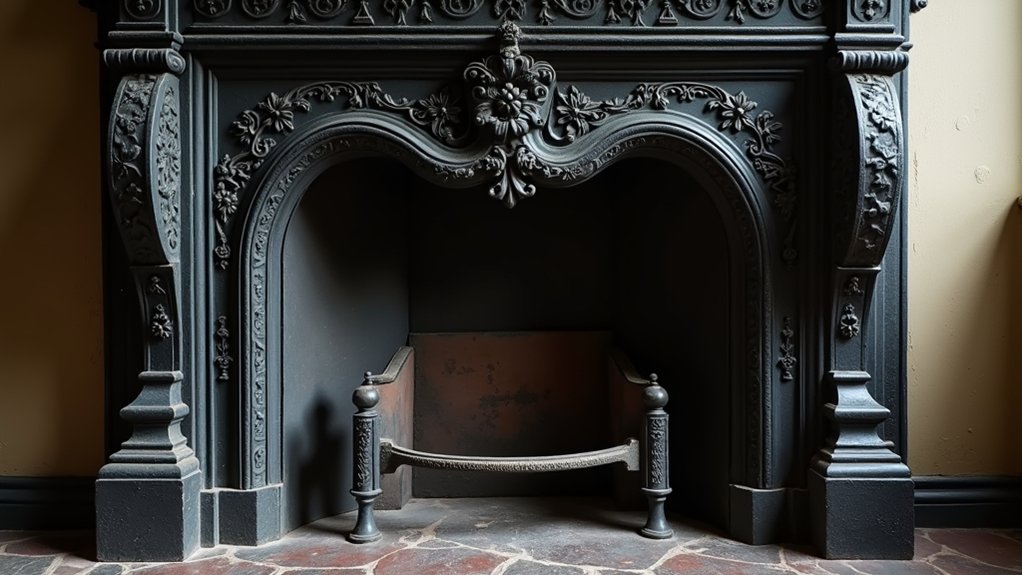
You stand in front of a soot-stained hearth and you’re not just seeing decoration—you’re looking at a cast-iron insert built to manage heat, draft, and smoke with hard-won Victorian know-how. You can feel the difference in the weight, the crisp relief, and the way the firebox shapes the flame. But if you don’t know the parts, the fixings, and the wear patterns, you’ll miss what’s real—and what it was meant to do.
Key Takeaways
- Victorian cast-iron inserts lined fireboxes, controlled airflow, and pushed radiant heat forward, making open fires warmer and more efficient.
- Their parts—back plate, side cheeks, throat/canopy, grate, and ashpan—worked together to improve draft, reduce smoke, and stabilize combustion.
- Genuine originals show crisp yet softened casting detail, fine sand texture, hand-filed seams, and period fixings like slotted screws and square nuts.
- Wear clues include soot in recesses, heat-crazed blacking, and rubbed high points; many originals are narrower and shallower than modern openings.
- Foundries used wooden patterns, green-sand molds, cupola furnaces, and blackening finishes, then shipped heavy inserts via wagons and rail to ironmongers.
Victorian Cast-Iron Fireplace Inserts: Parts and Purpose

Although they look like pure ornament, Victorian cast-iron fireplace inserts are working hardware: they line and protect the firebox, manage airflow, and push heat back into the room instead of letting it soak into brick. You’ll notice a back plate that takes the brunt of flame, side cheeks that shield masonry, and a throat or canopy that guides smoke toward the flue.
A built-in grate lifts fuel off the hearth so air can feed the burn, while an ashpan or cleanout keeps drafts predictable. Many designs add a fender or trim to guard flooring and frame the opening.
This is Historical craftsmanship that favors thick, heat-cycling iron, and Artistic embellishments that don’t compromise function.
How to Spot a Genuine Victorian Insert
Three quick checks will tell you whether you’re looking at a genuine Victorian cast-iron insert or a later reproduction. First, study the back and edges: original castings show crisp yet slightly softened detail, fine sand texture, and uneven hand-filed seams; repros often look too smooth or uniformly sharp.
Second, check the fixings and joints. Period pieces use slotted screws, square nuts, and simple lugs; modern adaptation tends to hide fasteners, use Phillips heads, or weld in tidy beads.
Third, read the wear. You should see soot staining in recesses, heat crazing in old blacking, and honest rubbing on high points of Victorian design.
Finally, measure: many originals fit narrower, shallower grates than today’s standard openings.
How Victorian Inserts Improved Heat, Draft, and Health
Once you’ve confirmed you’re holding a real Victorian cast-iron insert, the next thing to notice is how hard it worked for the room, not just how it looks. Its shallow firebox and shaped back throw radiant heat forward instead of letting it die up the chimney. The iron heats fast, holds warmth, and shrugs off hard firing—useful when you come in wet and cold.
You also get better draft control. A tighter throat and smoother passage speed smoke upward, so the fire lights quicker and backpuffing drops. Many inserts paired with small vents to feed air without cracking windows. That meant fewer sooty walls and less stale, damp air—real health gains.
In Victorian interior design, that practicality hid behind ornament, yet it still nudges Modern heating efficiency today.
How Foundries Made and Sold Cast-Iron Inserts
Before an insert ever warmed your parlour, a foundry crew had to pattern it, cast it, and finish it like working hardware, not fragile decor. You’d start with a wooden pattern and core boxes, then ram green sand tight around them. You’d melt pig iron and scrap in a cupola, tap it, and pour steady to avoid cold shuts.
After shakeout, you’d chip gates, grind seams, drill fixing holes, and blacken the face so it shed soot and weathered heat cycles.
To sell them, you’d load inserts onto wagons, ship by rail, and supply builders’ yards and ironmongers by the catalog. You’d price by weight and grate size, and tout efficiency.
Modern manufacturing echoes that workflow, but you can’t ignore Environmental impact from fuel, slag, and smoke.
Styles, Makers, Dating Clues, and Safe Preservation

If you’re standing in front of a Victorian cast-iron insert and trying to judge what you’ve got, start by reading it like field gear: profile, pattern, marks, and wear tell you the style, likely maker, and rough date. Arched hoods and Gothic tracery lean early; crisp sunflower, Aesthetic, or Japonisme panels push later Victorian design. These are must different from Georgian fireplaces and other periods.
Look for foundry names, patent dates, or retailer plaques on the back, ash lip, or damper plate; mismatched screws and fresh grind marks hint at rebuilds. Weight and ring matter too—good cast iron durability feels dense and sounds clear when tapped.
Preserve it like a tool: vacuum soot, keep rust dry, use graphite on dampers, and avoid sandblasting; a thin stove polish or microcrystalline wax seals without hiding detail.
Frequently Asked Questions
Do Victorian Cast-Iron Inserts Increase a Home’s Resale Value?
Yes, you can boost resale value if you install Victorian cast-iron inserts well. Buyers like Historical authenticity, but Restoration challenges can scare them. You’ll win most when you show safe lining, solid hearthwork, and clean iron.
Can I Install a Victorian Insert in a Modern Gas Fireplace?
Yes, you can—about 60% of gas units accept retrofit surrounds if clearances match. Choose Victorian craftsmanship sized for modern compatibility, use heat-rated fasteners, and have a certified gas tech verify venting, ignition, and clearance.
What Does It Typically Cost to Restore a Damaged Victorian Insert?
You’ll typically pay $300–$1,500 to restore a damaged Victorian insert. Your cost estimation depends on cracks, missing trim, and finish. Restoration techniques like welding, recasting, sandblasting, and heat-resistant paint add labor.
Are There Insurance or Building-Code Issues With Using an Antique Insert?
Yes—ignore them and you’ll invite a wildfire in your living room. You’ve got to confirm insurance accepts it, meet local building-code clearances, liners, and venting for fire safety, while preserving historical authenticity with certified inspection.
Where Can I Buy Authentic Victorian Inserts Outside the UK?
You can buy authentic Victorian inserts outside the UK via architectural salvage yards, antique dealers, and online platforms shipping globally. Prioritize Antique sourcing and Authentic craftsmanship; request provenance, measure firebox fit, and confirm iron condition before purchase.
About the Author