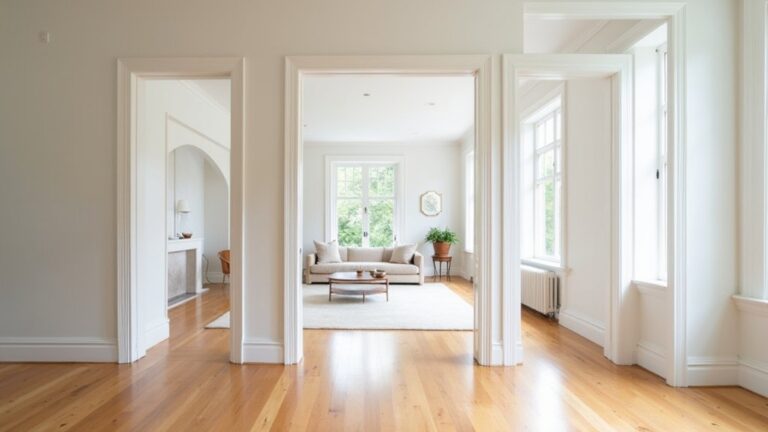
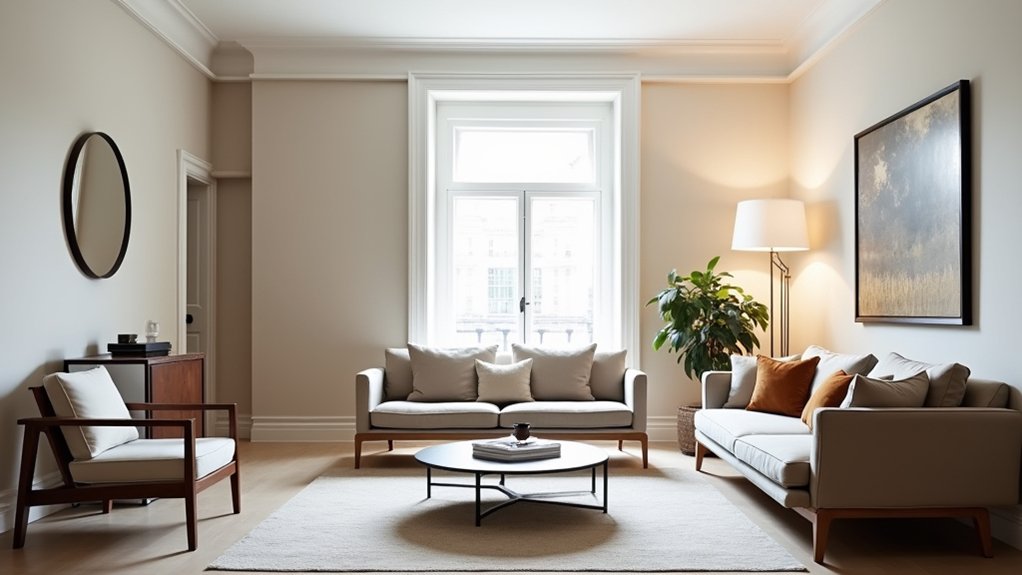
You’ll get better seating and smoother flow when you treat your lounge like a measured plan, not a guessing game. Start by measuring walls and key walkways, then tape out furniture footprints so you can see pinch points before you lift anything. Pull out clutter and any bulky pieces that block movement. Angle seats toward each other with 18–24 inches between edges, then right-size the table and layer lighting—because the next choice you make decides everything.
Key Takeaways
- Measure the room and furniture footprints, then tape layouts to confirm 30–36″ walkways and door, drawer, and radiator clearances.
- Trace natural paths from entry to seating, windows, and storage, and remove obstacles like bulky tables, parked ottomans, or wide-based lamps.
- Choose a layout that supports flow: float a slim sofa with a clear lane in long rooms, or anchor one wall in square rooms.
- Arrange seating for conversation by angling chairs slightly, keeping seats within easy speaking distance, and leaving 18–24″ between seat edges.
- Right-size surfaces and lighting: use a narrow or nesting table, keep 14–18″ from seating, and zone lamps to brighten seating without blocking paths.
Measure Your Small Lounge (and Walkway Clearances)
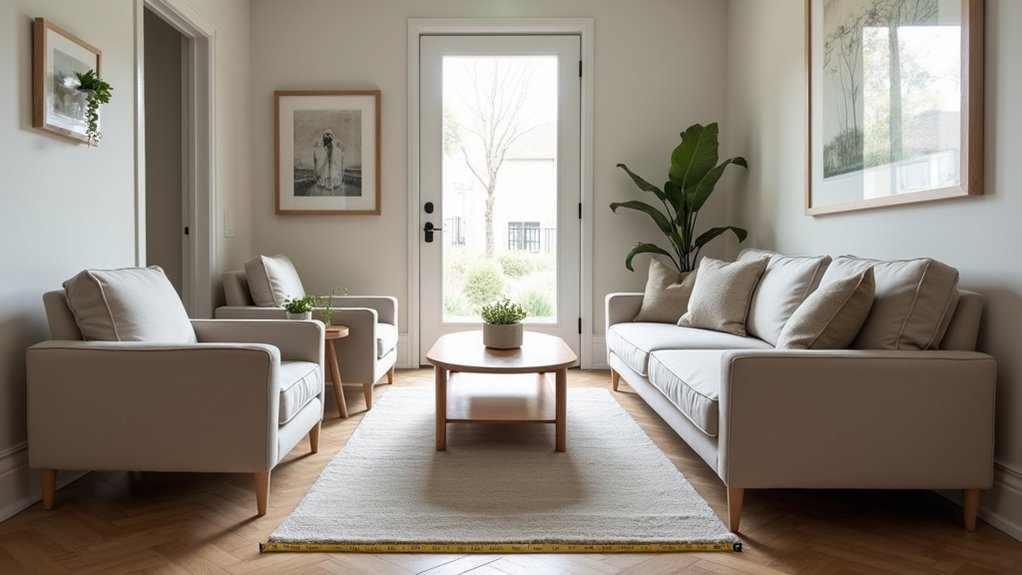
Before you move a single piece of furniture, measure your lounge and its “working space” so you don’t block how you actually use the room. Grab a tape measure and note wall-to-wall dimensions, window and door swing, radiator depth, and outlet locations. Mark these on a quick sketch.
Next, map clearances: keep main walkways about 30–36 inches, and allow 18 inches around a coffee table for knees and reach. Measure furniture footprints too, including recline or pull-out ranges, so pieces don’t collide.
Use painter’s tape to outline layouts on the floor for a fast reality check. Once sizing works, plan Decorative accents and Color schemes that won’t add visual bulk or clutter.
Find What’s Blocking Small Lounge Flow and Seating
Now that you’ve mapped the room and clearances, walk the space and pinpoint what’s actually choking movement and seating. Start at each entry and trace the natural path to the main seat, windows, and storage. Note where you sidestep: a coffee table that’s too deep, an ottoman parked in a pinch point, or a chair that forces a tight turn. Check door swings, drawer pulls, and radiator or vent zones that steal usable inches.
Next, audit visual clutter that makes the room feel tighter than it is. Oversized Decorative accents on surfaces, floor lamps with wide bases, and stacks of throw pillows can block perches. Replace bulky pieces with slim Storage solutions—wall shelves, closed baskets, or nesting tables—so seating stays accessible and routes stay clean.
Choose a Small Lounge Layout for Your Room Shape
Where does your room naturally want to send you—straight through, around a corner, or into a dead-end? Map that path first, then choose a layout that protects it.
In a long, narrow lounge, float a slim sofa parallel to the longest wall and keep a clear 30–36″ lane along one side.
In a square room, anchor one wall with your main piece and use a single compact accent piece to balance the opposite corner without choking entries.
In an L-shaped space, dedicate the short leg to storage or media and keep the main zone open.
Match layout lines to your Decor style: crisp grids for modern, angled placements for eclectic.
Use your color scheme to visually “push back” bulky pieces with darker tones.
Set Up Small Lounge Seating for Easy Conversation
Although a small lounge can feel tight, you can make conversation effortless by arranging seats to face each other at a slight angle and keeping everyone within easy speaking range. Pull the main sofa a few inches off the wall so legs can tuck behind it and voices carry evenly.
Add one armless chair or slim loveseat opposite, then rotate it 10–15 degrees to prevent a stiff “interview” line. Keep 18–24 inches between seat edges for comfortable knee room and easy pass-through.
Use a small ottoman that doubles as extra seating, and choose pieces with raised legs to keep sightlines open.
Tie the group together with Decorative accents that don’t clutter, and coordinate Color schemes to calm the space visually.
Right-Size the Coffee Table and Zone Lighting
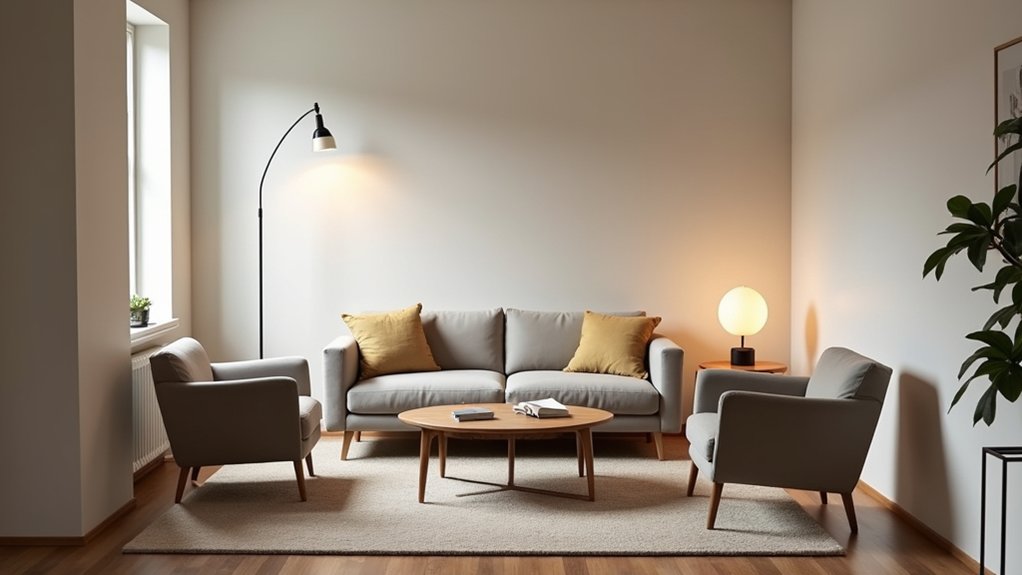
Because the coffee table anchors both traffic flow and reach, size it to your seating first: aim for a tabletop that’s about two-thirds the sofa’s length, set it 14–18 inches from the seat edge, and keep the height within 1–2 inches of your seat cushions so drinks and remotes land easily without forcing you to lean.
If the path feels tight, swap to a narrow oval or two nesting tables you can slide aside when you stand up.
Protect furniture proportions by matching leg visual weight to nearby pieces; airy bases read smaller.
Then zone lighting: place a floor lamp behind the main seat for reading, add a low table lamp on the opposite side to balance glare, and use a dimmable bulb to tune lighting ambiance for conversation.
Frequently Asked Questions
How Can I Make My Small Lounge Look Bigger Without Remodeling?
You can make your small lounge look bigger by prioritizing Furniture arrangement: float key pieces, keep walkways clear, and use multi-use seating. Add lighting enhancements with layered lamps, bright bulbs, and mirrors to bounce light.
What Colors and Patterns Help a Small Lounge Feel Less Crowded?
Choose airy light neutrals and cool pale blues; they’re windows for your walls. With Color psychology, you’ll calm clutter. Use Pattern mixing sparingly: one bold rug, tiny-scale stripes, solid upholstery. Keep contrast low.
Which Storage Solutions Hide Clutter Without Taking up Floor Space?
Use hidden storage like wall-mounted cabinets, floating shelves with bins, and over-door organizers so you don’t lose floor space. Choose multifunctional furniture: ottomans with lift tops, storage benches, and sofa arms with pockets.
How Do I Choose Window Treatments That Won’T Block Light or Views?
In a studio, you’ll pick sheer Curtain materials and top-down Blind styles, so light stays bright and views stay open. Mount high, go inside-mount, and choose slim hardware; you’ll avoid bulk and keep sightlines clean.
What Plants Work Best in Small Lounges With Low Natural Light?
You’ll get the best results with Indoor foliage like snake plant, ZZ plant, pothos, and cast-iron plant—reliable Low light plants. Use slim floor pots, wall planters, and rotate weekly for even growth.
About the Author