
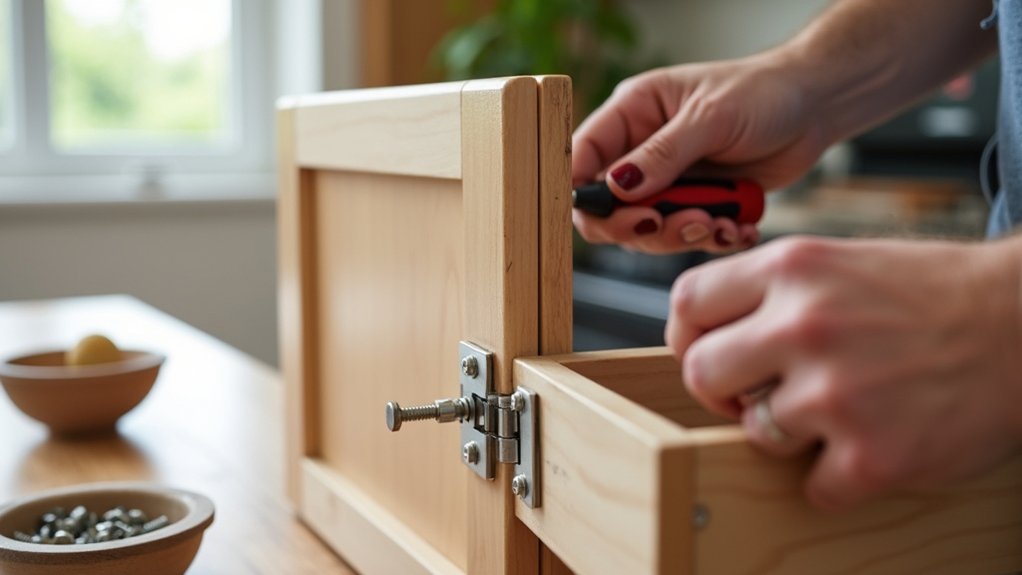
A loose hinge is like a worn-out hinge pin in your routine—you feel it every time the door moves. You can usually fix it fast with a screwdriver, a steady hand under the door, and a quick check for spinning screws or stripped holes. If the screws won’t bite, you’ll swap hardware or rebuild the hole with glue and toothpicks or filler, then re-seat everything square. But first, you need to know exactly what failed…
Key Takeaways
- Tighten hinge and handle screws with the correct screwdriver, supporting the door so screws seat fully without shifting alignment.
- Diagnose looseness by lifting the door corner and checking for backed-out screws, ovalized hinge slots, bent hinges, or rocking pulls.
- Fix stripped screw holes by inserting wood-glued toothpicks, snapping flush, letting dry, then re-driving screws into the rebuilt fibers.
- For badly wallowed holes, pack with wood filler, cure, drill a pilot hole, and use longer or thicker screws without punching through.
- After repairs, adjust hinge side, depth, and height screws for even gaps and flush fit, then add a drop of light oil to the hinge.
Quick Fixes for Loose Cabinet Hinges and Handles
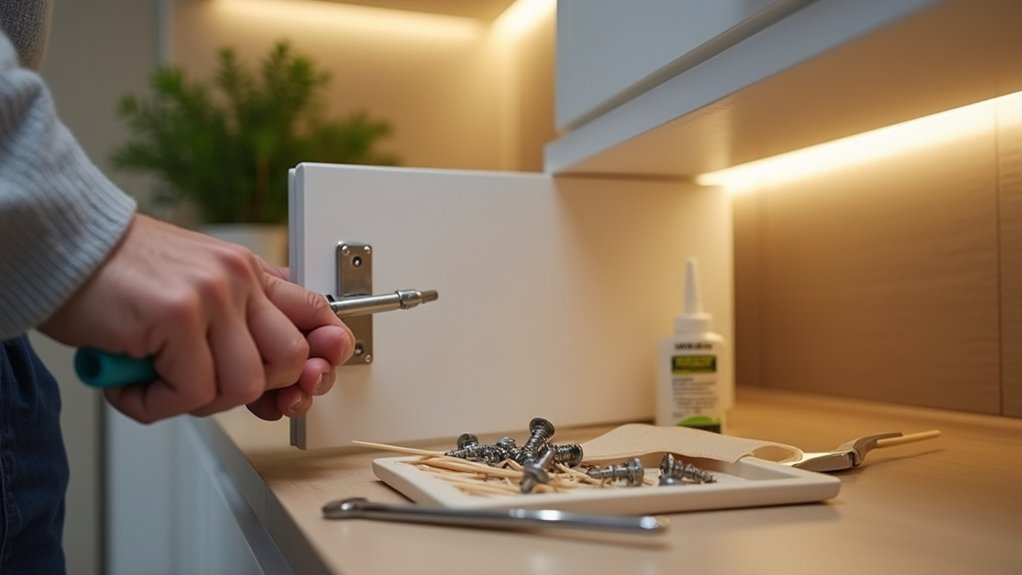
If your cabinet door suddenly sags or a handle starts to wiggle, you can usually stabilize it in minutes with a screwdriver and a few basic supplies.
Open the door, support it with your free hand, and snug each hinge screw with a #2 Phillips or square bit until it seats.
If a screw just spins, swap it for a slightly longer one or add a drop of wood glue and push in toothpicks, then re-drive the screw.
For handles, back out the machine screws from inside the door, align the pull, and retighten with a driver while holding the handle square.
Refit Decorative hinge covers after tightening.
Match cabinet handle styles when replacing hardware for consistent feel and alignment.
Figure Out Why the Hinge or Handle Is Loose
Before you reach for longer screws or filler, pinpoint what’s actually moving: the screw head in the hinge cup, the screw threads in the cabinet box, the hinge itself in its adjustment slots, or the handle/pull against the door face.
Open the door and watch the hinge while you lift gently on the outer corner; any shift at the plate or cup shows the source. Check for a backed-out screw head, an ovalized hinge slot, or a bent hinge arm.
For handles, clamp the door steady and try twisting the pull; if it rocks, the screws may be loosening or the door face may be compressing. Inspect for cracked stiles or bowed doors.
Add Hinge lubrication only after you confirm the hinge isn’t binding. Consider Handle replacement options if the pull’s base doesn’t sit flat.
Repair Stripped Cabinet Screw Holes (Toothpicks, Filler, or Longer Screws)
Once the screws spin without biting, you need to rebuild the wood fibers in the hole so the hinge plate or handle can clamp tight again. Back the screw out and remove the hardware.
For a quick Toothpick repair, dip two or three wooden toothpicks in wood glue, tap them into the hole with a hammer, and snap them flush. Let the glue set, then drive the screw by hand so you don’t re-strip.
If the hole is badly wallowed, pack it with Wood filler using a putty knife, let it cure, and drill a small pilot hole.
Another option is a longer or slightly thicker screw, but only if you won’t punch through the cabinet face or door.
Align Cabinet Hinges and Upgrade Hardware if Needed
After you’ve rebuilt the screw holes, dial in the hinge adjustments so the door sits straight and closes cleanly. Use a #2 Phillips or Pozidriv bit and turn the hinge’s side-to-side screw to set the reveal. Then tweak the depth screw so the door face is flush with the cabinet. Adjust the height screw last; support the door while you loosen it to prevent sag.
Open and close the door to confirm even gaps and no rubbing.
Finish with Hinge lubrication: add a drop of light machine oil at the knuckle, wipe excess, and cycle the hinge. If handles still feel sloppy, explore Handle replacement options—longer backplates, larger-diameter screws, or new pulls that cover worn footprints.
Frequently Asked Questions
How Much Does a Professional Cabinet Hinge Repair Typically Cost?
You’ll typically pay $75–$200 for a professional hinge repair, or $150–$350 if hardware’s replaced. For a Kitchen renovation, you can trim costs with DIY tips: screwdriver, drill/driver, wood glue, dowels, screws.
Can Loose Hinges Indicate Water Damage or Cabinet Structural Problems?
Yes—like a canary in a coal mine, loose hinges can signal Water damage or Structural issues. You’ll inspect screw holes, swollen fibers, soft spots, and joint gaps, then probe with an awl. Tighten, reinforce, or replace.
What Hinge Types Are Most Common, and How Do I Identify Mine?
You’ll most often see concealed European cup hinges, surface-mount butt hinges, or semi-concealed hinges. Identify yours by door removal and measuring the cup, leaf, and screw pattern. Note hinge material and cabinet alignment.
Should I Replace All Cabinet Handles for a Consistent Look?
You don’t need to replace all handles, but do if you’re chasing a uniform line. Match hole spacing, finish, and grip. Mix Decorative hardware with Vintage styles only if you template, drill, and align carefully.
How Can I Prevent Hinges and Handles From Loosening Again Long-Term?
Prevent loosening by using threadlocker, adding toothpicks or dowels in stripped holes, and re-screwing firmly. Apply hinge lubrication yearly. Use handle tightening techniques: torque evenly, add washers, and recheck quarterly with a screwdriver.
About the Author