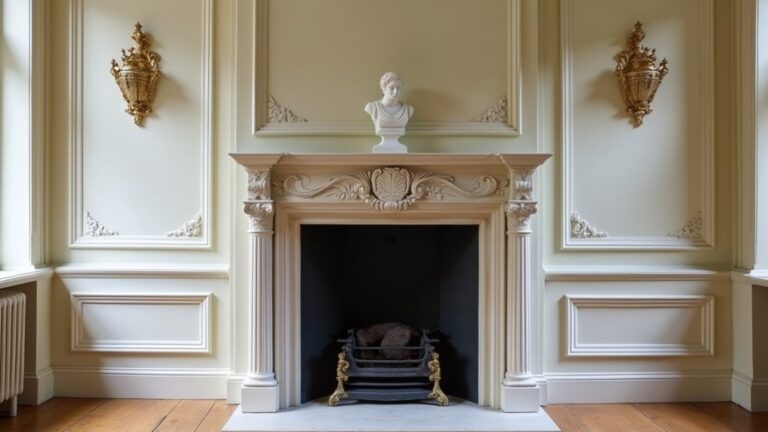

Like a time capsule you can still use, an Edwardian or Victorian fireplace needs modern performance without losing its original story. You start by identifying what’s truly period—tiles, cast iron insert, mantel proportions—then you check for cracks, loose masonry, and an unsafe flue. From there, you choose restore, repair, or a compliant replacement, and plan discreet ventilation and lining upgrades. The next decision is where most renovations go wrong…
Check What Fireplace You Actually Have
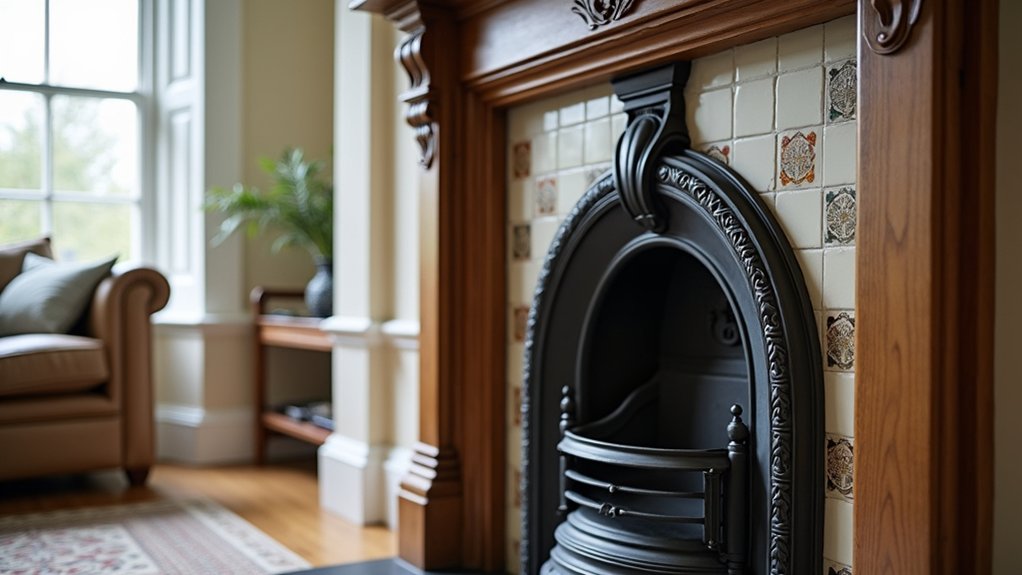
Before you buy a surround, book a sweep, or start chipping plaster, identify exactly what you’ve got: an original Edwardian/Victorian open fireplace, a later insert, or a fully blocked-up opening with a decorative mantel left in place.
Check the proportions: Victorian openings often read taller and narrower; Edwardian tends to be squarer with lighter detailing.
Look for period cues—tile slips, cast-iron register grates, and a shallow arched fireback—versus 1960s tiled infills or concrete lintels.
Inspect the mantel material and fixings: solid marble and timber usually show older dowels and lime-based bedding, while modern adhesive and screws suggest alteration.
Photograph details and measure width, height, and depth; it protects Fireplace aesthetics and supports Historical accuracy.
Renovate the Edwardian/Victorian Fireplace Safely
Once you’ve confirmed what’s original and what’s been altered, renovate with safety as the non‑negotiable priority: isolate the work area, wear proper PPE, and assume soot, sharp metal edges, and loose masonry until proved otherwise. Switch off nearby electrics, protect floors, and ventilate; old soot can be irritant and carcinogenic.
Before you disturb anything structural, check for cracks, bulging brickwork, or a failing lintel, and stop if the breast feels unstable. Don’t dry‑scrape lead-based paint; use tested methods and bag debris for compliant disposal.
Book a qualified chimney sweep to assess and clear the flue, then arrange a smoke test if you’re reopening it. Document details as you go so you maintain Historical accuracy while meeting Fireplace safety expectations and insurance requirements.
Decide: Restore, Repair, or Replace the Insert
Next, you’ll assess the insert’s condition—checking for cracked firebrick, warped cast iron, failed seals, and evidence of past overheating or unsafe modifications.
If the unit is structurally sound and period-appropriate, you can restore or repair it to protect authenticity and avoid unnecessary costs.
If it’s compromised, non-compliant, or beyond economical repair, you’ll replace it with a correctly sized insert that meets current safety and efficiency expectations.
Assess Insert Condition
How do you tell whether an Edwardian or Victorian fireplace insert deserves restoration, needs targeted repair, or should be replaced outright? Start with a close visual and tactile inspection under good light.
Check cast iron for hairline cracks, warping, missing lugs, and heavy pitting; tap gently to spot dead-sounding fractures.
Assess enamel tiles for crazing, spalls, and insecure bedding. Look for overpainting that obscures fireplace aesthetics and compromises historical accuracy.
Open any access plates and verify the throat and flue connection haven’t been bodged with cement blobs or ill-fitting adapters.
Inspect vents, ashpan doors, and grates for free movement and excessive wear.
Finally, note corrosion patterns and heat staining; they often indicate prior overheating or poor draw.
Document everything with photos and measurements.
Choose Restore Or Replace
Your inspection notes and photos now need to turn into a clear decision: restore, repair, or replace the insert.
If the casting’s sound, the doors align, and the grate isn’t burned through, restoration usually wins—strip paint, de-rust, and refinish for Historical accuracy and resale appeal.
Choose repair when you’ve got localized cracks, warped baffles, missing firebricks, or failed seals; stitch-weld or braze only where a specialist confirms it won’t distort the body, and replace consumables with correct profiles.
Replace the insert when the backplate has deep section loss, the flue path can’t be made safe, or parts are unobtainable.
Your Material selection should match era and fuel: cast iron for coal look, steel or approved gas for modern use.
Renovate the Victorian Fireplace Surround and Mantel
Although a Victorian fireplace surround and mantel can look like a simple decorative frame, renovating it demands careful assessment and period-appropriate choices so you don’t damage original materials or erase character.
Start by identifying what you’ve got: cast iron, tiled slips, marble, slate, or timber. Then check for cracks, spalling, loose tiles, and failed adhesive.
Strip paint only after testing for lead; use gentle chemical poultices or low-heat methods, never aggressive sanding on carvings.
Re-bed tiles with lime-friendly adhesives and repoint with fine mortar to match joints.
If you’re refinishing timber, choose a stain or wax that respects grain and sets your fireplace color.
Finish with restrained mantel accessories—period clocks, candlesticks, or mirrors—so the surround remains the focal point.
Upgrade the Fireplace Flue, Liner, and Ventilation
Before you light another fire, treat the flue, liner, and ventilation as the working core of your Edwardian or Victorian fireplace.
Book a CCTV flue survey and smoke test to confirm continuity, clearance to combustibles, and signs of tar, salt staining, or fractured parging.
If the flue is oversized or rough, install a correctly sized, insulated stainless-steel flexible liner (or rigid where required) and register plate to stabilise draw and protect masonry.
Fit a top-sealing damper or chimney cowl suited to your stack, and add an air vent if the room is too airtight for reliable draft.
Choose fireplace accessories—vents, cowls, grilles—in finishes that respect historical accuracy while meeting current building regs and manufacturer clearances.
Add Efficient, Cleaner Heat Without Losing Charm
Once the flue system performs properly, focus on adding efficient, cleaner heat in ways that preserve the Edwardian or Victorian fireplace’s proportions and period detail.
Choose an inset wood-burning or multi-fuel stove sized to the original opening, then specify a discreet register plate and a correctly rated hearth temperature zone.
If you prefer modern heating options, consider a high-efficiency gas fire with a slimline cassette that sits back from the surround, keeping the visual depth.
For eco-friendly fuels, look at kiln-dried logs, certified smokeless briquettes, or bioethanol inserts where a full solid-fuel setup isn’t viable.
Add a top-sealing damper, fireback, and tight-fitting doors to reduce drafts and improve heat retention.
Prioritise HETAS or Gas Safe installation and compliant clearances throughout.
Finish Your Fireplace Renovation With Period Details

When you’ve sorted the structure and heat output, finish the renovation by reinstating the period cues that make an Edwardian or Victorian fireplace look “right” rather than merely refurbished.
Start with the surround: strip back inappropriate varnish, then choose period paint finishes—typically muted, chalky tones for timber or a restrained sheen on cast iron. If you’ve uncovered original tiles, clean and seal them; if not, match glaze colour and scale rather than buying oversized reproductions.
Next, fit correct fireplace accessories: an ash pan cover, fret, and canopy for cast inserts; or a simple blackened register plate if you’ve installed a stove. Choose a fire basket, companion set, and guard with authentic proportions and patina.
Finally, align detailing—beading, corbels, and hearth edges—so everything reads original.
Frequently Asked Questions
Do I Need Listed Building Consent to Alter My Fireplace?
You’ll likely need listed building consent if your property is listed and you alter the fireplace’s character or fabric. Check with your council’s conservation officer. Historic preservation and Building regulations still apply, even for minor works.
How Much Does a Typical Edwardian Fireplace Renovation Cost?
You’ll typically pay £800–£3,500 for an Edwardian fireplace renovation, depending on fireplace materials, condition, and labour. You’ll spend more if you add lining or a new hearth. Your renovation timeline usually runs 2–7 days.
How Long Will the Renovation Take From Start to Finish?
Measure twice, cut once: you’ll finish in 1–3 weeks. Fireplace restoration typically takes 3–7 days; add 2–10 days for hearth rebuilding, liner fitting, and approvals. Your renovation timeline depends on hidden damage and parts.
Can I Install a TV Above a Victorian Mantel Safely?
Yes, you can, if you prioritize Mantel safety and proper clearances. You’ll need heat assessment, adequate height, and rated TV mounting brackets anchored into masonry or studs. Don’t mount above an active open fire.
What Home Insurance Implications Come With Changing the Fireplace?
Changing a fireplace can affect Insurance coverage if you don’t notify your insurer, use certified installers, or meet Fireplace safety and building codes. Keep permits, inspections, and receipts; unapproved work can raise premiums or void claims.
About the Author