There are small interior alterations you can make in your older house, to bring it more upto date. Start by clearing sightlines with tighter furniture groupings, a stronger focal point, and less visual clutter. Then consider widening one or two key doorways to improve circulation, or add interior glass panels or a transom to borrow light while keeping privacy. Layer dimmable lighting and use subtle reflective finishes to stretch brightness—yet the biggest change often comes from…
Key Takeaways
- Clear sightlines from room entries by moving tall furniture away from openings and keeping main walk lanes unobstructed.
- Widen or reframe narrow interior doorways (after checking load-bearing) to improve circulation and reduce bottlenecks.
- Add interior glass—glazed doors, transoms, or reeded sidelights—to share daylight while maintaining privacy.
- Layer lighting with ceiling fixtures, sconces, and under-cabinet LEDs on separate dimmers to eliminate shadows and brighten corners.
- Use light-bouncing finishes: warm light wall colors, higher-sheen trim, and strategically placed mirrors to visually expand rooms.
Fix Sightlines First (Furniture, Focal Points, Clutter)
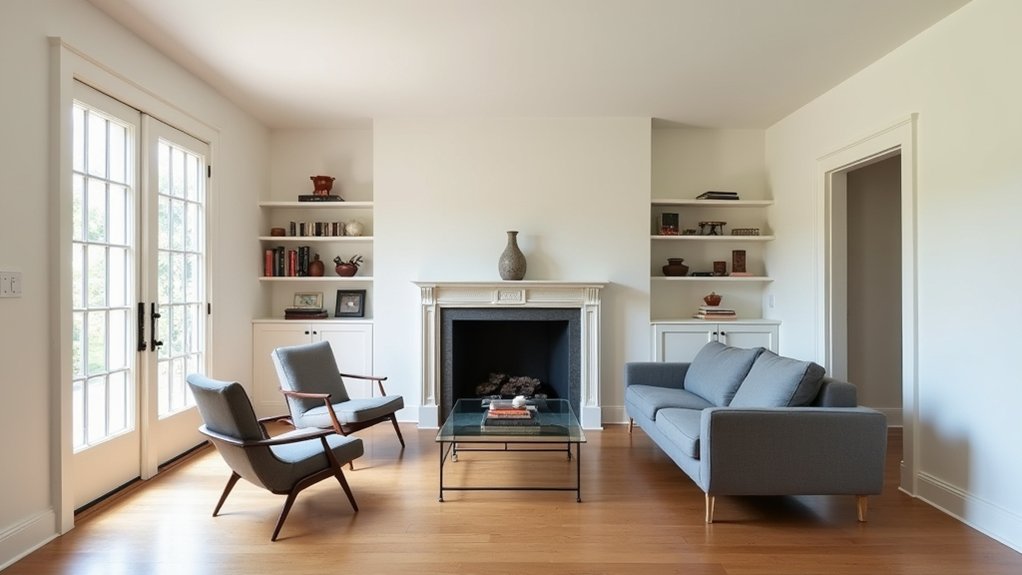
If your rooms feel tight even when the square footage is decent, start by fixing the sightlines. Stand at the main entry to each room and note what stops your eye first. Clear that path: reduce tall pieces near openings, and keep the centerline between doorways and windows open.
Then refine furniture placement by floating seating a few inches off walls, aligning major pieces parallel, and leaving consistent walk lanes. Use one strong focal point arrangement—fireplace, window, or built-in—and angle chairs toward it instead of scattering accents.
Contain clutter with closed storage, trays, and a single drop zone. Edit surfaces to three items max, and keep floor-to-ceiling corners light so the room reads longer.
Widen Doorways in Older Homes: Safely and Subtly
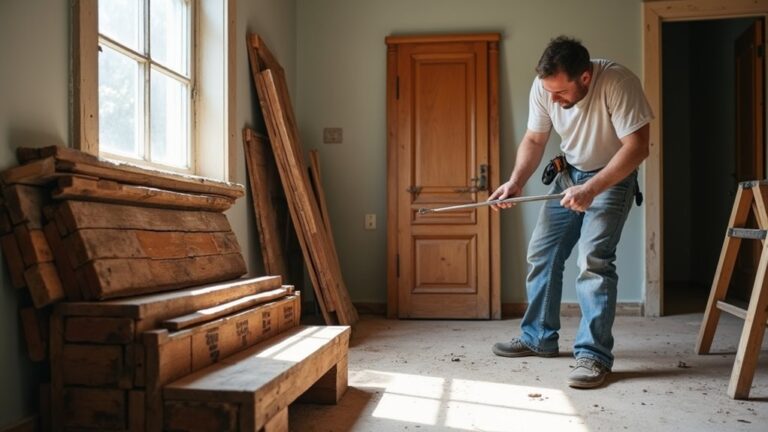
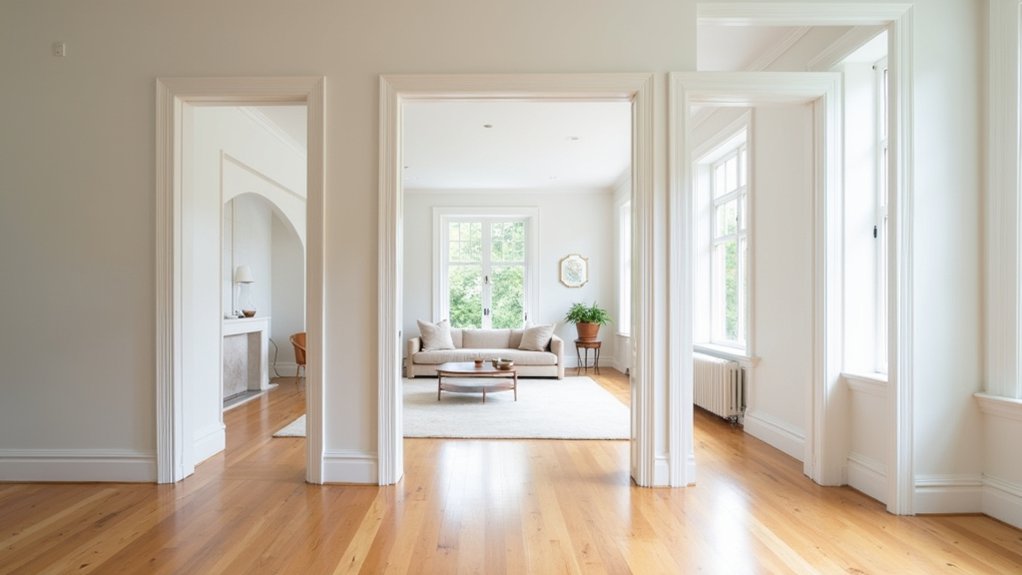
While furniture can fake openness, widening a doorway actually changes how your older home moves and breathes from room to room. Start by confirming whether the wall is load-bearing, then plan a width that improves circulation without erasing original trim proportions.
You’ll get the cleanest result by matching casing profiles, aligning header heights with adjacent openings, and keeping reveals consistent. Use proper framing techniques—new king and jack studs, a correctly sized header, and tight shimming—to prevent future sagging or cracks.
Don’t skip doorway reinforcement where plaster meets new lumber; secure lath, add backing, and tie in blocking so finishes stay crisp. If you want a subtle upgrade, consider squared corners or a shallow arch that echoes period details.
Add Interior Glass to Borrow Light (With Privacy Options)
Because older homes often have deep interior rooms and fewer exterior windows, adding interior glass lets you “borrow” daylight from brighter spaces without blowing open your floor plan. Swap a solid door for a glazed one, or cut in a transom, sidelight, or interior window between a hall and a kitchen.
You’ll keep walls that hold furniture and storage, yet improve sightlines and orientation. For discretion, specify frosted glass, ribbed glass, or reeded panels that diffuse views while still passing light.
If you need flexibility, pair clear glazing with privacy screens—sliding panels, curtains, or built-in shutters—so you can open up during the day and close off at night. Match trim profiles to existing casings for a seamless, period-correct upgrade.
Layer Lighting to Brighten an Older Home Fast
Interior glass pulls daylight deeper into the house, then layered lighting takes over once the sun drops or the corners still read dim.
Start by mapping tasks: prep, read, dress, and circulate. Place slim LED under-cabinet strips for counters, a small pendant or flush mount for general light, and an adjustable sconce or floor lamp for focused work.
Use warm, high-CRI bulbs so wood trim and plaster look true, not flat. Put each layer on separate dimmers to tune brightness without glare.
Add motion sensors in hallways and closets to keep pathways bright while saving energy.
Aim fixtures away from shiny glass and toward ceilings or walls to spread natural illumination after dark. You’ll feel openness instantly.
Choose Light-Bouncing Finishes That Still Feel Original
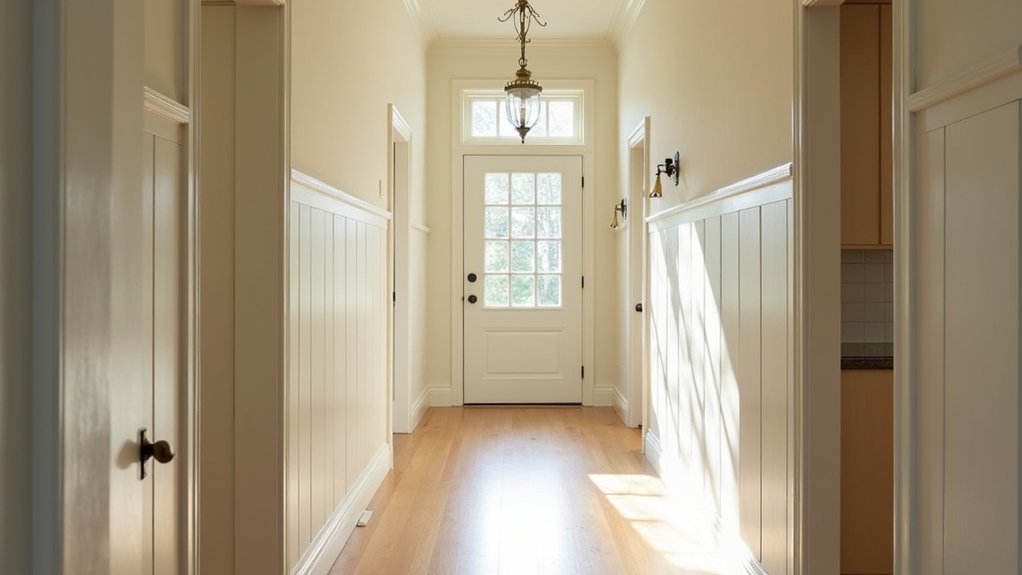
If your rooms still feel dim after you’ve improved lighting, swap in finishes that reflect light without erasing the home’s age. Choose warm whites, soft greiges, and heritage-inspired tints in eggshell or satin; they bounce daylight while hiding wall imperfections better than gloss.
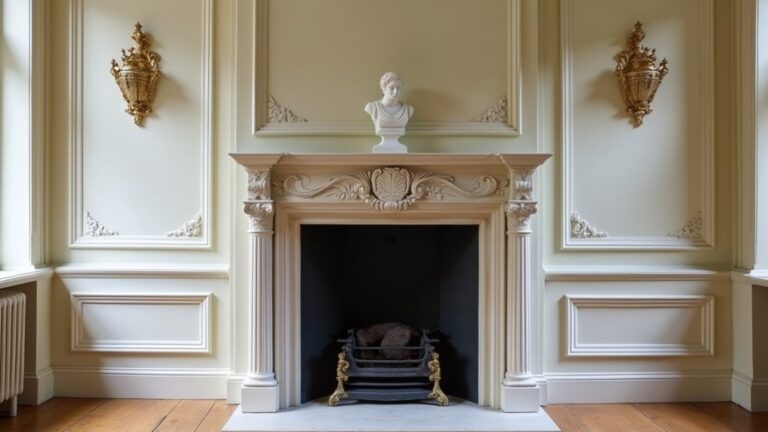
Prioritize Reflective surfaces where they’ll work hardest: a lightly polished stone countertop, a mirror in an aged brass frame, or lacquered built-ins in a classic profile. Keep authenticity by pairing sheen with subtle textures—linen-look grasscloth, limewash, or matte ceramic tile—so the space reads original, not “new build.”
Update trim and doors with the same color in a slightly higher sheen to sharpen edges and visually expand narrow halls. Test swatches at morning and night.
Frequently Asked Questions
How Do I Open up a Space Without Removing Any Walls?
You can open up space without removing walls by using light colors, boosting layered lighting, and adding open shelving. You’ll clear sightlines, swap bulky furniture for slim pieces, hang mirrors, and streamline storage.
What Permits or Approvals Are Required for Interior Changes in Historic Homes?
You’ll typically need a building permit for structural, electrical, plumbing, or HVAC work, plus Historic preservation review or COA if designated. You must meet Building codes, coordinate inspections, and confirm approvals with your local planning office.
How Can I Improve Airflow and Reduce Stuffiness in Older Rooms?
You’ll boost airflow enhancement and staleness reduction by sealing leaks, cleaning ducts, and adding a balanced ERV. You can run ceiling fans, keep interior doors undercut, and place discreet transfer grilles to equalize pressure.
What Are Budget-Friendly Updates That Deliver the Biggest “Open” Feeling?
In a $500 refresh, you’ll get the biggest “open” feeling by painting with lighter Color palettes and swapping in Decorative lighting. You’ll also hang a large mirror opposite windows, declutter surfaces, and add sheer curtains.
How Can I Make Rooms Feel Open While Keeping Original Trim and Built-Ins?
Keep original trim and built-ins by boosting light and sightlines: use Decorative glass in doors, add Light enhancing mirrors opposite windows, paint walls lighter than trim, declutter shelves, and use low-profile, leggy furnishings.
About the Author