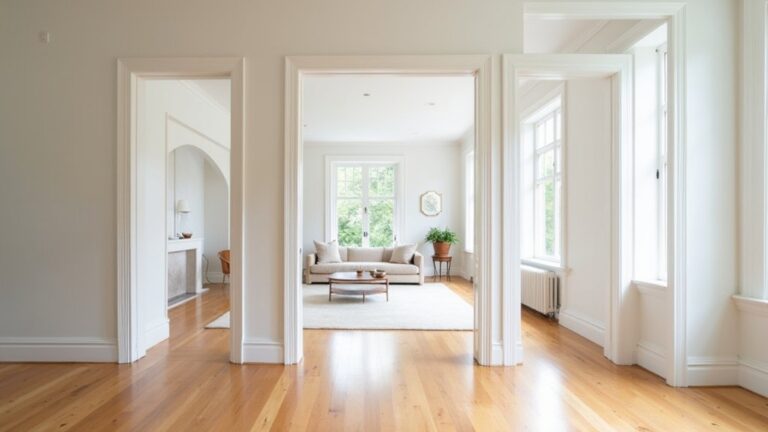
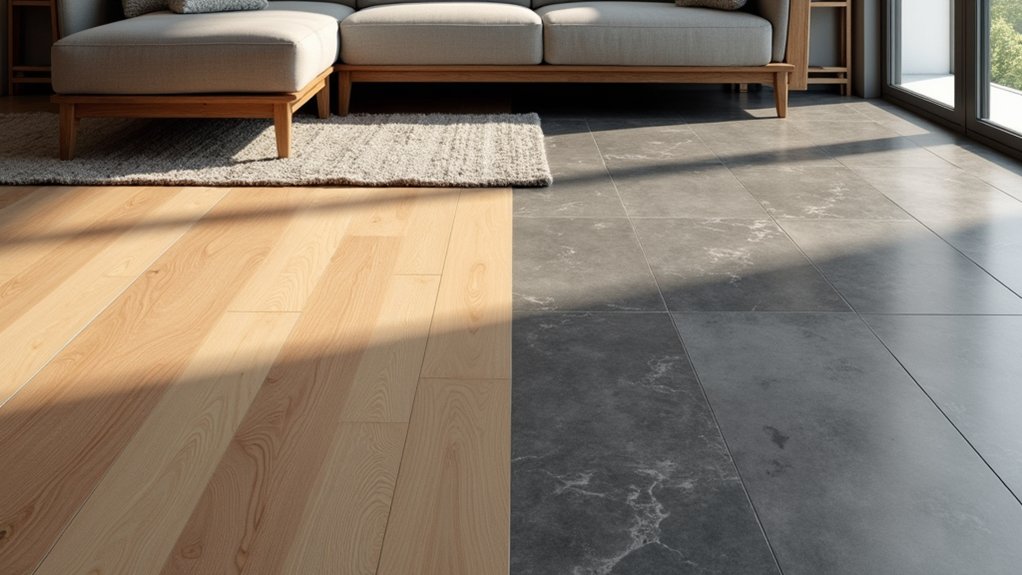
Choosing living room flooring is like tailoring a jacket—you want it to look sharp and hold up under real wear. You’re balancing resale-friendly hardwood and engineered wood against today’s ultra-tough luxury vinyl and laminate that shrug off scratches and spills. Tile keeps things sleek but can feel cool, while carpet softens sound and steps. The right pick depends on your traffic, pets, and budget—so what should you prioritize first?
Key Takeaways
- Hardwood or engineered wood delivers timeless style and resale value; engineered boards resist warping and suit open-plan spaces.
- Luxury vinyl plank offers realistic wood/stone looks with waterproof, scratch-resistant durability; choose rigid-core SPC/WPC for stability and comfort.
- High-AC laminate is budget-friendly and tough against scratches; pick textured, sealed-edge planks for better traction and spill protection.
- Porcelain tile is the most durable and stain-resistant for high traffic; large-format options look modern, and darker grout hides dirt.
- Low-pile carpet adds warmth and sound control; choose stain-resistant fibers and dense construction, and vacuum with a HEPA filter for allergens.
Choose Living Room Flooring by Lifestyle and Budget
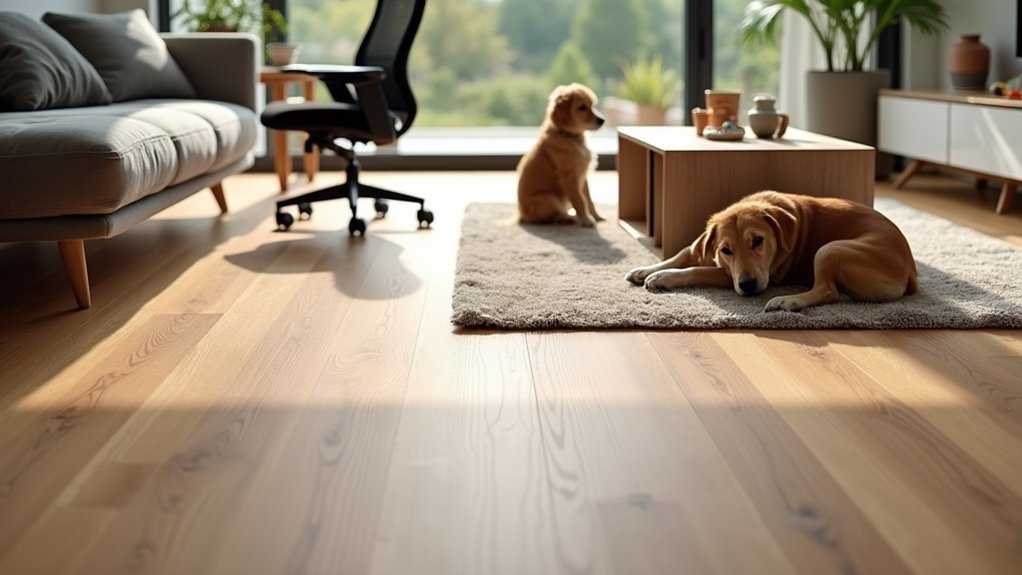
Whether you’re designing around kids, pets, frequent guests, or a quieter routine, your living room floor should match how you actually use the space—and what you’re willing to spend.
Start by ranking wear: high-traffic homes do best with scratch-resistant, waterproof surfaces like luxury vinyl plank or rigid-core laminate. Low-traffic spaces can lean softer underfoot with carpet tiles or cork.
Follow flooring trends that also save square footage: wide planks visually expand small rooms, and low-profile floating systems keep transitions clean.
If you’re budget-led, shop thicker wear layers, not just color.
For eco-friendly options, choose FSC-certified cork, recycled-content carpet tiles, or bio-based vinyl alternatives with low-VOC adhesives. You’ll get style without constant babysitting.
Hardwood Living Room Flooring: Beautiful, High Maintenance
Because nothing reads as timeless quite like real wood, hardwood flooring still leads living-room trends with warm grain, wide-plank visuals that make tight spaces feel larger, and a premium resale signal.
Yet it demands more upkeep than most modern surfaces. You’ll need to manage scratches from chairs, pet nails, and grit with felt pads, entry mats, and regular sweeping. Sunlight can fade boards, so you’ll want layered window treatments or rugs to break up exposure. Spills require fast wipe-ups, and you’ll budget for periodic recoats to keep the finish crisp.
If sustainability matters, look for Eco friendly options like FSC-certified species or reclaimed planks. For acoustic enhancements in echo-prone rooms, pair hardwood with dense underlayment plus area rugs to soften footfall and TV sound.
Engineered Wood: Real Wood, More Stable
If you want real-wood style without hardwood’s mood swings, engineered wood fits a modern living room. You get a layered build that resists warping as temperatures and humidity shift, so your space stays crisp and flat.
The top veneer delivers authentic grain and warmth, but you won’t babysit it to keep it looking sharp.
Layered Construction Resists Warping
While solid hardwood can shift with seasonal humidity, engineered wood stays noticeably steadier thanks to its layered construction. You get a plank built from cross-grained layers that counteract expansion and contraction, boosting warping resistance when your living room swings from winter heat to summer AC.
That stability matters in open-plan layouts, where long sightlines and wide installs can exaggerate even minor cupping. Choose wider planks or herringbone looks without stressing about seasonal gaps, and place area rugs with confidence that edges won’t telegraph ripples.
If you’re styling around low-profile sofas and clean-lined built-ins, engineered wood helps keep the floor plane crisp. Pair it with a quality underlayment to reduce movement and maintain a tight, modern fit over time.
Authentic Grain Without Fuss
Because the core is built for stability, you can pull off wider planks and longer runs that visually stretch a compact living room.
Choose matte finishes and light oaks for that current, airy vibe, or go walnut tones to ground open-plan spaces.
You’ll also like the maintenance simplicity: sweep, dry-mop, and use a damp cloth sparingly—no constant refinishing cycles.
If you entertain, add felt pads and a washable rug, and your floor keeps its showroom look longer.
Laminate Living Room Flooring: Low Cost, Scratch Resistant
As budgets tighten but style expectations stay high, laminate flooring has become a go-to living room upgrade that looks upscale without the premium price tag. You get crisp plank visuals, matte finishes, and on-trend wide boards that visually stretch small spaces.
Choose a high-AC wear layer and you’ll shrug off chair scuffs, pet claws, and toy drag marks with less anxiety than softer surfaces.
For a cleaner spec sheet, look for Eco friendly options like low-VOC cores and recycled-content underlays. Add a quality pad and you’ll boost seasonal comfort—warmer underfoot in winter, quieter during movie nights, and less echo in open-plan rooms.
Keep it sharp by using felt pads, a grit-trapping entry mat, and a damp-only mop routine.
Luxury Vinyl Flooring for Living Rooms: Waterproof Workhorse
Luxury vinyl flooring (LVP/LVT) steps in when you want laminate’s clean plank look but need real waterproof performance for spill-prone living rooms and busy open-plan layouts. You’ll get convincing oak, walnut, and concrete visuals, plus embossed textures that read high-end under layered rugs and low-profile sofas.
Choose rigid-core SPC for flat, stable installs over imperfect subfloors, or WPC for a slightly warmer, quieter feel. A thicker wear layer and matte finish handle chair legs, pet traffic, and sunlit seating zones without shouting “plastic.”
You can float it fast for budget options, or glue it down for a tighter, more custom feel. Pair wide planks with continuous runs into the kitchen for space-stretching flow—easy Luxury upgrades without maintenance drama.
Tile Living Room Flooring: Durable, Cooler Underfoot
If you want a living room floor that keeps up with high traffic and still looks sharp, tile’s hard-wearing surface delivers serious long-term resistance.
You’ll also feel the difference underfoot—tile stays naturally cool, a smart move for sunny rooms and open-plan layouts.
With today’s large-format porcelain and stone-look styles, you can keep the footprint sleek while getting durability that won’t quit.
Long-Lasting Wear Resistance
While soft surfaces can show their age fast, tile holds up under daily foot traffic, pet claws, and dragged furniture with minimal wear. You’ll see fewer dents, frays, and compression marks, so your living room stays photo-ready longer.
Choose porcelain for high-traffic zones; its dense body resists chips and staining better than many ceramics.
To keep the look current, go matte concrete-look, limestone visuals, or large-format planks that minimize grout lines and visually expand tighter layouts. Specify a higher PEI rating and color-body or through-body options to hide micro-scratches.
For Eco friendly options, consider recycled-content tiles and low-VOC setting materials. If you’re handy, some systems support DIY installation with click-together panels or straightforward thinset layouts.
Cool Comfort Underfoot
Because living rooms often run warm—especially in open plans with big windows—tile gives you that naturally cool, clean feel underfoot without sacrificing style. You’ll notice instant temperature regulation: porcelain and ceramic stay crisp in summer, and they pair beautifully with radiant heat when you want winter coziness.
Choose large-format slabs or rectified-edge tiles to make a compact room read bigger, with fewer grout lines and a more seamless, luxe look. Matte finishes are on-trend and hide dust, while subtle stone looks add depth without visual clutter.
Worried about echo? Layer in a low-pile rug and cushioned pad to boost sound absorption and soften the step. Add felt pads under furniture, and you’ve got sleek durability that still feels livable.
Carpet for Living Rooms: Cozy, Stains and Allergens
Although hardwood and vinyl are having a moment, carpet still earns its spot in the living room when you want instant warmth, quieter acoustics, and a softer landing underfoot.
For a current look, you’ll want low-pile textures like loop, bouclé, or subtle cut-and-loop patterns that read tailored, not shaggy, and won’t visually shrink a smaller space.
Prioritize Stain resistance by choosing solution-dyed nylon or triexta, then pair it with a spill-shielding pad to keep color crisp and cleanup fast.
If you’re sensitive to dust, carpet can still work when you plan for allergen control: pick dense, low-pile constructions, skip high-shed fibers, and commit to HEPA vacuuming.
Finish with a warm neutral that layers easily with modern rugs and streamlined furniture.
Best Living Room Flooring for Pets, Kids, and Heavy Traffic
If your living room doubles as a play zone, pet lounge, and main hallway, you’ll want flooring that hides scuffs, shrugs off spills, and stays grippy under fast feet. Luxury vinyl plank leads the pack: it’s waterproof, quiet underpaw, and comes in matte oak visuals that feel current without showing every crumb.
For a slimmer profile in tight spaces, rigid-core vinyl clicks in fast and handles rolling toys. If you crave real wood vibes, choose high-quality laminate with a sealed edge and textured finish for traction.
Tile works, but add washable runners to cut noise and protect joints. Prioritize Pet friendly options with scratch-resistant wear layers, and pick Kids safe materials with low-VOC certifications. Finish with darker grout tones or mixed-plank patterns to camouflage traffic lanes.
Frequently Asked Questions
How Does Radiant Floor Heating Affect Different Living Room Flooring Types?
Radiant floor heating changes how your floor feels and performs: tile and stone warm fast, wood needs stable temps, vinyl requires rated products, carpet reduces output. Check Radiant compatibility; manage Flooring insulation for even, efficient heat.
What Are the VOC Emissions Differences Among Common Living Room Flooring Materials?
You’ll see VOC emission levels vary: solid hardwood, tile, and polished concrete stay low; natural linoleum stays low. Carpet, vinyl, laminate, and engineered wood can off-gas more. Choose FloorScore/Greenguard for better Indoor air quality.
Can I Install New Living Room Flooring Over Existing Flooring Without Demolition?
Yes, you can—provided you prep properly. Sleek, smart stacking starts with Flooring installation that checks existing surface considerations: flat, dry, stable, and compatible. You’ll save space by avoiding thick underlayment and bulky shifts.
How Do Underlayment Choices Change Soundproofing and Comfort in Living Rooms?
You’ll boost soundproofing and comfort by matching underlayment density and thickness: cork and rubber deliver premium Comfort enhancement, while foam favors budget installs. Use Soundproofing techniques like acoustic mats plus moisture barriers to quiet footsteps and soften.
Which Flooring Options Best Match Open-Concept Transitions to Kitchens and Hallways?
You’ll get the smoothest open-concept flow with continuous LVP or wide-plank engineered hardwood into kitchens and hallways—one ribbon, many rooms. Nail Flooring color coordination; soften zones with Area rug options, keeping clear walk paths.
About the Author