You don’t need to be a conservation expert to convert a quiet country chapel, but you do need a method. You start by checking the planning map, zoning, and any listing or curtilage constraints, then you walk the building with a torch and a notebook to spot roof spread, damp, beetle, and failed drainage. You price utilities, access, fire strategy, and Part M implications early, because the first snag usually appears when you…
Key Takeaways
- Confirm planning permission for change of use by checking local plans, zoning rules, and protected community-asset policies before committing.
- Verify heritage constraints: listing status, conservation area controls, and denominational covenants that can restrict alterations and require specialist approvals.
- Do thorough pre-purchase checks on title, easements, access, graveyard obligations, boundaries, and shared drives to avoid legal and practical surprises.
- Budget realistically for structural repairs, specialist materials, surveys, permits, and a 15–25% contingency; expect 9–24 months from offer to move-in.
- Plan utilities and code compliance early: water, power upgrades, septic testing, damp control, fire escape routes, and discreet design changes that preserve character.
Is a Church (or Chapel) Conversion Allowed Here?
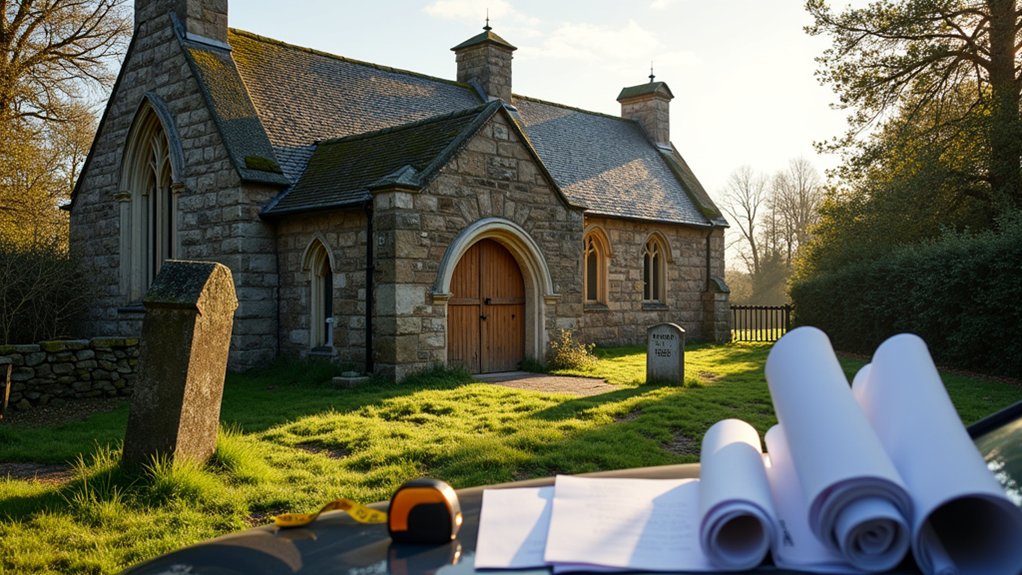
Before you fall for a peeling steeple or a sunlit nave, confirm the change of use is actually permitted on that plot. Start with the planning map: you’re looking for an authorized residential, mixed, or community-to-dwelling pathway, not a blanket “assembly” designation.
Read the local plan and any parish neighborhood policies that treat churches as protected community assets. Then test the site against zoning regulations: parking ratios, access widths for fire appliances, setback lines, and limits on new openings.
Next, check whether the building or curtilage sits under listing, conservation area control, or a denominational covenant that triggers Historical preservation review. If permissions exist, you’ll convert by consent, not by hope.
What Should You Check Before Buying the Chapel?
Once you’ve confirmed the change of use can be permitted, treat the chapel like a small civic building with old bones and modern liabilities, and start your checks on paper and on site.
Pull title, easements, and access rights; confirm boundaries, graveyard covenants, and any shared drives.
Review Historic preservation status: listing grade, curtilage, protected fixtures, and prior consents, because “interior” can still be controlled.
Re-read Zoning regulations for parking, setbacks, occupancy, and noise.
On site, check roof leadwork, gutters, spalling stone, timber decay, and bellcote stability.
Look for damp routes: failed drains, ground levels, cement pointing.
Verify utilities, meter locations, and three-phase supply.
Ask about asbestos, bats, and fire compartmentation, and note escape widths and stair geometry.
How Much Does a Church Conversion Cost: and How Long?
Although chapels can look like simple single-room shells, their conversion costs often land closer to “small public building” money than “quirky cottage” money, and the timeline stretches accordingly. You’ll price it like a rehab plus compliance: structure, roof, masonry repointing, windows, damp control, interior framing, and finishes.
If Historic preservation applies, you may need matching materials, specialist trades, and documented methods, which adds both lead time and contingency.
Expect soft costs too: surveys, measured drawings, engineer reports, heritage statements, and permit fees. Zoning regulations can trigger hearings, parking or access upgrades, and occupancy reclassification, all of which slow approvals.
Typical schedules run 9–24 months from offer to move-in, with construction 4–12 months. Budget with a 15–25% contingency for discoveries.
Can You Add Water, Power, and Septic to a Chapel?
If the chapel was built to light candles and ring bells rather than run a kitchen and bath, you’ll need to treat utilities as a full-site infrastructure project, not a simple hookup.
Start with Water access: confirm a well or municipal main, secure permits, and test flow, potability, and seasonal reliability. Protect historic foundations by routing trenches away from footings and adding freeze-depth burial.
For Power installation, you’ll likely upgrade from a small service to modern amperage, set a compliant meter location, and plan grounding, AFCI/GFCI protection, and any overhead-to-underground conversion.
Septic is often the limiting factor. You’ll order a percolation test and site evaluation, size the system to bedrooms or fixture units, and reserve a repair area. Expect setbacks from wells, streams, and property lines.
How Do You Design a Church Conversion With Character: and Code?

Because a church already tells a story through its proportions, materials, and light, you’ll get the best conversion by designing around those character-defining features while letting modern code requirements disappear into the fabric of the building.
Start by identifying the Architectural style—Gothic lancets, Romanesque arches, simple vernacular trusses—and keep sightlines to the altar wall and roof framing.
For Historic preservation, repair rather than replace: patch slate, consolidate plaster, and strip paint carefully.
Meet life-safety code by tucking sprinklers into cornices, routing wiring through existing chases, and using intumescent coatings on exposed timber where permitted.
Add a discreet rated stair or second egress in a former vestry.
Improve accessibility with a gently graded side entry and a compact lift.
Insulate from below, not over stained glass.
Frequently Asked Questions
Can I Keep the Church’s Original Name and Signage After Purchase?
Yes, you can keep the original name and church signage if you own the marks and no covenants restrict historic naming. You’ll check deed clauses, trademark claims, preservation rules, and obtain local permit approvals.
How Do I Handle Human Remains or Historic Graveyards on the Property?
Measure twice, cut once: you’ll document graves, stop disturbance, and consult county officials and descendants. Follow Burial regulations, secure permits, and hire an archaeologist. Coordinate Historical preservation reviews, maintain access easements, and post respectful boundaries.
Will My Home Insurance Cover a Converted Chapel and Unique Materials?
Your home insurance might cover a converted chapel, but you’ll likely need specialty insurance coverage and endorsements for unique features. Document material considerations (timber, slate, stained glass), meet current codes, and schedule appraisals for accurate limits.
Are There Tax Incentives or Grants for Preserving a Former Church Building?
Yes—you can tap Tax credits and Preservation grants, like finding coins under old floorboards. You’ll need historic designation, compliant rehab, and meticulous records. Check state SHPO, local easements, and IRS rules.
How Can I Maintain Good Relations With the Local Community After Conversion?
Maintain good relations by prioritizing Community engagement: host open houses, honor Local traditions, and keep a public calendar. You’ll follow code transparently, preserve landmark details, and hire locally, documenting changes like archival stewardship.
About the Author