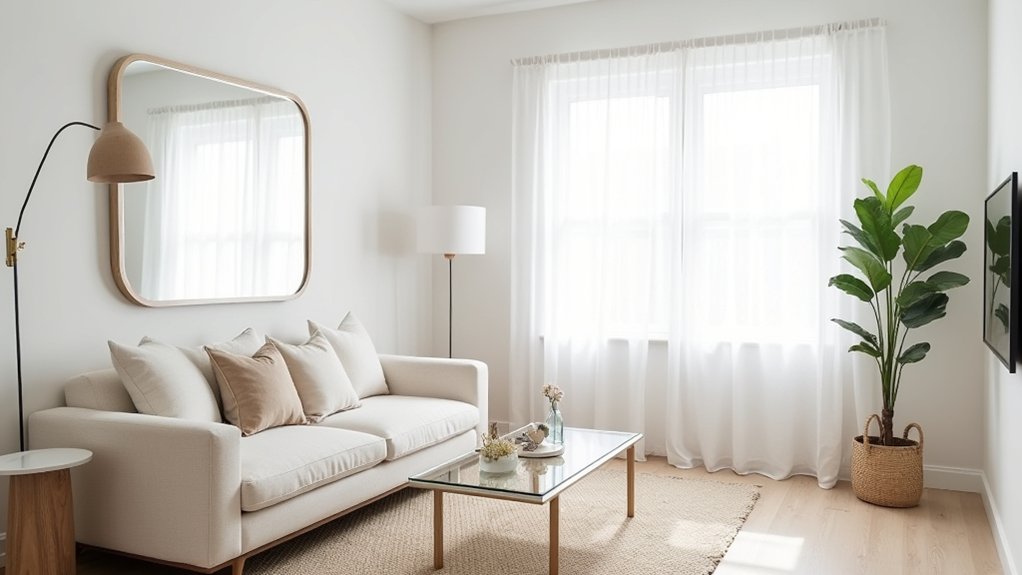
You can make a small room feel larger and brighter by controlling light and keeping layouts clean. Start with layered lighting—dimmable ceiling fixtures, wall sconces, and a focused task lamp—so you don’t rely on one harsh source. Place a mirror opposite a window or lamp to bounce light deeper into the space, then support it with pale paint and a few glossy accents. But the biggest shift often comes from one overlooked move…
Key Takeaways
- Layer lighting with dimmable flush mounts, wall sconces, and corner floor lamps to brighten evenly without cluttering surfaces.
- Place mirrors opposite windows or light sources to reflect daylight deeper into the room and reduce shadowy corners.
- Use light paint colors in eggshell or satin finishes to bounce light and visually expand walls and ceilings.
- Arrange furniture to keep clear pathways and float seating slightly off walls, making the room feel more open.
- Choose slim, low-profile pieces and light window treatments to preserve floor space and maximize natural light.
Brighten a Small Room With Layered Lighting
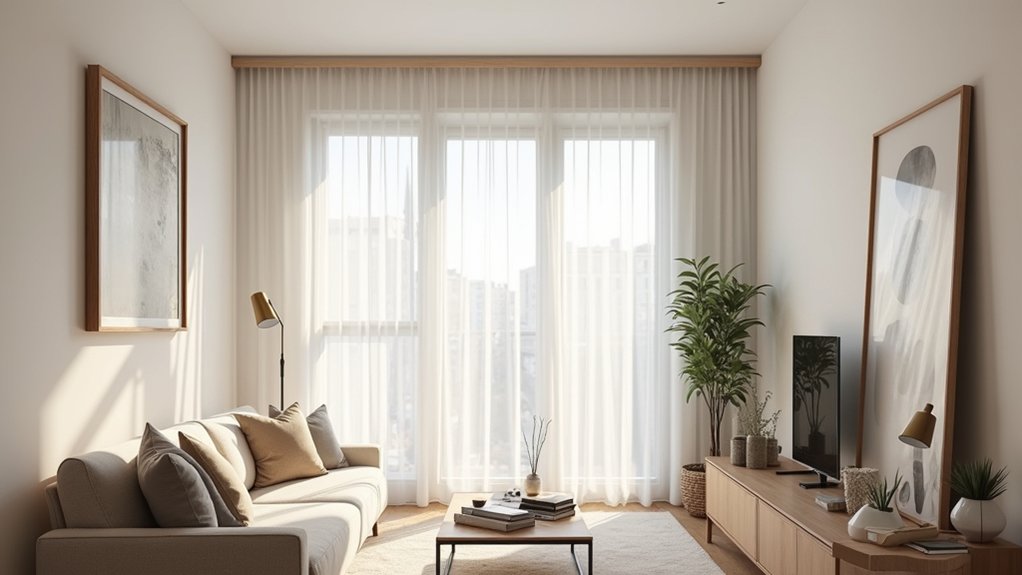
Even if your room’s square footage is limited, you can make it feel open by layering light instead of relying on a single overhead fixture. Start with a slim ceiling fixture or flush-mount on a dimmer to set an ambient glow without visual clutter.
Then add a plug-in wall sconce or swing-arm lamp beside the bed or sofa so you free up tabletop space. Place a narrow floor lamp in a corner to lift shadows and push light upward.
Finish with task lighting where you actually work: an under-cabinet strip for a desk nook, a clip-on reading light, or a small LED bar on a shelf. Keep bulbs consistent in color temperature for a clean, cohesive feel.
Use timers for easy control.
Use Mirrors and Reflective Decor to Spread Light
Because small rooms tend to swallow light in corners, you can bounce it back by placing a mirror where it catches a window or lamp and throws brightness across the space. Hang one opposite your brightest source, or lean a tall mirror on a wall to lift light without using floor space.
Choose reflective finishes that work hard: glossy frames, glass trays, and metallic accents on shelves. Add Decorative wall panels with a satin or high-sheen surface to amplify daylight while keeping walls streamlined.
Keep windows clear with Transparent window treatments so sun reaches the mirror instead of getting absorbed by heavy fabric. If glare’s an issue, angle mirrors slightly and use frosted or antiqued glass for softer diffusion.
Limit shiny pieces to a few key spots so the room feels bright, not busy.
Arrange Furniture to Open Up a Small Room
After you’ve boosted brightness with mirrors and reflective accents, make the room feel larger by rethinking where each piece sits. Start by clearing the natural walking path from doorway to window, then float seating slightly off the walls to reduce cramped corners.
Choose space-saving furniture like nesting tables, armless chairs, and a slim console that doubles as storage, so you keep surfaces open and light can travel.
Anchor the layout with one focal piece, then edit everything else. Keep low profiles near windows to avoid blocking daylight, and use color contrast techniques—dark legs with light upholstery or a light rug under a darker sofa—to define zones without adding bulk.
Angle a chair toward the brightest spot to pull you in.
Pick Light Paint Colors to Make a Small Room Look Bigger
When you choose a light paint color, you give your walls a job: bounce daylight and push the edges of the room outward. Start with soft whites, pale greiges, or airy pastels; they reflect more light than saturated hues and reduce visual “stops” at corners. Use Color psychology: cool, quiet blues and greens feel expansive, while warm off-whites keep the space welcoming without closing it in.
Match the paint finish to how you live. Pick eggshell or satin for most small rooms because they brighten gently and wipe clean. Use flat on imperfect walls if glare bothers you, but add reflectance with a semi-gloss ceiling or trim.
Keep one light palette across adjoining areas to stretch sightlines and simplify.
Frequently Asked Questions
How Can I Make a Small Room Feel Bigger on a Tight Budget?
You can make a small room feel bigger even if you think you can’t afford changes: use Color illusions with light paint, maximize daylight, and improve furniture arrangement by floating pieces, clearing corners, and adding one mirror.
What Window Treatments Maximize Natural Light Without Sacrificing Privacy?
Choose sheer linen curtains or light-filtering cellular shades; they brighten while keeping silhouettes soft. Mount rods high and wide to suit Window styles. Add top-down/bottom-up shades or frosted film as privacy solutions.
Which Rug Size and Placement Make a Small Room Look Larger?
Choose Area rugs that fit under front legs of furniture, leaving 6–12 inches of floor border. Center Rug placement on the room’s longest sightline. You’ll unify zones, reduce visual breaks, and feel brighter.
How Do I Reduce Clutter and Still Keep Essentials Accessible?
Picture clear surfaces catching daylight—you’ll reduce clutter by zoning essentials, using hidden storage solutions, and keeping a grab-tray by the door. You’ll swap piles for labeled bins, and choose decorative accents that double as organizers.
What Are the Best Plants for Brightening Small Rooms With Low Light?
You’ll brighten small rooms with Indoor greenery like pothos, snake plant, ZZ plant, and peace lily—reliable Low light plants. You’ll choose slim floor pots or hanging planters, place near windows, and rotate weekly.
About the Author