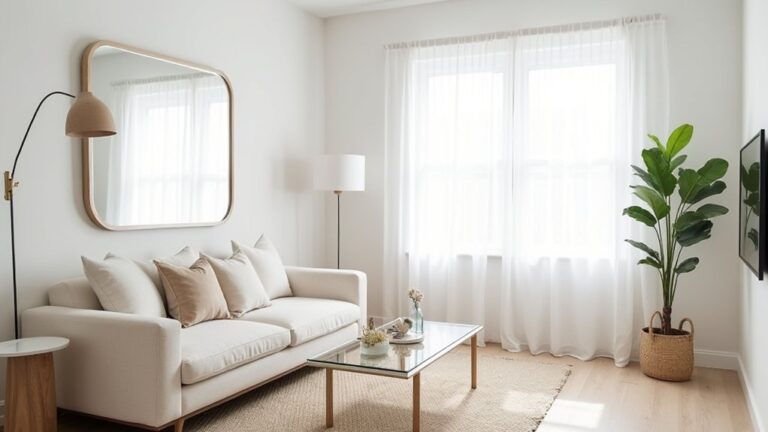
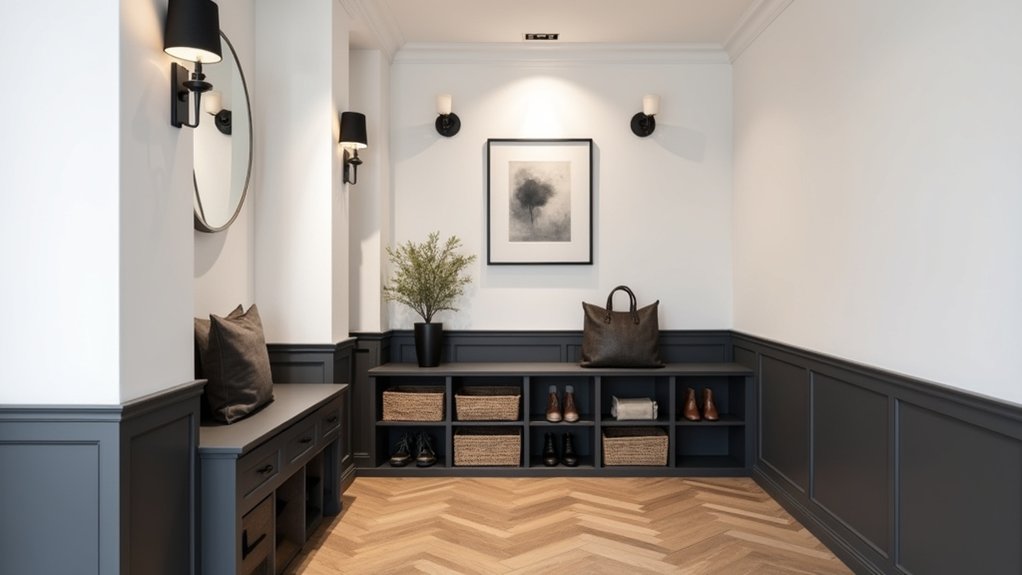
A hallway can feel like a dark tunnel or a crisp gallery, and the difference comes down to a few smart moves. You start by choosing a modern neutral that stays warm under bulbs, then use paint placement to stretch the walls and hide everyday scuffs. You add layered lighting with dimmable warmth and a mirror to bounce it back. Finally, you keep storage slim, wall-mounted, and closed—because what you do next determines whether it looks sleek or cramped…
Key Takeaways
- Choose hallway paint for your light: warm neutrals in low light, muted sage/clay/blue in bright sun; test swatches morning and night.
- Use durable finishes: eggshell or satin on walls, semi-gloss on trim; mid-tone greys/taupes hide scuffs and wear in high-traffic zones.
- Modernise with subtle effects: light color-blocking, brighter ceiling, or horizontal stripes to visually widen the corridor without heavy pattern clutter.
- Upgrade lighting in layers: 2700–3000K bulbs, ceiling fixture plus sconces, and dimmers; place mirrors to bounce light and extend space.
- Add slim storage: 17–22cm shoe cabinets, wall-mounted coat rail with shelf, drawers for small items, and over-door organizers to keep pathways clear.
Plan Your Hallway Makeover: Order, Budget, Prep
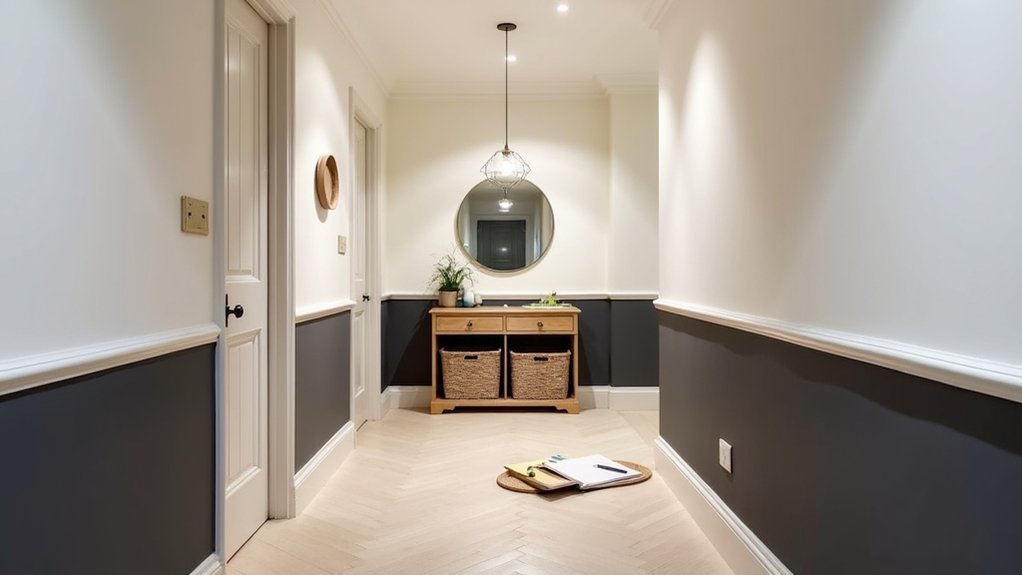
Before you pick paint swatches or order a statement pendant, map out your hallway makeover so the work flows in the right order, stays on budget, and doesn’t stall halfway through.
Start by measuring walls, trim, and floor progression, then list what’s staying, what’s being replaced, and what needs repair.
Do budget planning next: price prep materials, lighting, and storage first, then allocate a 10–15% contingency for surprises behind old trim.
Schedule in the right sequence—patching, sanding, priming, electrical rough-in, then installation—so you don’t redo work.
For Color coordination, pull cues from adjacent rooms and fix your undertones early, including metals and wood stains.
Finally, prep smart: label hardware, protect flooring, and stage tools for fast, clean progress.
Choose Modern Hallway Paint Colours for Light
Where does your hallway get its light—north-facing gloom, a borrowed glow from adjacent rooms, or a strong hit of afternoon sun? Match colour to that reality. In cool, low light, pick warm off-whites, soft greiges, or blush-tinted neutrals to stop walls looking flat.
In bright sun, calm it with muted clay, sage, or smoky blue; they stay modern without turning harsh. Use Color psychology: warm tones feel welcoming at the door, while green-blues read organised and serene near storage zones.
Test large swatches morning and night, and check how they bounce onto doors and trim. Finish matters: choose washable matte or durable eggshell for paint durability, especially at hand height and corners.
Paint Tricks to Make a Narrow Hallway Wider
If your hallway feels tight, you can make it read wider with light colour blocking—keep the side walls a soft neutral and paint the ceiling or upper third a brighter white to lift and open the space.
For a modern, architectural look, paint subtle horizontal stripes (tonal-on-tonal works best) to visually stretch the walls without adding clutter. These paint moves are quick, budget-friendly, and instantly change the hallway’s proportions.
Use Light Color Blocks
A simple block of light paint can visually push your hallway walls outward, making a narrow run feel calmer and more open. Choose a pale, low-contrast tone—soft white, warm greige, or airy blush—and paint a clean-edged rectangle across both side walls at eye level, stopping before corners to avoid a tunnel effect.
Use Color psychology: cooler off-whites read spacious and quiet, while warm ivories feel welcoming under evening lamps. Let historical influences guide you, too; Georgian-style light stone shades and Scandinavian chalky whites both bounce light and look current.
Keep ceilings and trim one step lighter for lift, and finish in eggshell to reflect without glare. Mask sharply, measure symmetrically, and repeat the same block near the entry for rhythm.
Paint Horizontal Stripes
Because your eye naturally follows strong lines, horizontal stripes can stretch a tight hallway visually, making the walls feel farther apart. Keep the look modern by choosing two close-toned neutrals (warm white and greige) or a matte/satin pairing in the same colour family for subtle depth.
Paint wider bands at shoulder height to emphasise width, and use a laser level so lines stay crisp through door trims.
If you can’t commit to paint, try Decorative wall decals in stripe formats; they’re renter-friendly and let you test scale fast.
Finish the ceiling to match: a lighter stripe or clean white above boosts height, while ceiling medallions around a pendant add a tailored focal point without narrowing the space.
Pick the Right Paint Finish (and Hide Scuffs)
While colour grabs the attention first, the paint finish does the heavy lifting in a high-traffic hallway—especially when shoes, bags, and fingers constantly brush the walls.
For a modern look, pick a balanced paint sheen: eggshell or satin reads crisp without spotlighting every dent, and both wipe clean easily. If your walls are less-than-perfect, avoid high-gloss; it telegraphs bumps and patching.
For better scuff concealment, use a durable, washable formula labelled “scrubbable” and choose mid-tone colours with a touch of grey or taupe, which hide marks better than bright white.
Paint trim in semi-gloss so it stands up to knocks, but keep main walls softer. Finish with two coats and cure time before heavy use.
Pick Hallway Bulbs: Warm vs Cool Lighting
Next, you’ll modernise your hallway fast by choosing the right bulb temperature: warm light (around 2700–3000K) makes the space feel welcoming and elevated.
If you need sharper visibility for keys, shoes, and artwork, cool light (around 3500–4000K) boosts clarity and keeps finishes looking crisp.
Match the Kelvin range to your hallway’s purpose, and you’ll get a cleaner, more intentional look with zero extra renovation.
Warm Light For Welcoming
Even if your hallway looks modern on paper, the wrong bulb can make it feel flat or clinical the moment you walk in. Choose warm white LEDs (2700K–3000K) to soften angles, flatter paint, and make skin tones look natural at the door.
Layer it: a warm ceiling fixture plus a wall sconce or picture light creates depth without clutter. Use a high CRI (90+) bulb so wood, runners, and artwork read rich, not muddy.
For hallway feng shui, aim for an even, gentle glow that guides movement and reduces harsh shadows at corners. Put warm bulbs on a dimmer so you can shift for guests or seasonal décor, like wreaths, lanterns, and framed prints.
Keep wattage modest to avoid glare.
Cool Light For Clarity
If your hallway doubles as a drop zone where you hunt for keys, read labels, or check your outfit on the way out, cool white light (3500K–4000K) sharpens contrast and makes details pop without the icy “hospital” vibe of daylight bulbs.
Use it where precision matters: over a console, inside a closet, or near a mirror. Choose high-CRI LEDs (90+) so colours read true, especially with paint, art, and timber grain.
According to Color psychology, cooler light feels cleaner and more alert, so it suits streamlined storage and minimalist palettes. Balance it with matte finishes and warm metals—brass or bronze—to keep things inviting.
In historical styles like Georgian or Arts-and-Crafts, swap in frosted globes or opal shades to soften glare while staying crisp. Add a dimmer for flexibility.
Layer Hallway Lighting: Ceiling, Wall, and Accent
How do you make a hallway feel bigger, brighter, and more intentional the moment you walk in? You layer light the way designers do: overhead for coverage, vertical light for shape, and accents for mood.
Start with Ceiling fixtures that spread even illumination—think flush mounts or slim semi-flush styles that don’t visually drop the ceiling.
Next, add Wall sconces at eye level to wash the walls and reduce harsh shadows; they instantly widen narrow corridors and make paint and artwork read richer. Choose warm-dim or 2700–3000K LEDs so the space stays welcoming.
Finish with subtle accent lighting: a picture light, a low-glare LED strip under a ledge, or a discreet uplight in a corner. Put everything on dimmers and separate switches so you can tune the vibe.
Slim Hallway Storage Ideas (Depth Limits Included)
Once you’ve layered your lighting, the next step is keeping the hallway clear so it still reads bright and spacious—this is where slim storage earns its keep.
Start with a shoe cabinet that’s 17–22cm deep; it swallows pairs without jutting into the walkway. If you need coats, choose a 25–30cm-deep wall-mounted rail with a shelf above for baskets, keeping bulk off the floor.
Use slim furniture like a 30–35cm console only where the corridor is wider, and pick one with drawers for hidden storage (keys, dog leads, chargers).
Add a 10–15cm picture-ledge shelf for mail and sunglasses.
Finally, mount hooks at staggered heights and add an over-door organiser; you’ll free the floor instantly.
Style the Hallway: Mirrors, Runners, Art, Hardware
Because hallways are often narrow and light-starved, your styling choices need to work double-duty: bounce light, elongate the sightline, and add personality without adding clutter. Hang an oversized mirror opposite a window or sconce; a slim black or brass frame feels current and sharp.
Lay a flatweave runner with a tight pattern to hide traffic wear; leave 10–15cm of floor showing at each side so it reads intentional, not cramped.
Curate a mini gallery: one large print or three aligned frames at eye level beats a busy cluster. Swap dated knobs for matching pulls and a modern latch set; hardware is the easiest upgrade for structural elements like doors and built-ins.
Finish with decorative accents—one sculptural tray or vase—then stop before it feels crowded.
Frequently Asked Questions
Do I Need Building Regulations Approval to Change Hallway Lighting Circuits?
You might need Building Regulations approval if you alter circuits or consumer units; like-for-like light swaps usually don’t. For Electrical safety and Lighting compatibility, use a qualified electrician, notify Building Control where required, and test certification.
How Can I Modernise a Hallway Without Repainting Walls?
In one flat, you modernise the hallway without repainting by swapping in Decorative mirrors and a statement rugs runner, then upgrading warm LED sconces, sleek hooks, and a slim console to declutter and reflect light.
What’s the Best Way to Reduce Echo and Noise in a Hallway?
Add a runner rug and thick underlay first—you’ll cut reflections fast. Layer soundproofing solutions like acoustic panels, upholstered benches, and heavy curtains. Seal door gaps, add soft wall art, and avoid hard, bare surfaces.
How Do I Deal With Damp Patches or Mould Before Decorating a Hallway?
If damp’s spreading like an inky tide, you’ll tackle it first: fix leaks, boost ventilation, run a dehumidifier for moisture control, then scrub and treat with fungicide for mold remediation. Dry fully before priming.
Can Smart Switches Work With My Existing Hallway Wiring and Bulbs?
Yes, smart switches can work, but you’ll need to confirm Smart switches compatibility with your bulb type and hub. Check hallway wiring considerations: neutral wire presence, switch type (one-way/two-way), and load rating.
About the Author