
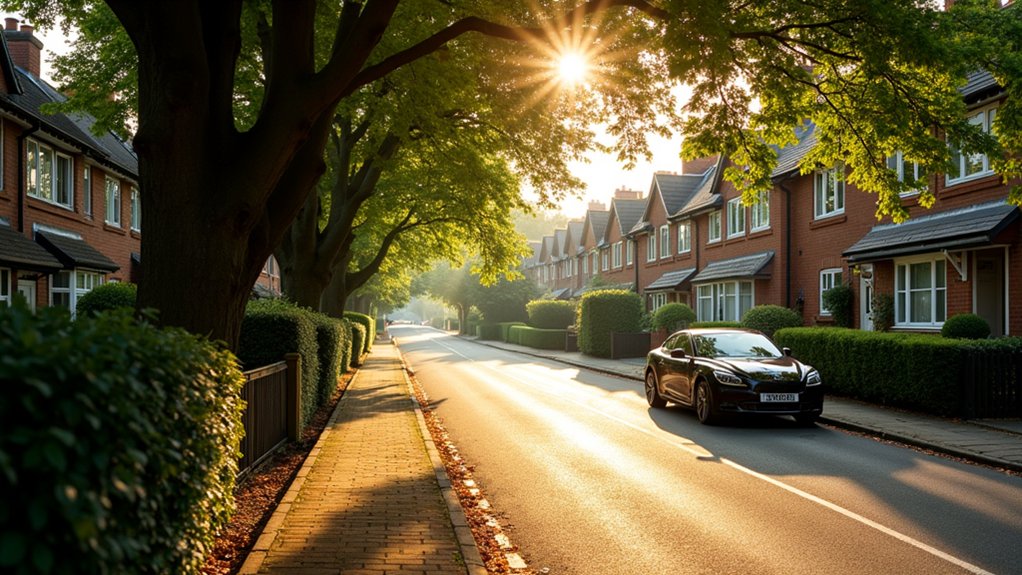
Is it really true that you can live on the edge of London and still hear birdsong more than traffic? In Epping, you get Central line access on tap, yet you’re buffered by the Green Belt and the pull of Epping Forest. You can choose period character near the high street or newer apartments by the station, then wrap your week around schools, pubs, and quick city runs—if you know where to look.
Key Takeaways
- Epping offers a fast, low-stress Central line commute to Central London and the City, with strong links to Stratford and the A104.
- Green Belt setting beside Epping Forest delivers premium space, clean air, and doorstep walks and cycling, without sacrificing London access.
- The town feels village-like yet connected, with cafés, pubs, and heritage landmarks creating a calm, community-focused lifestyle.
- Family living is well supported by walkable schools, childcare, libraries, sports clubs, and practical daily amenities near the High Street and station.
- Property spans modern station apartments to period houses and luxury estates, with strong demand for well-presented homes across price bands.
Epping, Essex: London Commute Without the Noise
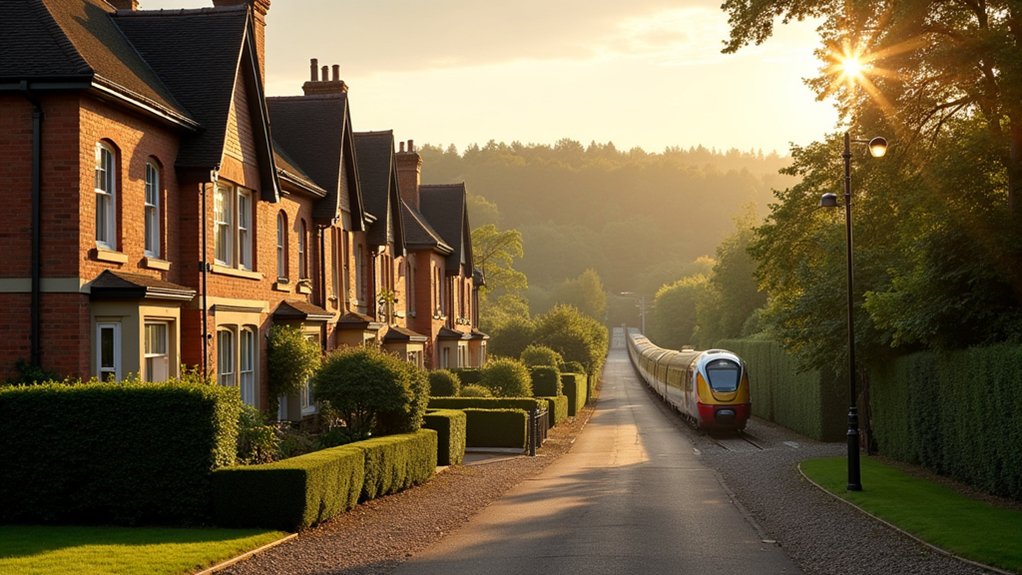
Although you’re only a short hop from Central London, Epping gives you the commute you want without the constant noise you don’t. You’ll step onto the Central line at Epping station and glide into the City, then return to quieter streets framed by the Green Belt.
Local transportation stays flexible: quick bus links, easy A104 access, and practical parking for weekend getaways. You can start mornings with coffee near the high street, then walk past historical landmarks like St John the Baptist Church and the town’s older coaching-route corners that still signal heritage.
Evenings feel calmer, with pubs, small restaurants, and forest air close by. You’re buying time back—less stress, more space, and still London-close.
Best Parts of Epping for Families and Commuters
Whether you’re mapping the school run or shaving minutes off the Central line, Epping’s best pockets make daily life feel effortless. Around the High Street and station, you’ll stay close to cafés, supermarkets, and gyms, while keeping local transportation on your doorstep for quick hops into Stratford or the City.
For family focus, you’ll like the calmer lanes edging Epping Forest, where you can swap screens for after-school bike rides and weekend walks. Near Stonards Hill and the civic core, you’ll find libraries, sports clubs, and dependable childcare—community amenities that anchor routines without constant driving.
Prefer a quieter feel? Choose roads set back from through-traffic yet still within an easy bus connection to the Tube. You’ll balance space, access, and atmosphere daily.
Epping Property Types, Prices, and What You Get
Once you’ve pinpointed the school-friendly streets and the quickest route to the Central line, the next decision comes down to what kind of home you want your budget to buy in Epping.
Period semis and Victorian terraces often start around £500,000–£750,000, typically giving you two to three bedrooms, a garden, and scope to extend.
Modern apartments near the station can sit in the £300,000–£550,000 band, trading outdoor space for turnkey finishes and parking.
Step up to detached family houses and you’ll usually land in the £900,000–£1.6m range, where you get larger plots, driveways, and open-plan living.
At the top end, Luxury estates push £2m+, with gated settings, bespoke kitchens, and landscaped grounds.
Market trends favour well-presented homes.
Schools, Shops, Pubs, and Day-to-Day Epping
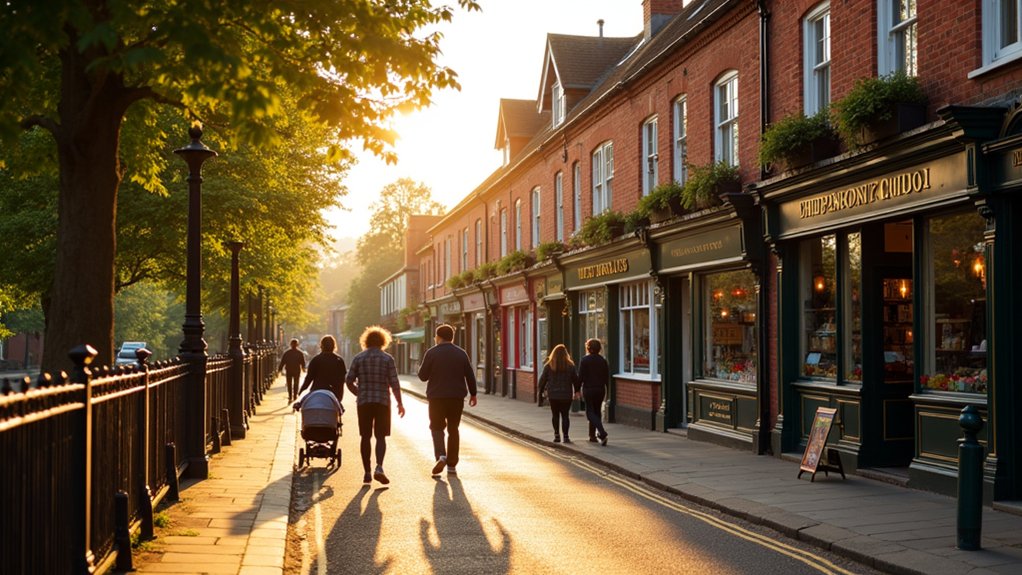
Where does Epping really earn its “best of both worlds” reputation—on the school run, on the high street, or over a Sunday roast? You’ll feel it early: walkable primaries, quick bus links, and parents who track local school rankings like the FTSE.
You can commute with confidence, then reset fast with the Forest minutes away.
For day-to-day, you won’t need to leave town. The High Street mixes independents with essentials, while nearby retail offers shopping center amenities—easy parking, supermarkets, fitness, and click-and-collect convenience.
When it’s time to switch off, you’ll book a table in a timber-beamed pub, order seasonal plates, and still be home before the next train. It’s polished, practical, and quietly premium.
Frequently Asked Questions
What Are the Council Tax Bands and Annual Costs in Epping?
You’ll typically find Council Tax Bands A–H in Epping; expect roughly £1,400–£4,200 annually, depending on valuation and parish precepts. These costs shape housing affordability while funding local amenities you’ll actually use daily.
Do I Need Parking Permits, and How Do I Apply in Epping?
You’ll need permits if you park in controlled zones; you won’t if you use private bays. Check parking regulations, choose resident/visitor permits, complete the online permit application via Epping Forest District Council, then upload proof and pay.
How Reliable Is Mobile Coverage and Broadband Speed Across Epping?
You’ll find Mobile coverage generally strong in central Epping, with occasional softer spots near wooded edges; check networks street-by-street. You can expect solid fibre options and good broadband reliability, though speeds vary by postcode.
What Flood Risk Areas Exist, and How Can I Check a Property?
You’ll find Flood zones mainly near river valleys and low-lying brooks; you can reduce surprises by running property checks via Environment Agency maps, local council searches, and a solicitor’s flood report before you bid.
Are There Planned Developments or Transport Upgrades Affecting Epping Soon?
Yes—there’s a tidal wave of planned housing and transport refreshes you’ll want to track via Epping Forest District and TfL updates. You’ll hear details at Local community events; protect value near historical landmarks and stations.
About the Author