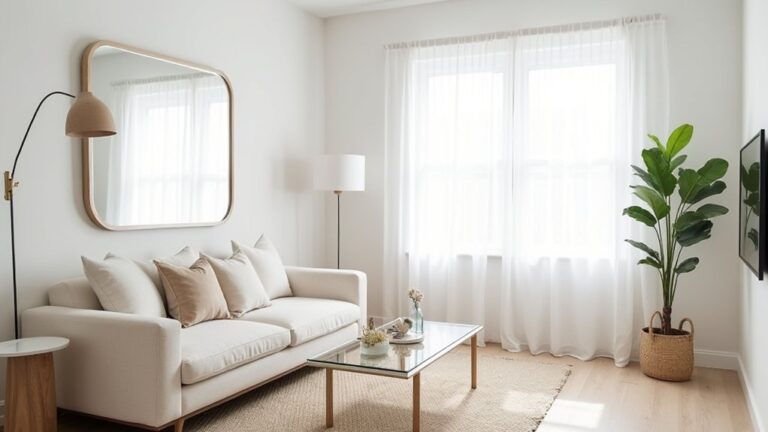
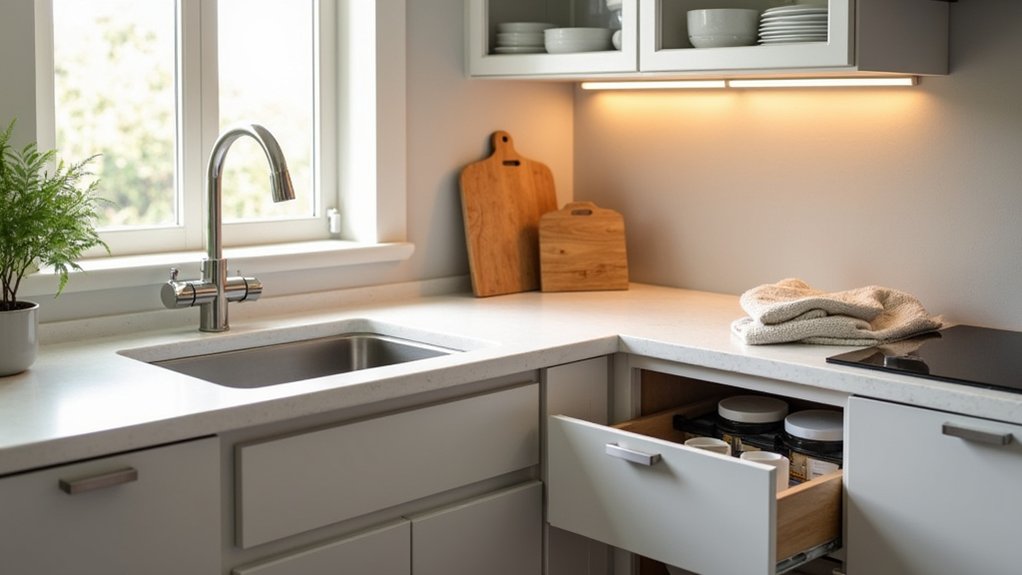
You don’t need a remodel to make your home work better every day. Start with quick, high-impact fixes: seal drafty doors, swap in LED bulbs, tighten loose hardware, and stop small leaks before they turn into damage. Add a smart thermostat or a simple storage hook where clutter piles up. These changes take minutes, but they cut waste and friction fast—and the next few upgrades can change how each room feels.
Key Takeaways
- Seal drafts with weatherstripping and caulk around doors, windows, and attic hatches to boost comfort and cut energy bills.
- Upgrade lighting with LEDs, consistent color temperatures, and dimmers to brighten rooms, reduce glare, and lower electricity use.
- Install a smart thermostat with schedules to maintain steady temperatures and reduce heating and cooling waste year-round.
- Swap to high-efficiency showerheads and fix dripping faucets to save hot water, lower utility costs, and improve daily shower comfort.
- Add simple storage upgrades—hooks, shelves, bins, and pull-out baskets—to reduce clutter and make everyday items easier to find.
Small Home Improvements With the Biggest Payoff
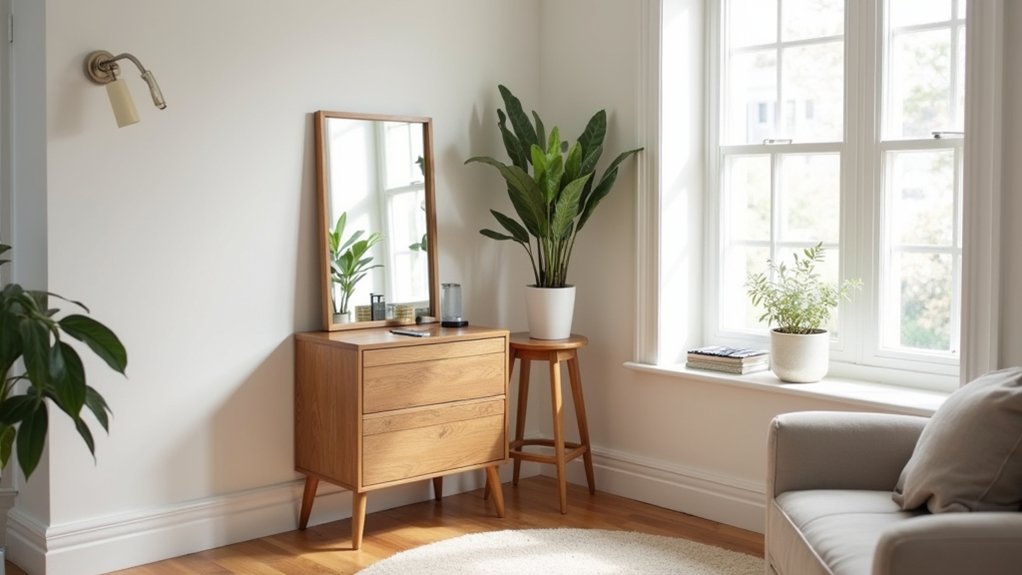
Although big renovations grab attention, you can often boost your home’s comfort and value faster by focusing on a few targeted upgrades. Start with air sealing and weatherstripping around doors, windows, and attic hatches; you’ll cut drafts and improve energy efficiency immediately.
Swap old bulbs for LEDs and add dimmers where you need task lighting. Upgrade your thermostat to a Smart home model and set schedules that match your routine, reducing wasted heating and cooling.
Replace a tired showerhead with a high-efficiency model to lower hot-water use without sacrificing pressure.
In the kitchen, install a pull-out faucet and check under-sink shutoffs for leaks.
Finally, improve curb appeal with a new mailbox and modern house numbers; buyers notice polish quickly.
Small Home Improvements You Can Do in 10 Minutes
If you’ve only got 10 minutes, swap in brighter, energy-saving LED bulbs where you notice dim corners or harsh color, and you’ll improve the room instantly.
Then clear one small surface—your entry table, kitchen counter corner, or nightstand—by putting away anything that doesn’t belong and wiping it down. These two quick fixes make your space look cleaner and feel more functional right away.
Upgrade Lightbulbs Quickly
When you want a quick upgrade that pays off immediately, swapping outdated bulbs for modern LEDs delivers better light in minutes. Start by matching the base type (E26, E12, GU10) and choosing the right color temperature: 2700K for warm living areas, 3000–3500K for kitchens, 4000K for task zones.
Pick energy efficient bulbs with a high CRI (90+) so colors look natural, and check lumens instead of watts for brightness.
For maximum impact, replace the most-used fixtures first: entry, kitchen ceiling, bedside lamps. If you want smarter control, add smart lighting bulbs or a smart switch for dimming, schedules, and motion triggers.
Turn power off, install, and test each lamp.
Declutter One Small Surface
Bright bulbs make a room feel newer, but clutter can still drag the space down. Pick one small surface: your entry table, nightstand, or kitchen counter. Set a 10-minute timer and clear everything into a box or tote so you can see the full area.
Wipe the surface top to bottom for quick Surface cleaning, including corners and the edge underneath. Then do Clutter organization with a simple sort: keep, relocate, toss, and donate. Put back only daily-use items, and group them on a tray so they don’t sprawl.
Return “relocate” items immediately to their homes, not another pile. If something doesn’t have a home, assign one now or donate it. You’ll notice instant calm and easier cleaning tomorrow.
Small Home Improvements for Better Lighting
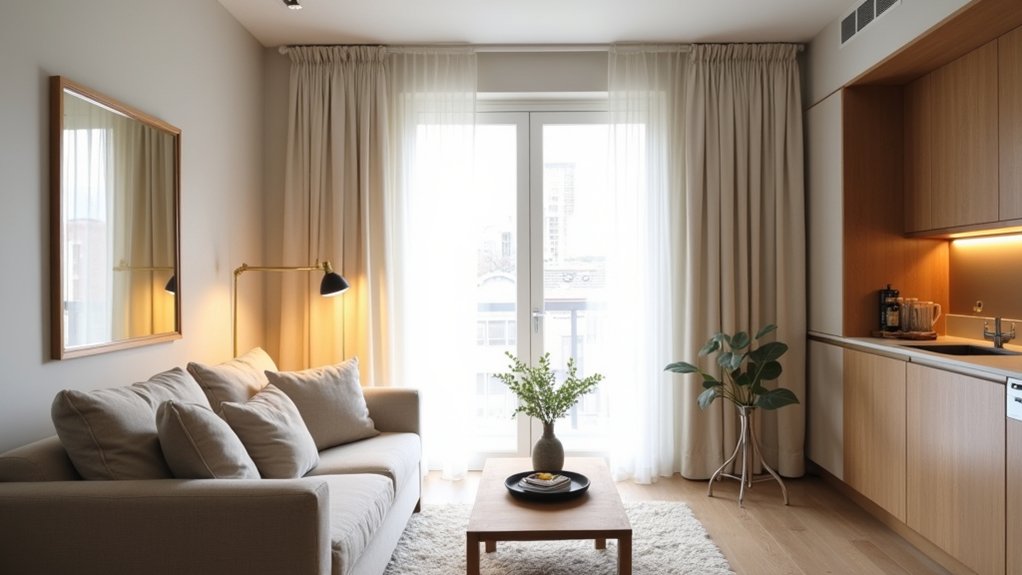
Although a full remodel can transform a room, you can get a major lighting upgrade with a few small, targeted changes.
Start by maximizing natural lighting: clean windows, swap heavy curtains for sheer panels, and hang a mirror opposite the brightest opening to bounce daylight deeper into the space.
Next, make smart light fixture upgrades. Replace yellowed globes or dated shades with clear glass or open designs, and choose LED bulbs at 2700–3000K for warm living areas or 3500–4000K for kitchens and baths.
Add a dimmer where you need flexibility, and use plug-in sconces or a slim floor lamp to eliminate dark corners without rewiring.
Finally, standardize bulb types and brightness levels so rooms feel consistent, not patchy.
Small Home Improvements That Create Storage Fast
Better lighting helps a room feel bigger, but fast storage upgrades make it function better day to day. Start by adding adhesive hooks behind doors for bags, robes, and cleaning tools. Install a slim shelf over the toilet or washer to capture dead vertical space.
Inside cabinets, use stackable risers and under-shelf baskets to double capacity without remodeling. Swap one drawer for a pull-out wire basket to stop items from disappearing in the back.
In closets, add a second tension rod for shirts and pants, plus labeled bins on the top shelf. Try a bench with lift-up storage in entryways, and slide low-profile boxes under beds.
These Storage solutions and organizational hacks reduce clutter fast and keep daily essentials easy to grab.
Small Home Improvements to Refresh Paint and Trim
Start by touching up high-traffic walls—clean scuffs, feather in matching paint, and focus on entryways, halls, and around switches.
Then repaint your trim in a crisp contrasting sheen (typically semi-gloss) to sharpen edges and make the room look newer fast.
Finish by rejuvenating doors and baseboards: fill dings, caulk gaps, sand smooth, and lay down a clean coat for a uniform, durable finish.
Touch Up High-Traffic Walls
Because hallways, stairwells, and kids’ rooms take the most hits, a targeted touch-up can make the whole house look freshly painted without committing to a full repaint. Start by cleaning scuffs with a damp microfiber cloth and a drop of dish soap; let it dry fully.
Lightly sand raised dings, then spot-prime any exposed drywall or patched areas to prevent flashing. For a seamless paint touch-up, use the original can if you’ve got it, stir well, and apply with a small foam roller to mimic the wall’s texture. Feather the edges and roll past the repair so it blends.
Add wall protection by installing clear corner guards or wipeable chair-rail film where backpacks and hands hit most often.
Repaint Trim For Contrast
Once you’ve handled scuffs and touch-ups on busy walls, fresh trim paint gives the whole room sharper definition with minimal effort. Pick a sheen that resists fingerprints—usually satin or semi-gloss—and stick to one trim color throughout connected spaces for cleaner color coordination.
If your walls are light, consider a slightly deeper trim tone; if walls are dark, go a crisp white. Either way, aim for deliberate trim contrast, not accidental mismatch.
Prep drives results: vacuum ledges, wipe with a degreaser, and lightly sand to dull old gloss. Tape the wall edge, then cut in with a 2-inch angled brush and finish with a small foam roller for smoothness.
Let it cure fully before washing or bumping it.
Refresh Doors And Baseboards
Where do fingerprints, shoe scuffs, and vacuum bumps show up first? Your doors and baseboards take daily hits, so a quick refresh pays off fast.
Start by washing with a degreasing cleaner, then lightly sand glossy spots to help new paint grip. Fill dents with spackle, caulk gaps along trim, and spot-prime repairs to prevent flashing.
Use a durable semi-gloss or satin enamel, and cut in with an angled brush before rolling flat areas with a foam roller for a smooth finish.
While paint cures, upgrade door hardware or tighten loose hinges so doors close cleanly.
For baseboard maintenance, add felt pads to furniture, use a soft brush on the vacuum, and touch up chips with a small artist brush.
Small Home Improvements for Comfort and Lower Bills
Even if you’re not planning a major remodel, a few targeted upgrades can make your home feel noticeably more comfortable while trimming your monthly utility bills. Start with Energy efficiency basics: seal air leaks around windows, doors, and attic hatches using caulk and weatherstripping.
Next, tackle insulation upgrades—add attic insulation to recommended R-values, insulate rim joists, and wrap exposed ducts to cut heat loss.
Swap to a smart thermostat and set schedules that match your routine, so you don’t heat or cool an empty house. Replace old furnace filters and clean supply vents to improve airflow and reduce run time.
Finally, install low-flow showerheads and fix dripping faucets; hot-water savings add up fast. You’ll feel fewer drafts, steadier temperatures, and lower bills year-round.
Frequently Asked Questions
How Do I Prioritize Improvements if I’M Planning to Move Soon?
Start with your moving timeline and pick projects that pay back fast. Use prioritization strategies: fix safety issues, address inspection risks, refresh paint and lighting, and skip custom upgrades. Track costs, DIY quick wins, schedule contractors.
Which Small Upgrades Add Value Without Requiring Permits?
You can add value permit-free with paint, updated hardware, and lighting. Nearly 80% of buyers notice kitchens first, so add Smart storage organizers and boost Energy efficiency with LED bulbs, weatherstripping, and a smart thermostat.
What’s the Best Way to Budget for Multiple Mini Projects?
Start with Budget planning: list every mini project, price materials/labor, and rank by impact. Use Cost saving strategies—bundle purchases, reuse tools, DIY safely. Set a 10–15% contingency, track weekly, and adjust.
How Can Renters Make Impactful Improvements Without Damaging Walls?
You can make impactful renter upgrades by using removable hooks, Command strips, and peel-and-stick wallpaper. Try Decorating tips like tension-rod curtains and adhesive LED lighting. Choose Temporary fixes: washable rugs, furniture anchors, decals.
Which Upgrades Are Safest to DIY, and When Should I Hire a Pro?
DIY safety means you can handle paint, caulking, peel-and-stick updates, and hardware swaps. Hire Professional assistance for electrical, plumbing, structural changes, or anything requiring permits. If you can’t isolate utilities safely, call.
About the Author