
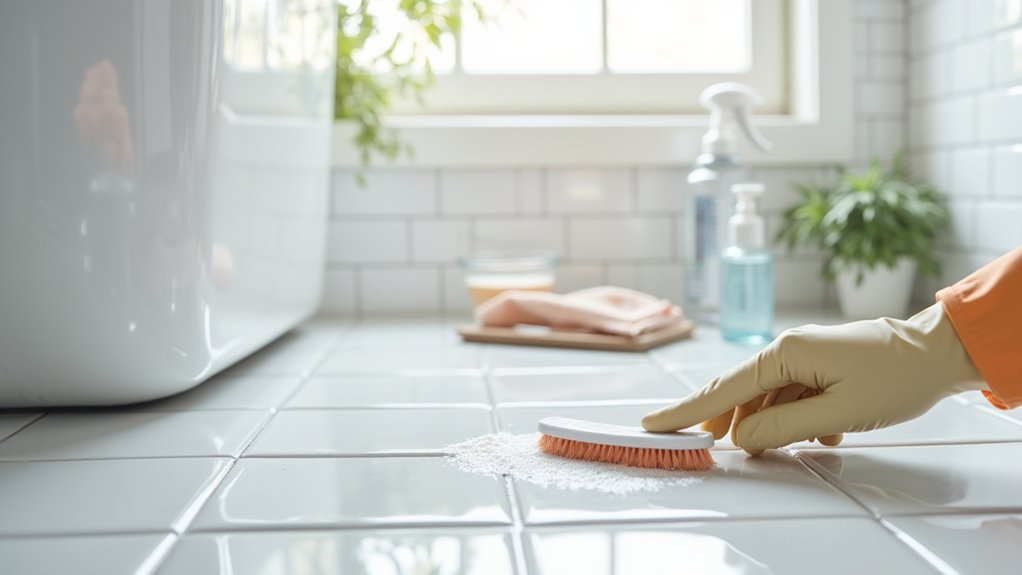
Grout looks sealed and solid, yet it absorbs soils and moisture fast. You’ll start by removing loose grit with a vacuum or dry sweep, then you’ll damp-mop using a neutral pH cleaner to avoid residue per manufacturer specs. When stains persist, you’ll match chemistry to the contaminant—oxidizer, degreaser, or mild acid—and spot-test first. Next, you’ll separate kitchen grease control from bathroom mildew control, because the wrong step can lock in damage…
Key Takeaways
- Vacuum grout lines, mist pH-neutral cleaner, scrub with a nylon brush, then rinse and dry to prevent residue.
- Match cleaners to stains: oxidizers for mildew, alkaline degreasers for oils, and mild acids for mineral or rust stains.
- Deep-clean kitchens with pH 10–12 degreaser and 5–10 minute dwell; scrub, rinse well, and repeat if needed.
- Deep-clean bathrooms with pre-rinse plus oxygen bleach or EPA disinfectant; focus corners last, rinse thoroughly, and dry with airflow.
- Maintain weekly by vacuuming, damp-mopping with neutral cleaner, rinsing and towel-drying, ventilating bathrooms, and wiping kitchen spills within 5 minutes.
Clean Tile Grout Fast: The 10-Minute Method
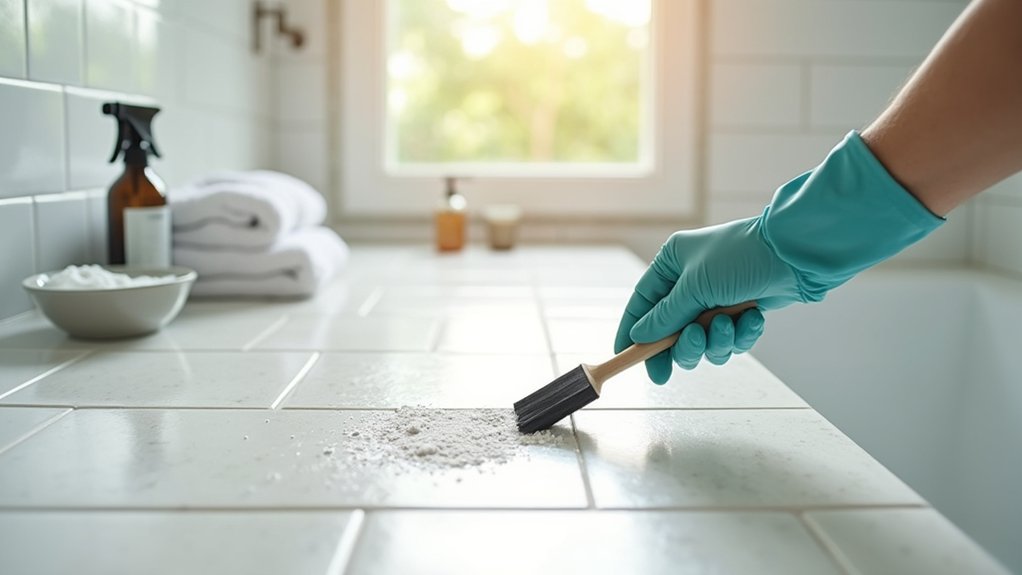
If you need grout that looks noticeably cleaner in a single pass, you can use a controlled 10-minute cycle that prioritizes dwell time, agitation, and a clean rinse.
Start by vacuuming joints, then mist a pH-neutral cleaner and let it dwell 3 minutes per label. Agitate with a nylon grout brush using short, linear strokes, keeping pressure consistent. Rinse with clean water, then extract or towel-dry to prevent residue redeposit.
In minute 8, inspect under strong light and document baseline color for Color matching later; don’t over-scrub pigmented grout. Finish by drying with airflow for 2 minutes.
Once fully dry, schedule sealing techniques per manufacturer cure times to lock in results and reduce future soil loading.
Best Grout Cleaners by Stain Type (Mildew, Grease, Rust)
Although grout reads as a single material, you’ll get faster, safer results by matching the cleaner to the stain chemistry—use an oxidizer (hydrogen peroxide or oxygen bleach) for mildew and organic discoloration, an alkaline degreaser (pH ~10–12) for kitchen oils and soap film, and a mild acid (citric or phosphoric) for rust and mineral-bound stains—then control dwell time, brush with nylon, and rinse to neutral so you don’t drive residues deeper into the joint or damage pigmented grout.
Spot-test per ANSI A108 care practices. For mildew, apply 3% peroxide 5–10 minutes; don’t mix with acids. For grease, use a non-caustic alkaline surfactant; rinse until water sheets clean. For rust, use citric/phosphoric at low concentration; stop at color change.
If staining persists, plan grout repair and color matching rather than over-etching.
Deep-Clean Kitchen vs Bathroom Grout (Grease vs Mildew)
Because kitchen grout typically holds hydrophobic oils while bathroom grout supports moisture-driven biofilm, you’ll deep-clean them with different chemistries and sequencing to meet ANSI A108 care principles without eroding the joint.
In kitchens, start dry: vacuum joints, then apply an alkaline degreaser at label dilution, dwell 5–10 minutes, and agitate with a nylon brush. Rinse with clean water and extract; repeat until rinse water runs clear to support Color restoration.
In bathrooms, pre-rinse warm, then apply an EPA-registered disinfectant or oxygen bleach; keep it wet for required contact time, scrub, and rinse thoroughly.
Address corners and change-of-plane joints last to avoid recontamination. Finish by drying the area with airflow and wiping residual moisture to drive Mold prevention.
Avoid acids on cement grout unless approved.
Seal Grout After Cleaning: When and How
Once the grout has been cleaned to a residue-free rinse, you should seal it to reduce absorption and staining without creating a surface film that compromises joint performance. Let joints dry per sealer label; as a standard practice, wait 24–72 hours, longer in humid baths. Confirm dryness with a moisture meter or a taped plastic square test.
Choose a penetrating, breathable sealer compatible with cementitious or epoxy grout and your tile. Mask adjacent surfaces if needed. Apply with brush, sponge, or applicator bottle, flooding joints evenly; that’s among the most reliable application techniques. Dwell 3–5 minutes, then remove all excess from tile faces before it hazes.
Apply a second coat if specified. Track Sealant longevity by documenting date, product, and re-test annually using a water-drop beading check.
Keep Grout Clean: Simple Weekly Habits
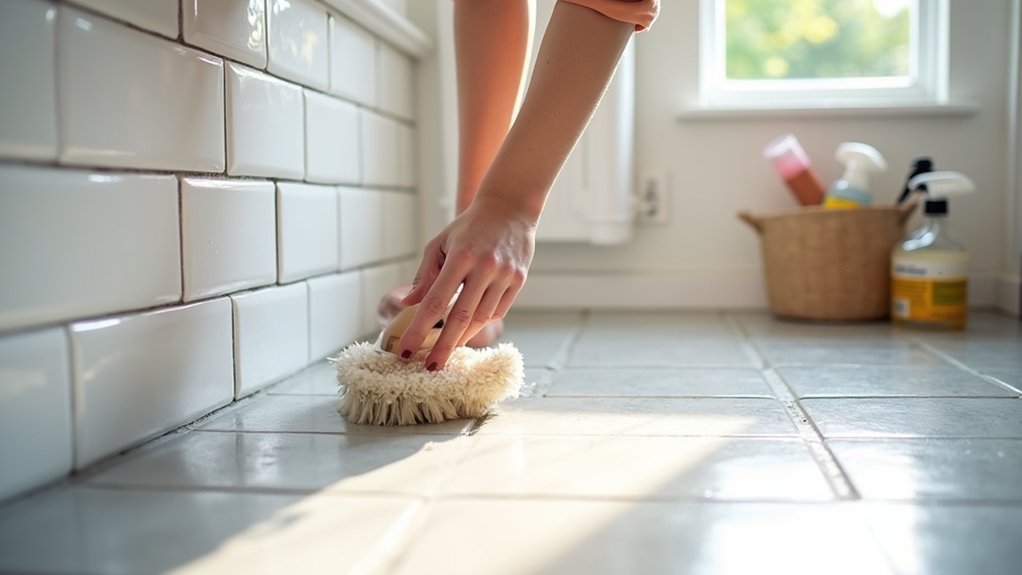
After you’ve sealed and fully cured the joints, keep grout clean by running a simple weekly maintenance cycle that limits soil loading, controls moisture, and avoids chemistry that degrades cement binders or sealer performance.
Dry-sweep or vacuum with a soft brush to remove abrasives, then damp-mop with a neutral pH cleaner (≈7–9) at label dilution. Rinse with clean water and squeegee or towel-dry to reduce dwell moisture and biofilm.
Ventilate bathrooms for at least 20 minutes after use; in kitchens, wipe spills within 5 minutes to prevent capillary staining.
Don’t use acids, bleach, or high-alkaline degreasers unless you’re restoring.
Inspect for pinholes and wear; schedule re-seal, Color sealing, or Grout repainting only after cleaning passes and joints are dry.
Frequently Asked Questions
How Do I Know if My Grout Needs Repair Instead of Cleaning?
You’ll know grout needs repair, not cleaning, when it’s cracked, missing, powdery, or tiles loosen—congratulations, your grout’s staged a revolt. Verify per standards: probe depth, moisture staining. Then do grout color matching, grout sealing.
Can I Use a Steam Cleaner on Grout Without Damaging Tiles?
Yes, you can use Steam cleaning on grout without damaging tiles if you use moderate pressure, keep the nozzle moving, and follow manufacturer limits. Test first; persistent grout discoloration signals sealant failure—reseal afterward.
What’s the Best Way to Whiten Grout Without Bleach?
Like fresh snow, you’ll whiten grout best using an oxygenated cleaner paste, stiff-brush agitation, and thorough rinse. Then apply color sealing per manufacturer spec; use sealing techniques (two coats, cure times) to lock brightness.
How Do I Remove Grout Haze From Tiles After Regrouting?
Remove grout haze by dry-buffing tile, then wiping with pH-neutral cleaner; use sulfamic-acid wash if cured. Rinse thoroughly, dry, and inspect. Finish with grout sealing and targeted stain removal per manufacturer specs.
Is Epoxy Grout Easier to Maintain Than Cement-Based Grout?
Yes—you’ll maintain epoxy grout more easily. You’ll scrub less, seal less, and stain less, because Epoxy durability resists chemicals and moisture. You’ll still choose Cement versatility when you need easy handling, cost control, or repairs.
About the Author