

You might assume seasonal home maintenance is optional, but that theory breaks down when you track the most common failures after weather shifts. You should follow a consistent checklist: clear and inspect gutters, check shingles and flashing, test smoke and CO alarms to manufacturer specs, confirm grading drains away from the foundation, and seal window, door, and utility penetrations. If you miss the early warning signs, one season can quietly set up the next one’s expensive problem…
Key Takeaways
- Inspect roof, flashing, and gutters each season; repair damage early and keep downspouts draining 4–6 feet away from the foundation.
- Test safety devices quarterly: smoke and CO alarms, GFCI outlets, exterior lights, and sump pump; replace batteries and reset or repair as needed.
- Maintain HVAC seasonally: change filters monthly in heavy-use months, clear vents and grilles, and verify thermostat schedules for efficient operation.
- Prevent water and freeze damage: check hose bibs and exposed pipes for leaks, drain and shut off exterior lines before winter, and insulate vulnerable plumbing.
- Check moisture and airflow: inspect attic insulation for dampness, ensure bath fans vent outdoors, and clear furnace, dryer, and outdoor exhausts of debris or snow.
Spring Home Maintenance Checklist (Post-Winter)
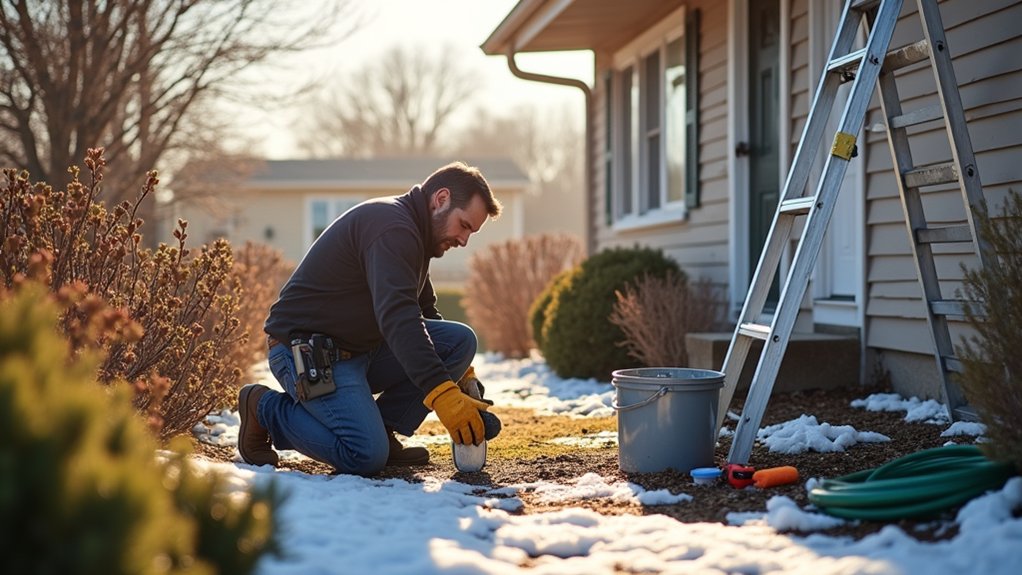
Once winter loosens its grip, start your spring checklist with a quick, systematic inspection to catch freeze-related damage before it turns into leaks, rot, or electrical hazards. Walk the perimeter and confirm grading still slopes away from the foundation. Test GFCI outlets, exterior lights, and any sump pump; reset or replace failed devices per manufacturer instructions.
Schedule a roof inspection: look for lifted shingles, damaged flashing, ice-dam scars, and clogged gutters, and use fall protection if you must access a ladder. Check attic insulation for moisture and verify bath fans vent outdoors.
Inspect hose bibs and exposed pipes for cracks, then slowly pressurize and watch for leaks. Finish with garden landscaping: prune dead branches, clear storm debris, and keep mulch off siding.
Summer Home Maintenance Checklist for Cooling and AC
Spring inspections handle winter’s leftovers; summer maintenance shifts your focus to keeping the house cool without overloading electrical circuits or stressing mechanical equipment. Replace or wash HVAC filters monthly, then vacuum return grilles to maintain airflow and energy efficiency. Set thermostats to a consistent, reasonable range and verify programmable schedules.
Clear supply vents, close unused room doors only if your system is zoned, and seal obvious duct leaks with UL-181 mastic.
Outside, shut power at the disconnect before hosing condenser fins; keep 24 inches of clearance and level the pad. Inspect the condensate line and flush it with vinegar to prevent clogs and water damage.
Test GFCI outlets on patios and near equipment for outdoor safety, and don’t run extension cords for permanent loads.
Fall Home Maintenance Checklist for Storms and Gutters
As temperatures drop and storm fronts pick up, you’ll want to prep your roof drainage and exterior openings before clogged gutters or wind-driven rain can force water behind siding and under shingles.
Start with gutter cleaning: wear gloves, use a stable ladder set on level ground, and maintain three points of contact. Clear downspouts, then run water to confirm full flow away from the foundation.
For storm preparedness, inspect fascia, soffits, and flashing for gaps; reseal with exterior-grade sealant where needed. Replace missing shingles and secure loose drip edge.
Trim branches back from the roofline, and verify splash blocks or extensions discharge 4–6 feet from walls. Check window wells and exterior drains for debris. Test sump discharge lines if you’ve got them.
Winter Home Maintenance Checklist to Prevent Freezing
Before the first hard freeze hits, you should lock down the areas most likely to burst, ice up, or lose heat. Shut off and drain exterior hose bibs, then close interior shutoff valves. Verify exposed water lines in crawlspaces, attics, garages, and exterior walls have listed pipe insulation and sealed joints. Set your thermostat to a consistent minimum and confirm heat reaches remote rooms to prevent stagnant cold pockets.
Inspect attic insulation depth and air-seal penetrations around vents, chases, and recessed fixtures to boost Energy efficiency. Clear snow from furnace and dryer exhaust terminations, and confirm carbon monoxide alarms meet current placement guidance and test properly.
Seal gaps at sill plates, utility entries, and garage doors for Pest prevention and to stop icy drafts. Check roof edges for early ice dam signs.
DIY Seasonal Home Maintenance Tasks (Safe and Simple)

Start each season with simple DIY checks that protect your indoor air quality, fire safety, and water management.
You’ll replace or clean HVAC filters and confirm supply/return vents are clear.
Then test smoke and CO alarms per the manufacturer’s instructions and replace batteries if required.
You’ll also clean gutters, downspouts, and surface drains with a stable ladder and gloves.
Finally, verify water flows away from the foundation.
Check Filters And Vents
Even if you only tackle one seasonal task, checking your HVAC filters and home vents can improve airflow, reduce strain on the system, and support healthier indoor air. Shut the thermostat off before you open the air-handler or return grille, and follow the manufacturer’s service instructions.
Replace HVAC filters on schedule (often 30–90 days) and match the size and airflow rating; don’t “upgrade” MERV without confirming your system can handle added resistance.
Vacuum dust from return grilles and supply registers, then confirm louvers aren’t blocked by rugs or furniture.
For Ventilation systems, clear bathroom and kitchen exhaust fan covers, and verify exterior hoods open freely and aren’t clogged with lint, nests, or debris. Reinstall covers securely.
Test Detectors And Alarms
As the seasons shift and you run heaters, fans, and holiday appliances more often, make detector and alarm testing a quick, non-negotiable safety check.
Test Smoke alarms and Carbon monoxide alarms monthly by pressing the test button until you hear the full alarm pattern. Replace batteries at least yearly, or immediately when you hear chirping; use the correct type and match polarity.
Vacuum vents and sensor openings lightly so dust doesn’t mute the sounder. Confirm each unit is securely mounted and located per manufacturer instructions: outside sleeping areas, on every level, and away from cooking sources to reduce nuisance alarms.
Check the manufacture date; replace alarms at end-of-life (often 10 years). If you’ve got interconnected alarms, verify all units sound together.
Record the date.
Clean Gutters And Drains
Once you’ve confirmed your alarms work, turn to another high-impact safety task: keeping gutters and drains clear so water can’t back up into fascia, siding, basements, or walkways.
Schedule Gutter cleaning each season, and sooner after storms or heavy leaf drop. Set your ladder on firm, level ground, keep three points of contact, and don’t overreach; use a stabilizer if you can. Wear gloves and eye protection, then scoop debris and flush with a hose to confirm flow.
Follow with Drain inspection: check downspouts for clogs, extensions for proper discharge 4–6 feet from the foundation, and splash blocks for alignment. Clear nearby grates, confirm yard drains accept water, and fix leaks immediately.
Home Maintenance Tasks to Hire a Pro For (Red Flags)
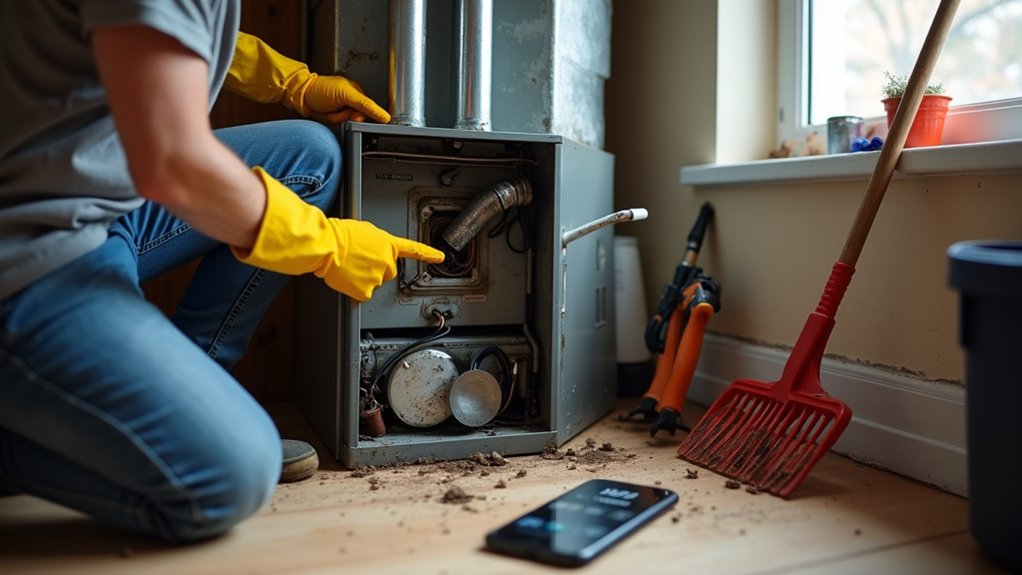
When a maintenance job involves high voltage, gas lines, pressurized systems, or structural components, you shouldn’t treat it as a DIY project—call a licensed pro and protect your home (and your insurance coverage).
Shut off utilities, document the issue, and avoid “temporary” fixes that can violate code.
Hire help if you smell gas, see scorching at outlets, hear breaker buzzing, notice plumbing hammering, or find moisture near electrical panels.
Don’t attempt appliance repairs that require opening sealed refrigeration lines, servicing gas burners, or bypassing safety interlocks.
Schedule structural inspections when you spot new drywall cracks, uneven floors, sticking doors, roof sagging, or foundation water intrusion.
Use licensed, insured trades and request permits, load calculations, pressure tests, and final sign-off to meet local standards.
Frequently Asked Questions
How Much Should I Budget Annually for Seasonal Home Maintenance?
You should budget $1,000–$3,000 annually for seasonal home maintenance, covering garden pruning and gutter cleaning. You’ll follow manufacturer specs, ladder safety, and local codes; you’ll add 1% of home value for major repairs.
What Maintenance Tasks Should Renters Handle Versus Landlords?
You handle Renters responsibilities: replace HVAC filters, test smoke/CO alarms monthly, report leaks promptly, keep drains clear, and maintain cleanliness. Your landlord meets Landlord obligations: code-compliant repairs, structural, plumbing/electrical, pest control, and safety systems.
How Do I Create a Home Maintenance Schedule for a Busy Household?
Create a shared calendar, assign owners, and batch tasks into monthly checklists; you’ll schedule Seasonal cleaning and Appliance upkeep quarterly. Set reminders, follow manufacturer manuals, log inspections, and prioritize safety checks like alarms, filters, shutoffs.
Which Smart Home Devices Help Track Maintenance and Prevent Failures?
Like a smoke signal, you’ll rely on Smart sensors: water-leak detectors, HVAC filter monitors, sump-pump and CO/smoke alarms, and smart breakers. You’ll set maintenance alerts to meet code, catch faults early, prevent hazards.
What Maintenance Records Should I Keep for Resale or Insurance Claims?
Keep Insurance documentation: policy, photos, serial numbers, permits, warranties, inspection reports, and claim correspondence. Keep Resale records: dated invoices, contractor licenses, code-compliance certificates, maintenance logs, and appliance manuals. Store backups securely; you’ll speed claims and reduce disputes.
About the Author