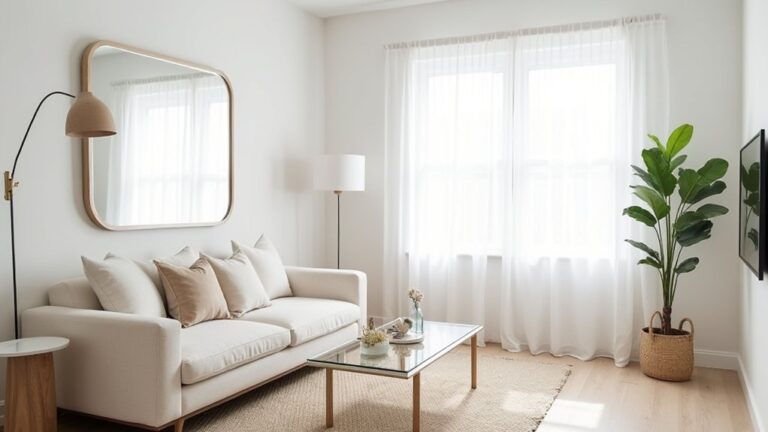
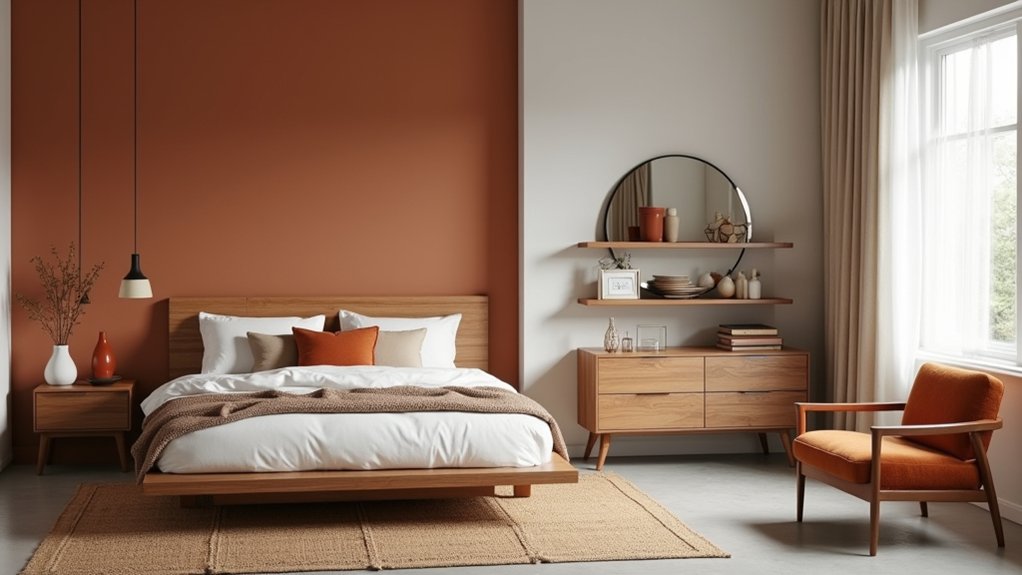
You can upgrade your bedroom fast when you treat it like a mini design project: set a calm vibe, lock in a realistic budget, and make the bed the clear focal point. Then you’ll plan a layout that keeps walkways open, choose a modern colour palette with soft walls and sharper accents, and layer textures through bedding, rugs, and curtains for depth. But the biggest shift often comes from one unexpected swap…
Key Takeaways
- Choose a clear bedroom vibe and budget, using two neutrals plus one accent colour and a few high-impact “anchor” purchases.
- Rework the layout around the bed: place it on a solid wall, keep door sightlines, and maintain 24–30 inches of walkway clearance.
- Update wall colours with soft, low-contrast paint; keep ceilings slightly lighter and use trim colour to create a seamless, calming “box” effect.
- Layer textures with bedding, rugs, and curtains: mix cotton, linen, knits, and hang curtains high and wide for height and softness.
- Upgrade lighting with warm dimmable bulbs and layered fixtures (ceiling, lamps, sconces), then finish with minimal art, mirrors, and styled surfaces.
Decide Your Bedroom Vibe and Budget
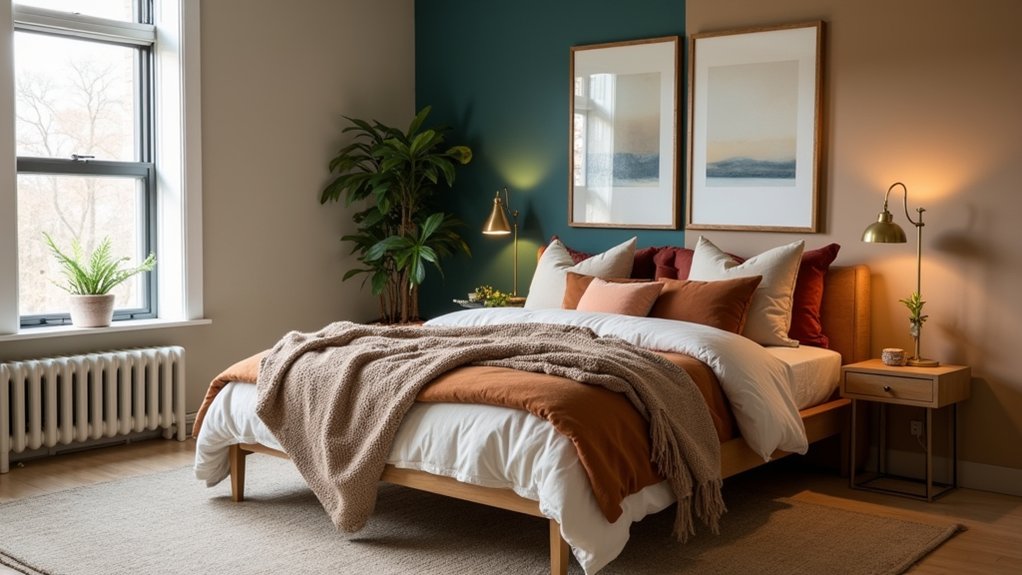
Before you buy a single throw pillow, lock in the vibe you want your bedroom to deliver—calm hotel suite, warm modern organic, moody boutique, or bright Scandinavian—and set a budget that matches the scale of change.
Build a tight palette: two neutrals plus one accent, then choose textures that sell the mood—linen and bouclé for soft modern, walnut and clay tones for organic warmth, lacquer and velvet for boutique drama.
Price out your “anchors” first: rug, lighting, window treatments, and one statement piece, then back-fill with affordable layers.
Audit bedroom storage early so your look stays sleek: add closed-case pieces, under-bed bins, or a tailored wardrobe plan.
Map furniture placement on paper so purchases fit clear walking paths.
Fix the Bedroom Layout Around the Bed
Once you’ve nailed the vibe, center your entire floor plan on the bed like it’s the room’s anchor piece. Start with bed positioning: aim for a solid wall, clear sightline to the door, and equal breathing room on both sides for a boutique-hotel feel. Keep 24–30 inches of walkway clearance, or more if you’re tight on corners.
Then refine your furniture arrangement to support how you actually live. Float nightstands to match mattress height, not the frame. If space is narrow, swap to wall-mounted shelves or a slim ledge.
Place a bench or ottoman at the foot only if it won’t pinch circulation. Tuck a dresser opposite the bed for a clean axis, or slide it to a side wall to reduce visual bulk.
Choose Bedroom Colours (Paint, Accents, Finishes)
Because colour changes how your bedroom’s proportions read, treat paint, accents, and finishes like a lighting plan for the eye: use a soft, low-contrast wall colour to calm the envelope, then layer in deeper tones and tactile materials (matte paint, warm woods, brushed metals) to add depth without visual noise.
For a modern, expanded feel, keep the ceiling a half-step lighter than walls and run colour through trim for a seamless “box” effect.
Want structure? Use Accent wall ideas behind the headboard: a grounded clay, inky green, or smoky navy band that’s wider than the bed to visually anchor it.
Choose paint finish options strategically—matte on walls to hide flaws, eggshell on trim for wipeability, satin only where you need bounce.
Layer Bedroom Textures With Bedding, Rugs, Curtains
After you’ve set your colour palette, you’ll upgrade the room fast by layering touchable textures where your body and eyes land first.
Mix bedding textures—crisp cotton sheets, a quilted coverlet, and a chunky knit throw—to create a styled, trend-forward bed that still feels practical.
Anchor the layout with a layered rug under the bed and soften the perimeter with curtains that stack wide and high, adding warmth, height, and a finished look.
Mix Bedding Textures
While your color palette sets the mood, it’s the mix of textures that makes a bedroom feel layered and intentionally designed. Start with crisp cotton or percale sheets for a cool, tailored base, then add a linen duvet for relaxed, modern texture.
For mixing textures that reads curated, fold a quilt or coverlet at the foot of the bed to create a clear visual break and a more hotel-like silhouette.
Use bedding layering to balance shine and matte: pair a smooth sateen duvet with nubby bouclé or waffle-weave throw pillows.
Anchor the headboard with oversized Euro shams, then place smaller lumbar cushions in front to control depth without crowding the mattress edge. Keep the palette tight, and let texture do the work.
Layer Rugs And Curtains
Even if your bedding already feels layered, rugs and curtains push the room into that fully finished, designer-look zone by adding scale and softness at the perimeter.
Anchor the bed with an oversized rug that extends 18–24 inches past the sides, then top it with a smaller accent rug for depth and smart Pattern combinations. Keep one element quiet (solid wool) and let the other bring graphics (stripe, checker, vintage Persian).
Treat windows like walls: hang curtains high and wide to stretch the ceiling line and frame the view. Choose curtain styles that match your layout—ripple-fold for sleek modern, pinch-pleat for tailored, or linen sheers plus blackout panels for hotel-grade function.
Coordinate tones with your bedding, not matchy-matchy.
Pick Bedroom Lighting That Flatters Your Colours
Because light shifts how every finish reads, you’ll want bedroom lighting that makes your wall colour, textiles, and wood tones look intentional—not washed out or muddy. Start by choosing warm, dimmable bulbs (around 2700K) to deepen paint and soften neutrals; go slightly cooler (3000K) if you’re working with crisp whites and modern grays.
Build layers: ceiling fixtures for overall glow, then ambient lighting from shaded lamps that bounce light across the room instead of spotlighting harshly. Use wall mounted lighting beside the bed to free up nightstands and keep beams at eye level, which makes fabrics look richer.
Aim sconces toward the headboard and curtains, and add a low-glare reading light for function without color distortion.
Finish the Bedroom With Art, Mirrors, and Tidy Surfaces
Once your lighting makes every colour and texture read true, lock in the upgrade with the finishing layer: art, mirrors, and surfaces that look styled, not scattered. Choose Wall art with strong scale: one oversized piece above the headboard, or a tight grid that aligns with nightstand edges. Keep frames consistent—black, oak, or brass—to echo your hardware and add a curated, current feel.
Dial in Mirror placement to expand the layout: hang a tall mirror opposite a window to bounce daylight, or lean it near a corner to soften dead space.
On dressers, edit to three objects max: a tray for daily items, a sculptural lamp, and a low bowl. Hide cables, corral skincare, and leave negative space so the room breathes.
Frequently Asked Questions
How Can I Reduce Outside Noise in My Bedroom Upgrade?
Like wrapping your room in a hush, you’ll cut outside noise fast: hang soundproof curtains, add door seals, and layer a thick rug. Reposition your bed off window walls for a calmer, boutique-hotel layout.
What Are Safe Paint and Material Choices for Allergies or Asthma?
Choose Eco friendly paints: zero-VOC, low-odor, and mold-resistant so you don’t trigger flare-ups. Use solid-wood or metal furniture, skip MDF, and add hypoallergenic bedding. Plan airflow with spaced rugs and washable curtains.
How Do I Improve Bedroom Air Quality Without Major Renovations?
Treat your bedroom like a lung: clear its pathways. You’ll boost air quality fast by running air purifiers, adding indoor plants, washing bedding weekly, vacuuming HEPA, and planning airflow zones with uncluttered layouts, plus humidity control.
Which Smart Home Devices Are Most Useful for a Bedroom Refresh?
You’ll get the biggest bedroom refresh from smart lighting for layered ambience, automated curtains for clean sightlines, a quiet air purifier, and a smart thermostat. Add a compact speaker and occupancy sensor for seamless routines, nightly.
Do I Need Permits for Electrical or Structural Changes in a Bedroom?
You often do—about 70% of home renovations trigger inspections, so picture paperwork before power tools. You’ll need Electrical permits for new circuits; Structural regulations apply if you move walls, beams, or enlarge openings.
About the Author