
You don’t need a full renovation to make a small room feel larger. You can amplify daylight with sheer panels, then use pale, matte paint to bounce it around without glare. You’ll get more breathing room when you float key pieces, keep sightlines clear, and choose slim furniture with visible legs. Add vertical storage and hidden drop zones to cut visual noise, then unify finishes and layer lighting for cohesion—but the real shift happens when you adjust just one layout decision first…
Key Takeaways
- Maximize daylight with sheer window treatments and pale matte wall paint to bounce light and reduce glare.
- Layer warm, consistent lighting (2700–3000K) using ceiling fixtures, slim floor lamps, and sconces to add depth.
- Rework furniture layout to open sightlines from the doorway, keeping circulation paths straight and uncluttered.
- Choose slim, leggy, multifunctional furniture sized for the room, like loveseats, nesting tables, and modular pieces.
- Add hidden and vertical storage in matching colors to clear floors, reduce clutter, and create a built-in look.
Use Light, Paint, and Contrast to Feel Bigger
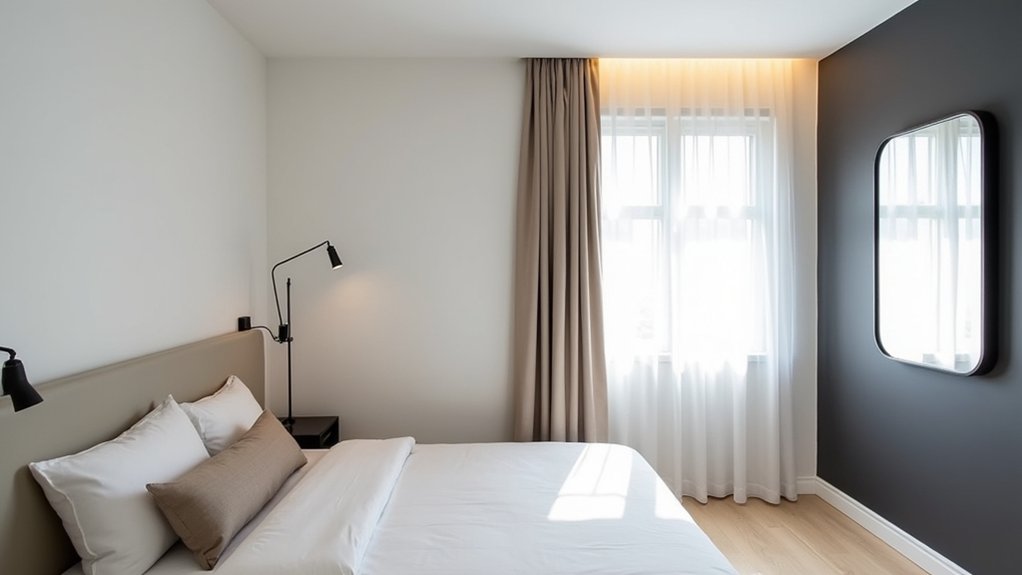
If your room feels tight, let light lead the makeover: maximize daylight with sheer window treatments, then amplify it with a pale, matte wall color that bounces brightness without glare.
Layer smart lighting techniques: a warm ceiling fixture for fill, a slim floor lamp to lift corners, and a focused sconce to graze texture and add depth. Keep bulbs consistent (2700–3000K) so the room reads calm, not choppy.
Use disciplined color schemes to stretch boundaries: match trim to wall paint for fewer visual breaks, then add contrast in controlled doses—one dark frame, a charcoal pillow, a black metal leg—to sharpen edges without shrinking the space.
Finish with a satin-matte ceiling for soft lift.
Rework the Layout to Open Sightlines
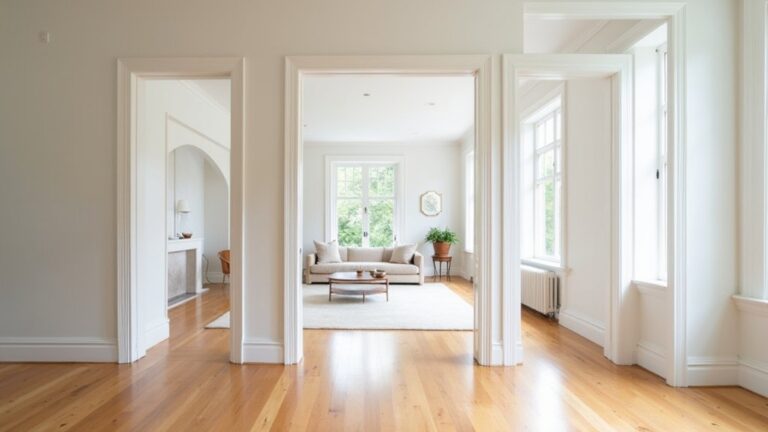
Light and paint can make a small room feel airier, but the layout decides whether it *lives* that way. Start by standing in the doorway and mapping your longest, cleanest view; you want one uninterrupted line to a focal point, not a zigzag of obstacles.
Float major pieces off the direct path and keep corners visually active, not blocked. Align rugs and art so they pull your eye forward, and keep circulation routes straight and readable.
Use Lighting techniques to reinforce sightlines: aim washes along the longest wall, then add a tight beam on the focal object to create depth.
Lean on color psychology, too—repeat one calm hue across the view to reduce visual stops and feel continuous.
Choose Space-Saving Furniture Sized for the Room
Because every inch has to earn its keep in a small room, choose furniture that matches the room’s scale and does double duty without looking bulky. Start with slim silhouettes: a loveseat over a deep sofa, armless accent chairs, and a round café table that eases circulation. Aim for pieces with visible legs and tight upholstery so the floor reads larger and lighter.
Prioritize multifunctional furniture that stays visually quiet: a desk that doubles as a console, nesting tables that spread out only when you’re entertaining, or an upholstered bench that works as seating and a soft landing spot. Look for modular designs that let you reconfigure seating to fit the moment without overpowering the footprint.
Keep finishes cohesive—one wood tone, one metal—to reduce visual chop.
Add Hidden and Vertical Storage to Cut Clutter
Next, claim wall height with vertical shelving that matches your trim or wall color for a clean, built-in look. Stack books and baskets in a consistent palette, and label discreetly to keep it polished.
Hang hooks on the side of a shelf unit for bags or headphones. You’ll clear the floor, open sightlines, and make the room feel wider.
Frequently Asked Questions
How Do I Improve Airflow in a Small Room Without Renovations?
Crack windows like you’re uncorking fresh air, then place a box fan to exhaust stale heat. For airflow optimization, run ceiling fans counterclockwise, clear vents, use cross-breezes, and try ventilation techniques: door gaps, dehumidifier.
What Window Treatments Maximize Privacy Without Making the Room Feel Smaller?
You’ll maximize privacy with light-filtering roller shades, top-down/bottom-up blinds, and airy drapery styles hung high and wide. Choose window film options like frosted or reeded panels for daytime cover without sacrificing brightness.
How Can I Reduce Noise in a Small Room Without Bulky Materials?
Use soundproofing solutions like slim Acoustic panels, peel-and-stick sealant on gaps, and heavy curtains with tight pleats. Add a rug pad and felt furniture glides; you’ll cut echo and transfer noise stylishly.
Which Lighting Color Temperature Makes Small Rooms Feel Most Comfortable?
Pick warm-white 2700–3000K Color temperature; you’ll make a small room feel most comfortable. Studies show warm light boosts relaxation by ~20%. You’ll craft flattering Lighting ambiance, reduce glare, and keep finishes looking crisp.
How Do I Make a Small Room Feel Bigger on a Tight Budget?
You’ll make a small room feel bigger by decluttering, using light paint, and keeping sightlines open. Add Decorative mirrors to bounce light, and choose Multi functional furniture that tucks away—like storage ottomans and nesting tables.
About the Author