You’re working with a Victorian fireplace that already has presence, so your job is to frame it, not fight it. Start by identifying what can’t be ignored—tile, cast-iron detailing, mantel proportions—then build a contemporary scheme that lets those features lead. Use a calm, modern palette, sharper silhouettes, and a few intentional contrasts in material and lighting. The difference between “mixed” and “designed” comes down to a few specific moves…
Start With the Victorian Fireplace’s Key Features
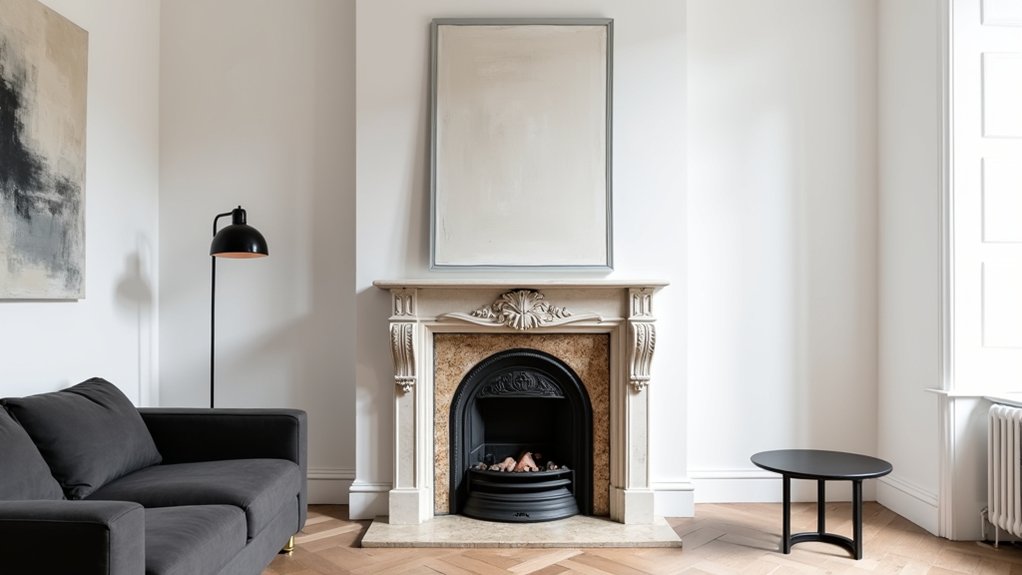
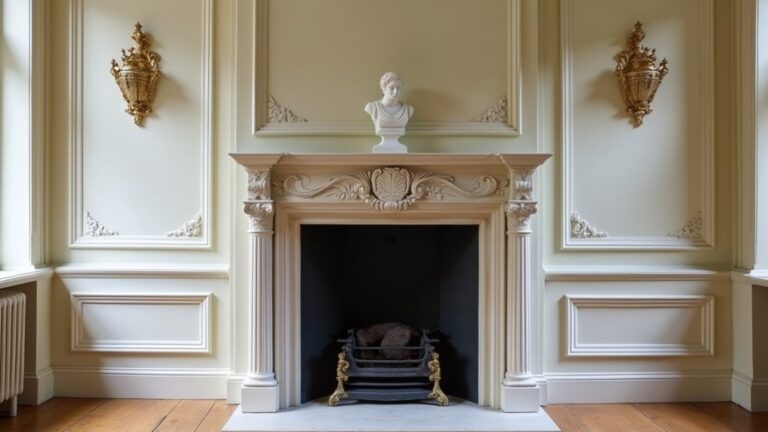
Before you choose paint colors or furniture, nail down what makes your Victorian fireplace unmistakably Victorian: its original surround material (marble, slate, tile, or carved wood), the mantel’s proportions and detailing, and any cast-iron insert, grate, or tiled hearth that anchors the composition.
Photograph it straight-on, measure the opening, shelf depth, and projection, and map every profile, corbel, and moulding.
Check for hairline cracks, failed grout, loose tiles, and warped timber, then confirm what’s original versus later repairs.
Identify period cues—tiled cheeks, patterned hearths, and register plates—so you can specify like-for-like restoration materials.
When you preserve Victorian craftsmanship and protect ornate detailing, you create a credible focal point that holds value and steers every later design decision.
Choose a Modern Colour Palette to Frame the Fireplace
How do you make an ornate Victorian surround feel current without stripping its character? You frame it with a modern palette that respects the original materials. Start by sampling the fireplace’s undertones—warm buff, cool slate, iron black—then build color harmony with adjacent wall and trim shades.
Market-favourite choices include soft mineral whites, greige, clay, and muted olive, because they read contemporary yet forgiving in natural light. Keep sheen intentional: matte on walls, eggshell on woodwork, and a heat-rated satin on the mantel for wipeability.
Use disciplined paint techniques: meticulous cutting-in to preserve crisp mouldings, thin coats to avoid clogging detail, and colour sampling on A4 boards at different times of day. Seal any stains before topcoating.
Use Contrast to Make the Victorian Fireplace Pop
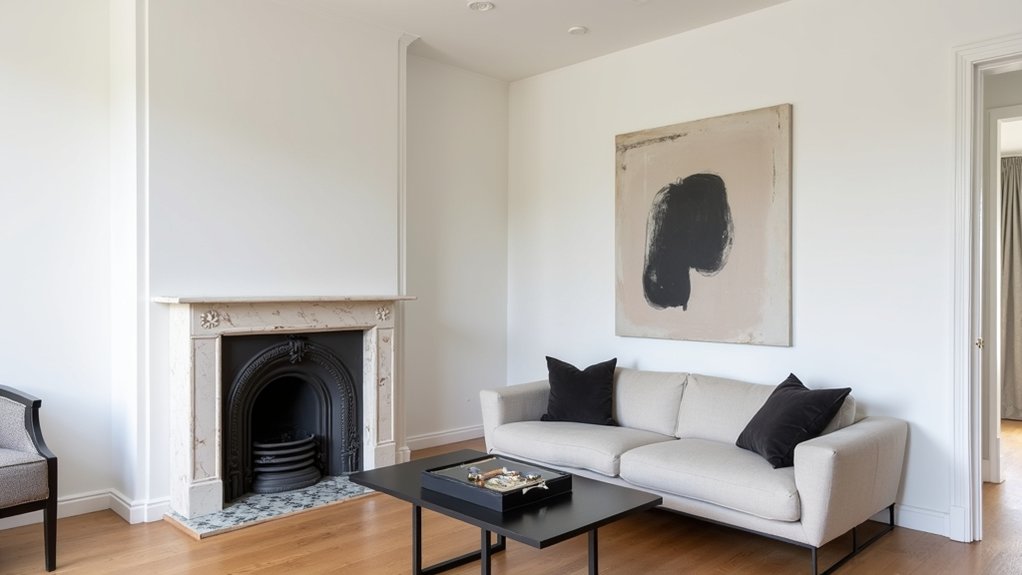
Even if you’ve chosen a calm, modern palette, you’ll only make a Victorian fireplace feel intentional when you sharpen the contrast around it. Push light walls against a darker mantel, or set a pale surround against inky trim so the carved details read from across the room. Keep contrast disciplined: repeat the fireplace’s strongest tone in one or two places—lighting, textiles, or a single piece of art—so it looks designed, not accidental.
Protect historical accuracy by letting original details stay crisp; don’t blur them with busy patterns or competing ornament. Instead, edit the styling: a minimal mirror line, one bold artwork, and a tight cluster of Vintage accessories—brass tools, a coal scuttle, or a ceramic vase—gives period credibility while staying contemporary.
Pick Contemporary Materials for Hearth and Surround
While the mantel and cast-iron insert carry the period character, you can modernize the look fast by specifying contemporary, hard-wearing materials for the hearth and surround—think honed limestone, concrete, large-format porcelain, or microcement—to get cleaner lines, fewer grout breaks, and better day-to-day durability without touching the original focal points.
Choose a flush or lightly raised hearth in a single slab to sharpen the silhouette and read as premium. Specify matte sealers and tight shadow gaps for minimalist finishes that still feel architectural.
If you’re targeting longevity and resale value, prioritize stain resistance, heat tolerance, and easy maintenance over decorative edging. Ask suppliers for low-VOC sealers, recycled-content porcelain, FSC-certified substrates, and locally quarried stone—Eco friendly materials that won’t compromise performance.
Keep joints minimal and align veining for a deliberate, contemporary finish.
Get the Scale Right in Modern Room Layouts
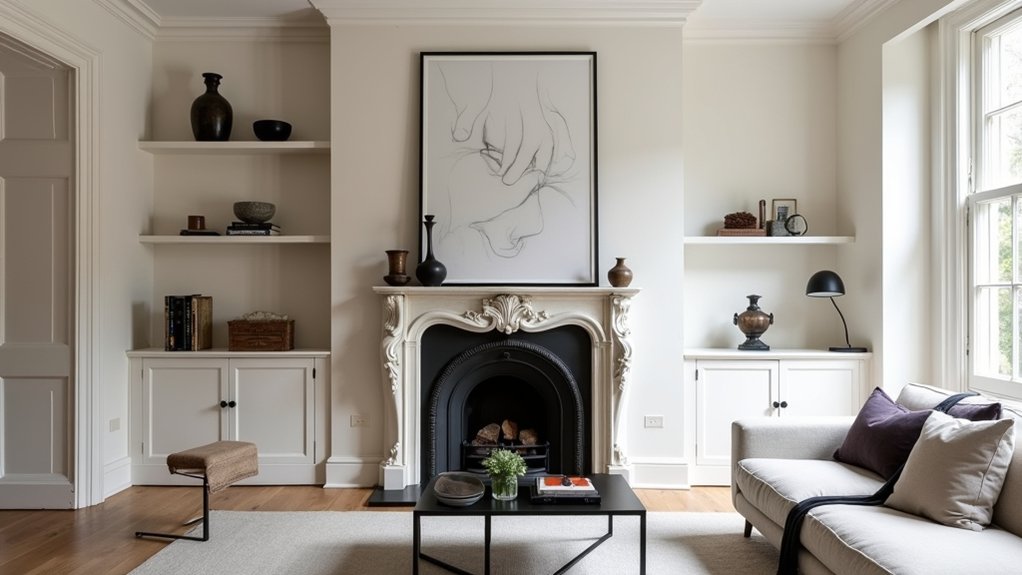
Because modern open-plan rooms and larger sightlines can dwarf period details, you’ll get a better result by scaling everything around the Victorian fireplace like a premium focal wall. Set your primary seating axis to face it, then keep clear circulation lines so the surround reads intentional, not lost in space.
Match mantel height to ceiling proportion: in taller rooms, extend the visual frame with a deeper chimney breast, higher plaster line, or built-in reveals—without falsifying historical accuracy. Balance the opening with appropriately sized hearth depth and a wider rug zone so the fireplace doesn’t look underscaled.
Use two flanking vertical elements to stabilize the composition and prevent “floating” detailing. Finally, allow service access and ventilation gaps; scale shouldn’t compromise fireplace maintenance or future inspections. Measure, mock up, then lock dimensions.
Style the Victorian Fireplace With Modern Décor
Once you’ve nailed the scale and sightlines, modern styling can make the Victorian fireplace feel intentional rather than “period dropped into new build.” Start by treating the surround as the room’s anchor and keep everything you add edited: one bold, contemporary artwork or a clean-lined mirror above the mantel, a tight palette that picks up the tile veining or cast-iron tones, and accessories grouped in asymmetrical clusters with plenty of negative space.
Keep materials crisp: honed stone, smoked glass, matte black metal, or pale oak that won’t compete with Victorian elegance. Swap clutter for function—one sculptural log holder, a single ceramic vessel, a slim tray for matches.
If you use textiles, echo one mantel tone in a modern rug border. You’ll land Modern minimalism without erasing heritage.
Update Lighting so the Fireplace Feels Contemporary
Update your lighting and you’ll instantly shift a Victorian fireplace from period piece to polished focal point. Layer light around the mantel—picture lights, slim sconces, and discreet uplighting—to sharpen details and control mood.
Then add one modern fixture nearby for intentional contrast, so the ornate surround reads curated, not dated.
Layered Lighting Around Mantel
If your Victorian mantel feels heavy or stuck in the past, layered lighting will modernize it fast without touching the original surround. Start with an ambient glow that softens carved details and reduces harsh contrast against darker timber or marble.
Add layered illumination by combining ceiling light, discreet wall washing, and focused task light for styling objects on the shelf.
Aim light upward to lift the chimney breast and visually “unweight” the mantel. Use dimmers on every circuit so you can shift from crisp daytime clarity to evening warmth.
Keep color temperature consistent (around 2700–3000K) to prevent the surround from reading yellow or grey. Hide drivers and cables, and position beams to graze relief rather than spotlighting soot marks.
You’ll get a clean, contemporary read while preserving authentic character.
Modern Fixtures For Contrast
While your Victorian surround brings the heritage, modern fixtures supply the contrast that makes the whole fireplace read current. Swap fussy sconces for slimline LEDs in aged brass or matte black, and you’ll sharpen the mantel’s profile without fighting its carving.
Choose opal globes or linear picture lights to wash the surround evenly, then dim them so the hearth feels layered, not glaring. If you’re keeping antique accessories, light them deliberately with a narrow-beam accent so they look curated, not cluttered.
Pair the new fittings with warm 2700K lamps to flatter stone, tile, and timber. When you’ve got period wallpaper nearby, pick understated fixtures with clean geometry so pattern stays the hero and the fireplace reads intentionally updated.
Frequently Asked Questions
What Permissions or Building Regulations Apply to Restoring a Victorian Fireplace?
You’ll need listed-building consent if it’s protected, and Building Regs (Part J) for flues, hearths, ventilation, and carbon monoxide alarms—because nothing says “heritage chic” like paperwork. Prioritise Historical authenticity, enable Modern integration, use HETAS.
How Can I Check if My Chimney Is Safe Before Using the Fireplace?
Book a certified sweep for a chimney inspection, then get a smoke test and flue-camera survey. You’ll check liner integrity, blockages, and draught. Follow safety precautions: fit CO alarms, use seasoned fuel, and verify ventilation.
Should I Install a Flue Liner, and Which Type Is Best?
You should install a flue liner if the flue’s cracked, oversized, or fails inspection. Choose stainless-steel flexible for most retrofits; use pumice/clay for rebuilds. Pair with chimney cleaning and proper flue material for compliance.
What’s the Typical Cost Range for Restoring a Victorian Fireplace?
You’ll typically pay $800–$5,000 to restore a Victorian fireplace, depending on Fireplace materials and damage. Expect a 1–6 week Restoration timeline, plus $500–$2,500 if you add specialist surround repairs.
How Do I Improve Energy Efficiency and Reduce Drafts Around the Fireplace?
Seal, seal, seal: you’ll boost efficiency fast by adding a top-sealing damper, fitting a tight glass door, and using insulation techniques like fireplace draft stoppers. Schedule fireplace maintenance—clean flue, check mortar, and seal gaps.
About the Author