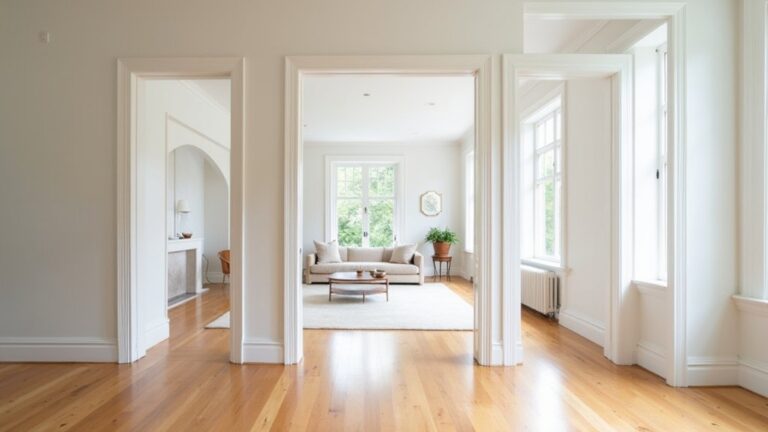

You can shave decades off an older interior in a single weekend. Start by resetting the mood with warm whites, muted greens, or inky blues, then sharpen everything with crisp white trim. Layer warm-dim LEDs, add smart dimmers, and swap shiny brass knobs for matte black or champagne bronze. Finish with low-pile rugs, linen curtains, and tactile finishes that feel current. Next, you’ll want to tackle the one detail that dates a room fastest…
Key Takeaways
- Refresh walls with warm white, then add greige, clay, soft sage, or inky blue accents; keep trim a consistent crisp white.
- Modernise lighting by layering ambient, task, and wall-wash sources with warm-dim 2700K–3000K LEDs and dimmers for adjustable mood.
- Swap dated hardware and fixtures for matte black, brushed nickel, or champagne bronze, keeping finishes consistent across doors, cabinets, and lighting.
- Replace heavy valances and swags with tailored panels, linen sheers, or minimal shades to sharpen window lines and brighten rooms.
- Add modern texture using flatweave or low-pile rugs, bouclé or matte leather seating, and tight-pattern textiles to create a curated, cohesive look.
Modernise an Older Interior With a Fresh Palette

If your home still leans on dated beige, heavy burgundy, or honey-oak undertones, a fresh, modern palette will update it faster than any single furniture swap. Start by choosing a warm white with a clean undertone, then layer in greige, clay, or soft sage for today’s grounded look.
Use color psychology: muted greens calm, inky blues add confidence, and warm neutrals make rooms feel larger and more current. Keep trims crisp in one consistent white to reduce visual noise.
For contrast, paint interior doors charcoal or deep olive, and repeat that shade in hardware or textiles. You don’t have to ditch vintage decor—edit it. Pair brass, cane, or patinaed wood with solid, modern colors so the pieces feel curated, not stuck.
Update Lighting to Modernise Older Rooms Fast
A refreshed palette sets the tone, but lighting is what makes those new whites, greiges, and sages read modern instead of flat.
Start by layering: ceiling fixtures for general light, wall washes or picture lights for depth, and task lighting where you actually live—reading chairs, desks, and kitchen prep zones.
Aim for warm-dim LEDs (2700K–3000K) with high CRI so finishes look rich, not yellow or dull.
Add Smart lighting so you can shift brightness and scenes from morning crisp to evening calm without rewiring.
Prioritise Ambient illumination with dimmers and multiple sources to eliminate harsh hotspots and shadowy corners.
If ceilings feel low, choose slim profiles and uplight to visually lift the room.
Swap Dated Details (Hardware, Trim, Window Dressings)
Once you’ve modernised the lighting, dated details stand out fast—so swap the small “tells” that pin a room to its decade. Start with hardware: replace shiny brass knobs, scalloped pulls, and fussy hinges with streamlined levers or simple bar pulls in matte black, brushed nickel, or warm champagne bronze. If you’ve got Vintage fixtures elsewhere, match finishes so the update feels intentional, not random.
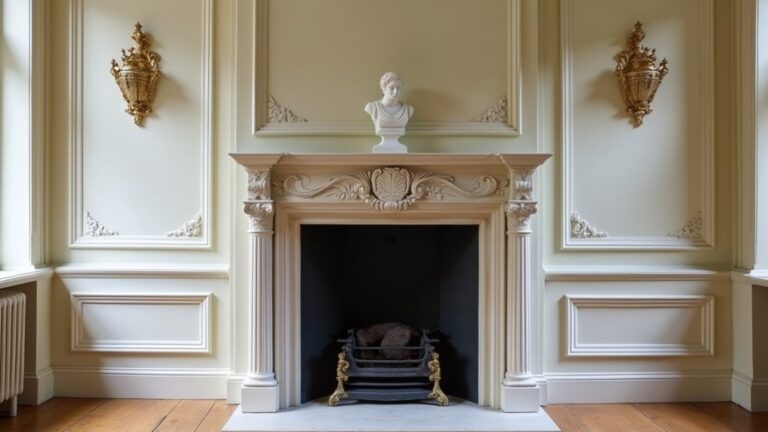
Next, edit trim. Keep good bones, but repaint yellowed woodwork in a crisp white or tone-on-tone wall color to quiet busy edges. If ornate moldings are worth preserving, highlight their lines with cleaner paintwork, not heavy stain.
Finish with window dressings: ditch swags and thick valances; hang tailored panels higher and wider, or choose minimal shades for a sharp, current frame.
Add Modern Textures With Rugs, Fabrics, and Furniture
After you’ve cleaned up the “dated tells,” modern texture becomes the fastest way to shift the room’s vibe without touching the layout. Start from the floor up: anchor seating with a low-pile wool rug or a flatweave in a tonal geometric, then stack a smaller vintage-style runner for Layered textures that feel curated, not cluttered.
Next, swap heavy drapes for linen or cotton sheers and bring in Patterned textiles through pillows—think micro-checks, pinstripes, or abstract botanicals in a tight palette.
On furniture, balance sleek lines with tactile finishes: bouclé on an accent chair, matte leather on an ottoman, and light oak or smoked walnut on side tables. Finish with one oversized knit throw to soften edges and make the room read current, tailored, and livable.
Frequently Asked Questions
How Can I Modernise an Older Interior on a Tight Budget?
You can modernise an older interior cheaply by repainting in warm neutrals, swapping dated hardware, and adding Bold accents via cushions and art. Keep Vintage furniture, but restyle it with new lamps, rugs, sleek textiles.
Should I Renovate or Decorate First to Update an Older Home?
Decorate first, then renovate if pain points remain. You’ll see quick trend-led impact with paint, lighting, and hardware, while planning Historical preservation and Vintage restoration details client-centrically, avoiding costly rework and misaligned finishes.
How Do I Modernise Without Removing Original Architectural Features?
Keep original details as the home’s crown, then weave modern layers around them. You’ll anchor rooms with vintage furniture, swap in antique lighting on dimmers, simplify palettes, add sleek textiles, and hide tech discreetly.
Which DIY Upgrades Add the Most Value in Older Interiors?
You’ll add the most value with fresh paint, updated lighting, refinished floors, and upgraded hardware—keeping vintage charm intact. Install smart thermostats, swap dated faucets, and add contemporary accents like matte-black fixtures and sleek switch plates.
How Can I Modernise an Older Home While Keeping It Kid- and Pet-Friendly?
You can modernise an older home by choosing wipeable paints, performance rugs, and rounded-edge furniture—kids and pets thrive. 80% of buyers prioritise durable finishes. Keep Vintage charm, layer Modern accents, and add washable slipcovers everywhere.
About the Author